

20 réis – Brazil
Add to wishlist
Brazil
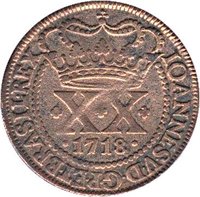
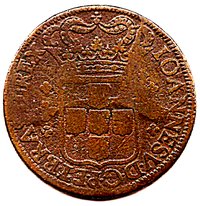
Obverse
Description:
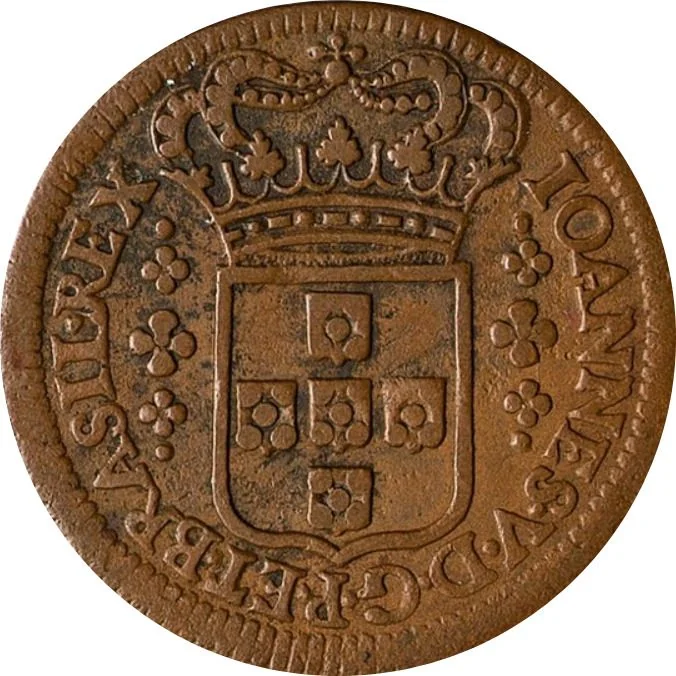
Portuguese arms crowned and flanked by flowers.
Inscription:
IOANNES.V·D.G.P.ET·BRASIL·REX
Script: Latin
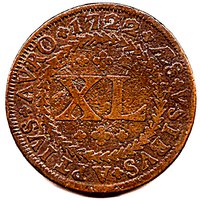
Reverse
Description:
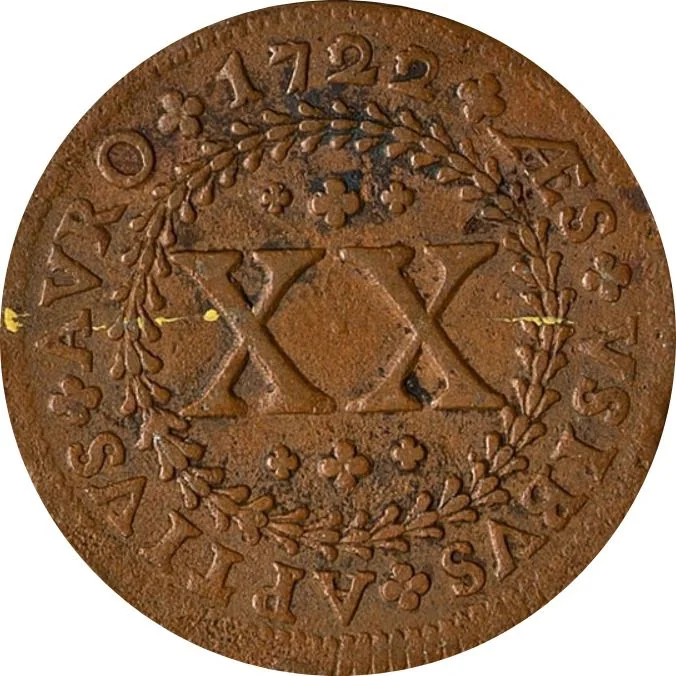
Value XX, tulip wreath, and date.
Inscription:
1722
AES VSIBVS APTIVS AVRO
XX
AES VSIBVS APTIVS AVRO
XX
Script: Latin
Edge
Plain
Mints
| Name | Mark |
|---|---|
| Imprensa Nacional - Casa da Moeda | — |
Mintings
| Year | Mint Mark | Mintage | Quality | Collection |
|---|---|---|---|---|
| 1722 | — | 229,475 |
Historical background
In 1722, the currency situation in the Portuguese colony of Brazil was one of profound crisis and transition, stemming directly from the discovery of vast gold deposits in Minas Gerais decades earlier. The massive influx of precious metals had triggered severe inflation, as the colonial administration failed to control the money supply or establish adequate minting facilities. This led to a chaotic monetary environment where gold dust was the primary medium of exchange, its value fluctuating wildly and its quality difficult to assess, while a chronic shortage of official coinage crippled daily commerce.
Recognizing the urgent need to assert royal control over the wealth and stabilize the economy, King João V of Portugal took decisive action in 1722. He ordered the establishment of the first official mint in Brazil, the Casa da Moeda do Brasil, in the coastal city of Bahia (soon relocated to Rio de Janeiro). Its primary mission was to standardize the colony's currency by minting gold coins from the mined ore, thereby replacing the unreliable gold dust (ouro em pó). The most significant coin introduced was the moeda (plural: moedas), a gold coin stamped with the royal coat of arms, which aimed to centralize authority and facilitate taxation.
Despite this intervention, the situation remained fraught with challenges. Widespread smuggling of gold to avoid the royal fifth (o quinto), continued circulation of foreign and clipped coins, and the sheer logistical difficulty of establishing the mint's operations meant monetary instability persisted. Thus, 1722 represents a pivotal year marking the Portuguese Crown's attempt to impose order on a booming but unruly colonial economy, laying an administrative foundation for the gold cycle that would define 18th-century Brazil, even as many of the underlying problems of contraband and inflation remained unresolved.
Recognizing the urgent need to assert royal control over the wealth and stabilize the economy, King João V of Portugal took decisive action in 1722. He ordered the establishment of the first official mint in Brazil, the Casa da Moeda do Brasil, in the coastal city of Bahia (soon relocated to Rio de Janeiro). Its primary mission was to standardize the colony's currency by minting gold coins from the mined ore, thereby replacing the unreliable gold dust (ouro em pó). The most significant coin introduced was the moeda (plural: moedas), a gold coin stamped with the royal coat of arms, which aimed to centralize authority and facilitate taxation.
Despite this intervention, the situation remained fraught with challenges. Widespread smuggling of gold to avoid the royal fifth (o quinto), continued circulation of foreign and clipped coins, and the sheer logistical difficulty of establishing the mint's operations meant monetary instability persisted. Thus, 1722 represents a pivotal year marking the Portuguese Crown's attempt to impose order on a booming but unruly colonial economy, laying an administrative foundation for the gold cycle that would define 18th-century Brazil, even as many of the underlying problems of contraband and inflation remained unresolved.
💎 Very Rare