

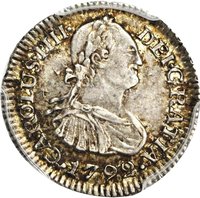
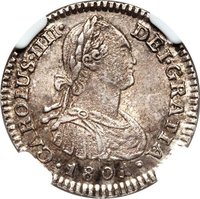
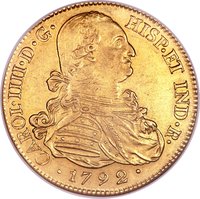
Obverse
Description:
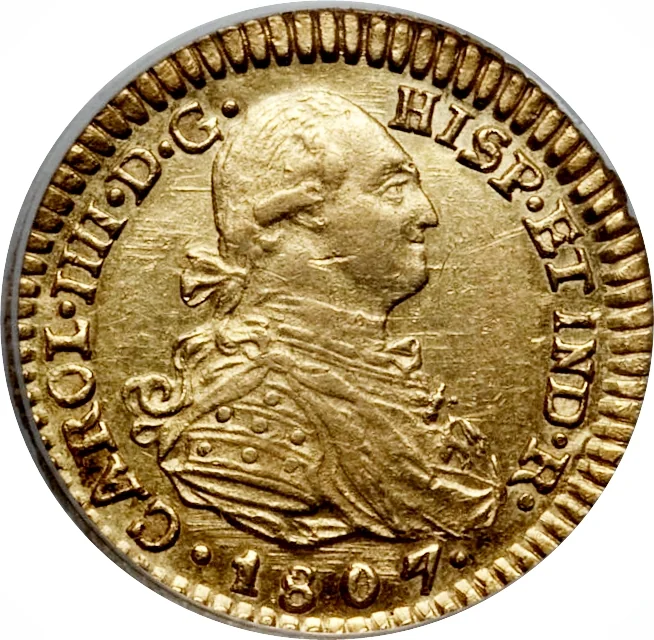
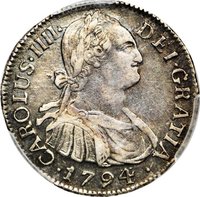
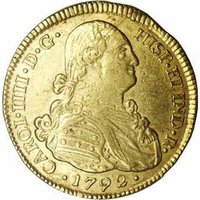
Bust of Carlos IV right within legend, date below.
Inscription:
CAROL·IIII·D·G· HISP·ET IND·R·
·1807·
·1807·
Script: Latin
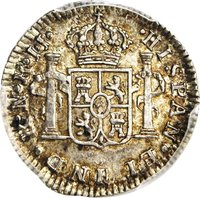
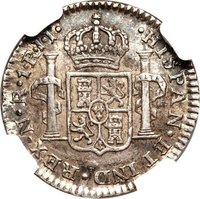
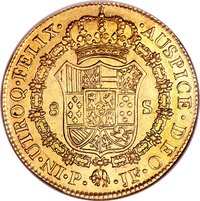
Reverse
Description:
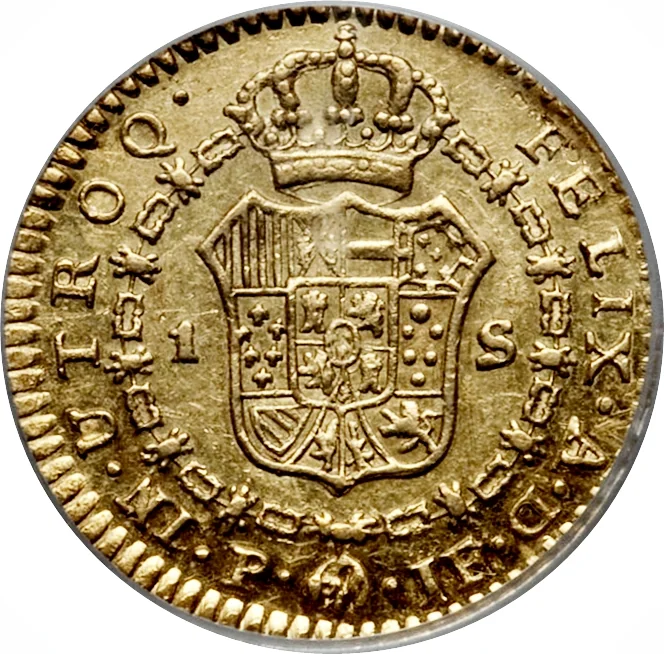
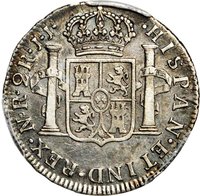
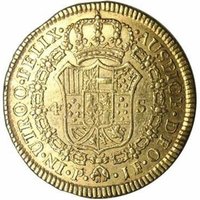
Crest encircled by inscription.
Inscription:
·IN·UTROQ· FELIX·A·D·
P. .JF
1 S
P. .JF
1 S
Script: Latin
Edge
Categories
| Symbols> Coat of Arms |
Mints
| Name | Mark |
|---|---|
| Bogota Mint | NR |
| Casa de Moneda de Colombia | P |
Mintings
Historical background
In 1792, the currency situation in the Viceroyalty of New Granada (modern-day Colombia, Ecuador, Panama, and Venezuela) was complex and fragmented, reflecting its colonial economy. The official currency was the Spanish silver real, with eight reales equaling one peso. However, the money supply was chronically insufficient for local trade, leading to widespread use of macuquinas—crudely cut and hammered silver coins minted in regional mints like Bogotá and Popayán. These coins were easily clipped and debased, causing significant problems with counterfeiting and inconsistent value, especially in remote provinces.
This scarcity of official coinage necessitated the use of various substitute monies. The most common was moneda de la tierra (money of the land), a system of credit and barter using commodities like cacao, tobacco, and textiles as units of account for local transactions. Furthermore, a vast array of foreign coins, particularly Spanish American pesos from Peru and Mexico (often of higher quality), and even illicit Portuguese and English coins, circulated alongside the official currency. This created a multi-tiered monetary environment where the value of a coin depended not only on its metal content but also on its origin and physical condition.
The Spanish Crown, under the Bourbon Reforms, was attempting to centralize and modernize the colonial economy, which included monetary policy. Plans were underway to replace the irregular macuquinas with new, machine-struck coins from the mint in Bogotá, featuring the portrait of King Charles IV and milled edges to prevent clipping. However, in 1792, this transition was still in progress. The system remained inefficient, hindering commerce and tax collection, and would persist until the more standardized columnario and later bust coins became dominant in the final decade of the 18th century.
This scarcity of official coinage necessitated the use of various substitute monies. The most common was moneda de la tierra (money of the land), a system of credit and barter using commodities like cacao, tobacco, and textiles as units of account for local transactions. Furthermore, a vast array of foreign coins, particularly Spanish American pesos from Peru and Mexico (often of higher quality), and even illicit Portuguese and English coins, circulated alongside the official currency. This created a multi-tiered monetary environment where the value of a coin depended not only on its metal content but also on its origin and physical condition.
The Spanish Crown, under the Bourbon Reforms, was attempting to centralize and modernize the colonial economy, which included monetary policy. Plans were underway to replace the irregular macuquinas with new, machine-struck coins from the mint in Bogotá, featuring the portrait of King Charles IV and milled edges to prevent clipping. However, in 1792, this transition was still in progress. The system remained inefficient, hindering commerce and tax collection, and would persist until the more standardized columnario and later bust coins became dominant in the final decade of the 18th century.
Series: 1792 Colombia circulation coins
💎 Very Rare