

5 Guineas – United Kingdom
United Kingdom
Context

Material
References
KM: #Click to copy to clipboard521
Numista: #52720
Value
Bullion value: $6406.66
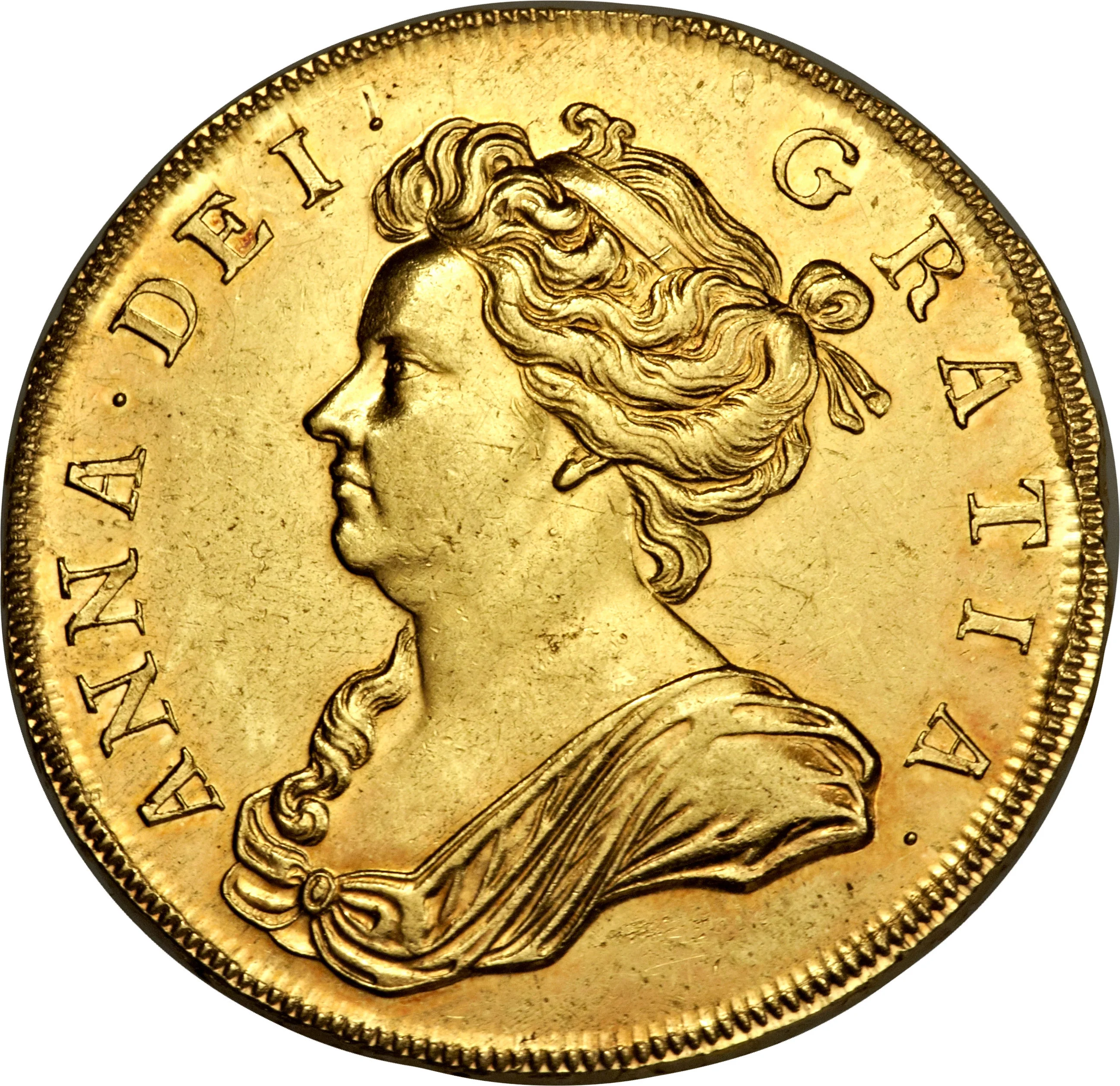
Obverse
Description:
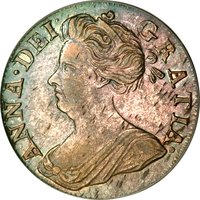
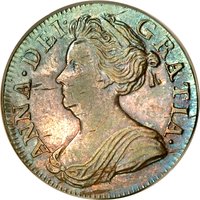
Queen Anne left-facing bust, legend surrounding.
Inscription:
ANNA · DEI GRATIA·
Script: Latin
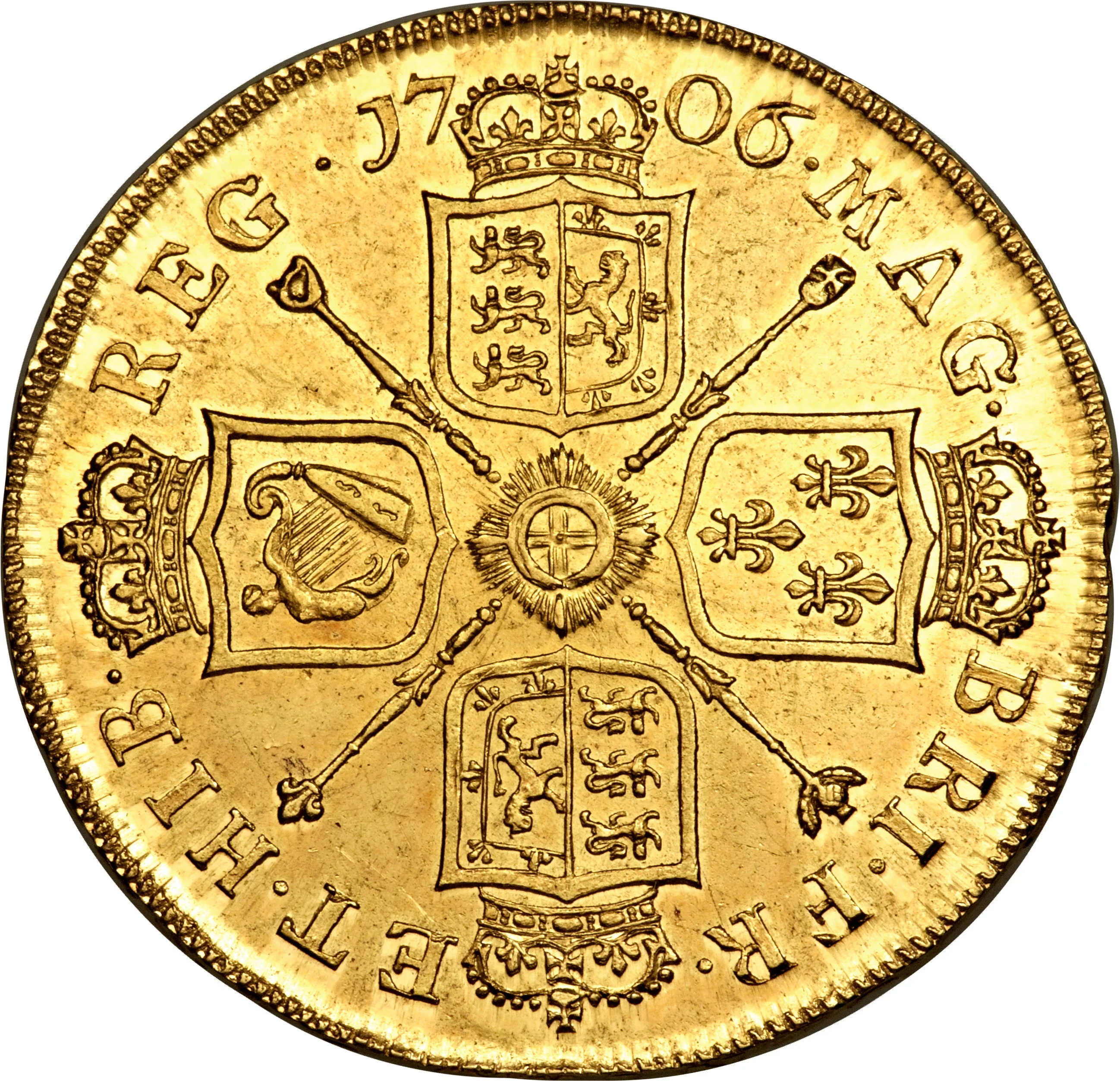
Reverse
Description:
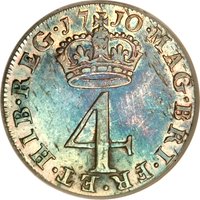
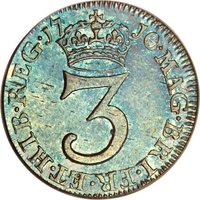
Crowned cruciform shields around a central Garter star, with national emblem sceptres in the angles. Divided date above, legend around. Post-Union design features halved shields for England and Scotland.
Inscription:
MAG· BRI·FR· ET·HIB· REG
·1706·
·1706·
Script: Latin
Edge
Regnal year in words
Legend:
QVINTO
Mintings
| Year | Mint Mark | Mintage | Quality | Collection |
|---|---|---|---|---|
| 1706 | — | — |
Historical background
In 1706, the currency situation in the Kingdom of England (soon to be Great Britain) was precarious and a source of significant economic and political anxiety. The core problem was the severe degradation of the silver coinage. After decades of wear, clipping, and counterfeiting, the average silver coin in circulation contained significantly less precious metal than its face value. This led to Gresham's Law in action: "bad money drives out good." Undervalued, full-weight coins were either hoarded or melted down for their bullion, which was often exported, leaving only the worn and clipped coins in daily use. This undermined both domestic trade, as people were reluctant to accept suspect coins, and international commerce, as foreign merchants demanded payment in gold or bullion.
The government's attempts to rectify the situation had been fraught with failure. A major recoinage in the 1690s under William III, masterminded by Sir Isaac Newton as Warden of the Mint, had temporarily restored the coinage but at a great fiscal cost to the Crown and had not solved the underlying structural issue. The fundamental problem was that the official mint price of silver was set too low relative to its market price, creating a disincentive to bring silver to the mint. Consequently, the shortage of sound specie persisted into the reign of Queen Anne, hampering economic growth and state finances, especially with the nation engaged in the expensive War of the Spanish Succession.
This monetary instability formed a critical backdrop to the negotiations for the Acts of Union with Scotland in 1706-07. A key Scottish demand was access to England's colonial trade, but English negotiators were deeply concerned that Scotland's weaker, lower-value currency would allow them to undercut English prices if full monetary union was not achieved. Therefore, the Treaty of Union explicitly included provisions for a uniform currency across the new united kingdom, to be based on the English standard. Thus, the currency crisis of 1706 was not merely a domestic economic issue but a direct driver in shaping the political union of Great Britain, with the creation of a single, stable currency being a fundamental pillar of the new state.
The government's attempts to rectify the situation had been fraught with failure. A major recoinage in the 1690s under William III, masterminded by Sir Isaac Newton as Warden of the Mint, had temporarily restored the coinage but at a great fiscal cost to the Crown and had not solved the underlying structural issue. The fundamental problem was that the official mint price of silver was set too low relative to its market price, creating a disincentive to bring silver to the mint. Consequently, the shortage of sound specie persisted into the reign of Queen Anne, hampering economic growth and state finances, especially with the nation engaged in the expensive War of the Spanish Succession.
This monetary instability formed a critical backdrop to the negotiations for the Acts of Union with Scotland in 1706-07. A key Scottish demand was access to England's colonial trade, but English negotiators were deeply concerned that Scotland's weaker, lower-value currency would allow them to undercut English prices if full monetary union was not achieved. Therefore, the Treaty of Union explicitly included provisions for a uniform currency across the new united kingdom, to be based on the English standard. Thus, the currency crisis of 1706 was not merely a domestic economic issue but a direct driver in shaping the political union of Great Britain, with the creation of a single, stable currency being a fundamental pillar of the new state.
✨ Legendary