

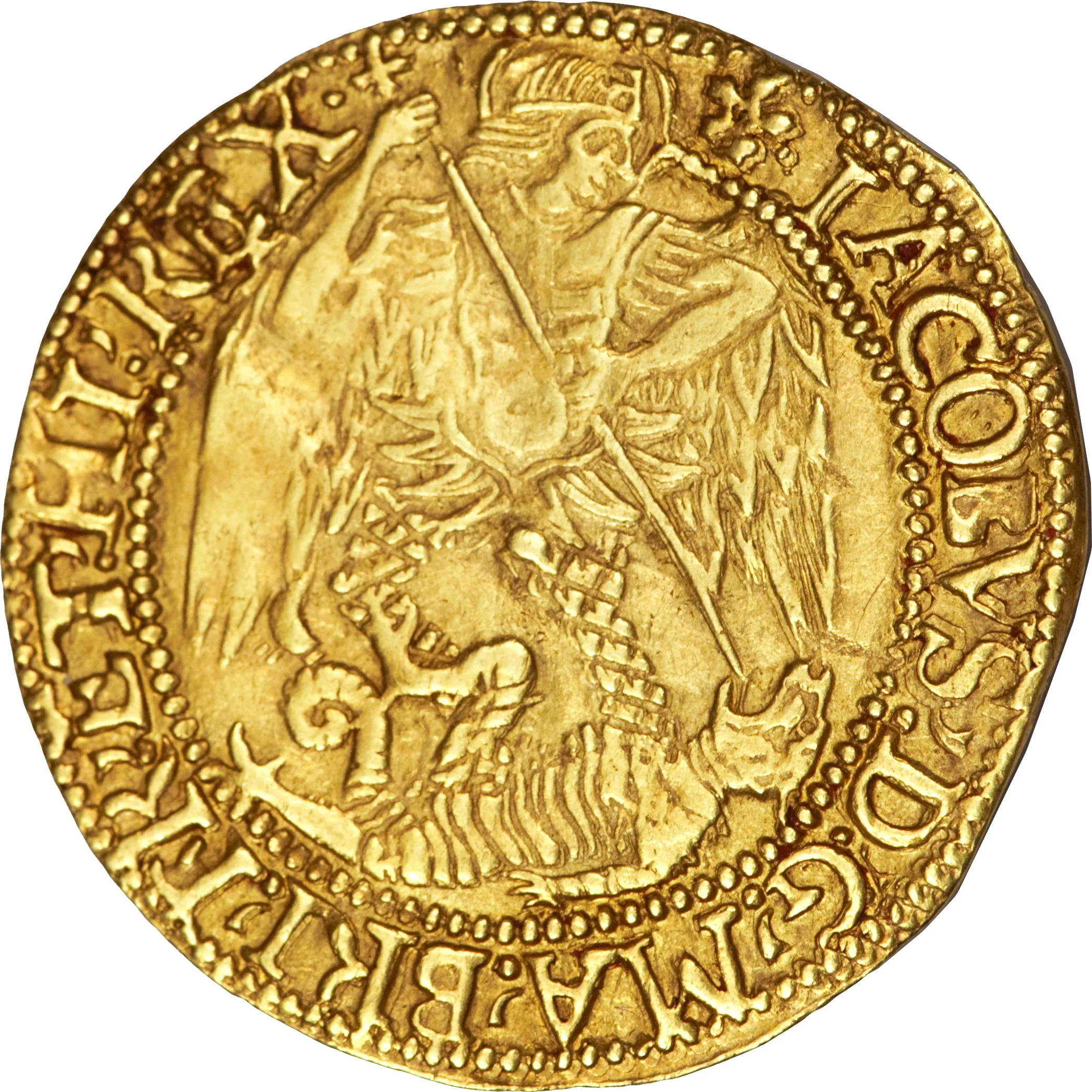
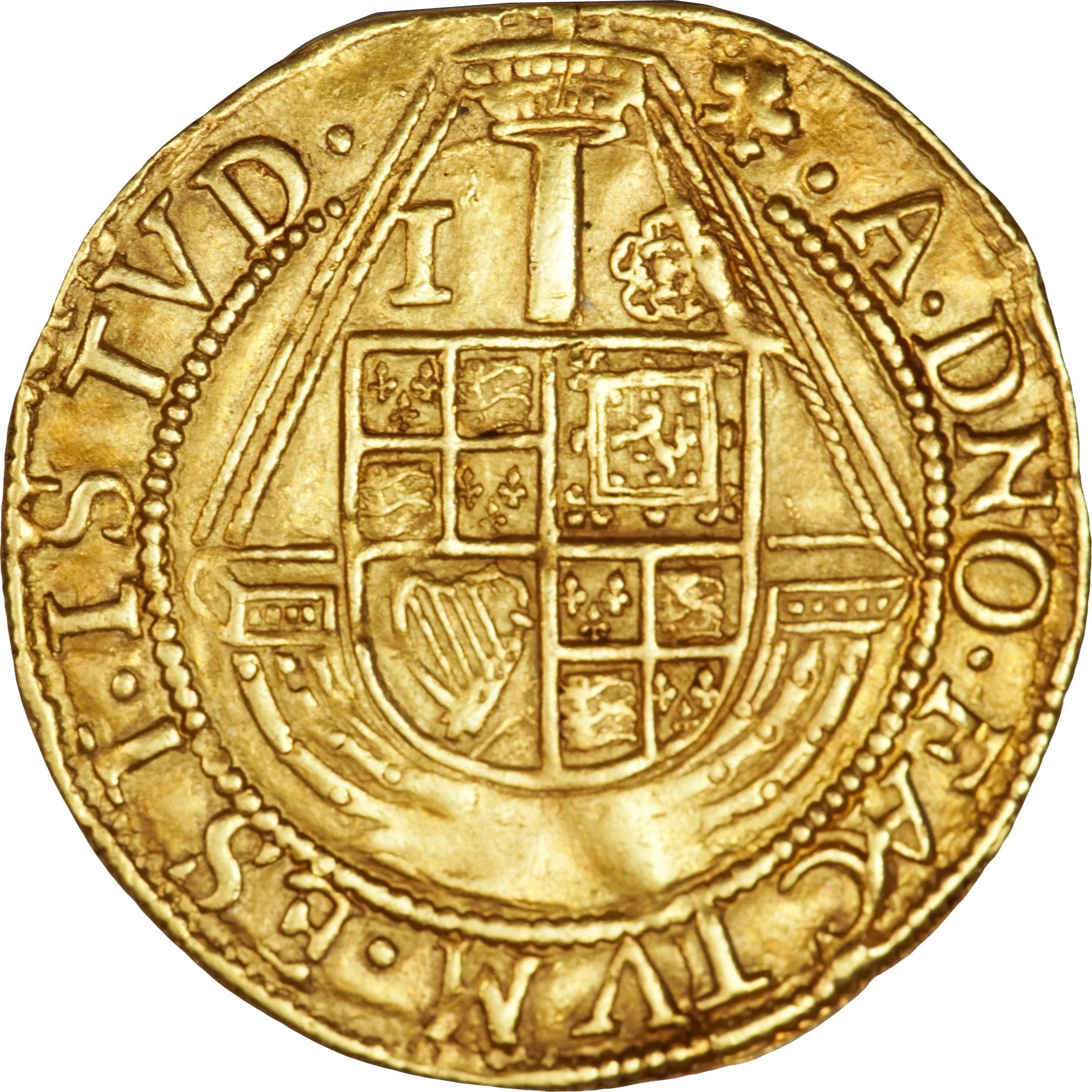
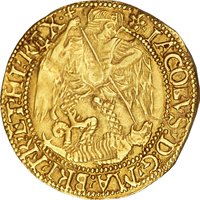
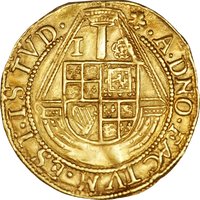
1 Angel – England
United Kingdom
Context
Years: 1613–1615
Country: United Kingdom 
Issuer: England 
Ruler: James I
Currency:
(1158—1970)
Demonetized: Yes
References
KM: #Click to copy to clipboard44
Numista: #52472
Mintings
| Year | Mint Mark | Mintage | Quality | Collection |
|---|---|---|---|---|
| — | — | — |
Historical background
In 1613, England operated under a bimetallic monetary system, anchored to both silver and gold. The foundational unit was the silver penny, with 240 pennies minted from one Tower Pound of sterling silver (92.5% pure), constituting one pound sterling (£1). The principal coins in circulation were silver: the shilling (12 pence), the crown (5 shillings), and the half-crown. Gold coins, like the sovereign (valued at 20 shillings) and the angel (10 shillings), also circulated, but their value was legally tied to the silver standard. The system relied on a fixed mint ratio between the metals, but this was increasingly destabilised by market fluctuations, leading to the persistent problem of undervalued coins being melted down or exported.
The period was marked by a severe and worsening shortage of circulating coin, particularly good silver money. This was largely a consequence of the "Great Debasement" under Henry VIII a century prior, which had eroded trust in the coinage. Although Elizabeth I had restored the purity of silver coins in 1560, the underlying economic pressures remained. The price revolution of the 16th century, driven by influxes of Spanish silver from the New World, caused inflation that made English silver coins undervalued relative to their continental counterparts. Consequently, full-weight English coins were routinely exported or melted for bullion, leaving a diminished and often clipped or worn currency in domestic circulation, which hampered everyday trade and commerce.
King James I, who had unified the English and Scottish crowns in 1603, continued to grapple with these monetary challenges. His reign saw attempts to introduce new coinage, such as the gold unite (another 20-shilling piece), to promote political unity and assert royal authority. However, these did not solve the structural issues. The state's primary response was punitive, enforcing harsh laws against clipping and counterfeiting. A genuine solution would not emerge for decades, culminating in the Great Recoinage of 1696 under William III. Thus, in 1613, England's currency system was strained, caught between a fixed legal standard and volatile economic realities, creating a tangible scarcity of sound money that affected all levels of society.
The period was marked by a severe and worsening shortage of circulating coin, particularly good silver money. This was largely a consequence of the "Great Debasement" under Henry VIII a century prior, which had eroded trust in the coinage. Although Elizabeth I had restored the purity of silver coins in 1560, the underlying economic pressures remained. The price revolution of the 16th century, driven by influxes of Spanish silver from the New World, caused inflation that made English silver coins undervalued relative to their continental counterparts. Consequently, full-weight English coins were routinely exported or melted for bullion, leaving a diminished and often clipped or worn currency in domestic circulation, which hampered everyday trade and commerce.
King James I, who had unified the English and Scottish crowns in 1603, continued to grapple with these monetary challenges. His reign saw attempts to introduce new coinage, such as the gold unite (another 20-shilling piece), to promote political unity and assert royal authority. However, these did not solve the structural issues. The state's primary response was punitive, enforcing harsh laws against clipping and counterfeiting. A genuine solution would not emerge for decades, culminating in the Great Recoinage of 1696 under William III. Thus, in 1613, England's currency system was strained, caught between a fixed legal standard and volatile economic realities, creating a tangible scarcity of sound money that affected all levels of society.
✨ Legendary