

½ Laurel – England
United Kingdom
Context
Years: 1619–1620
Country: United Kingdom 
Issuer: England 
Ruler: James I
Currency:
(1158—1970)
Demonetized: Yes
References
KM: #Click to copy to clipboard70
Numista: #52470
Value
Bullion value: $695.66
Obverse
Description:
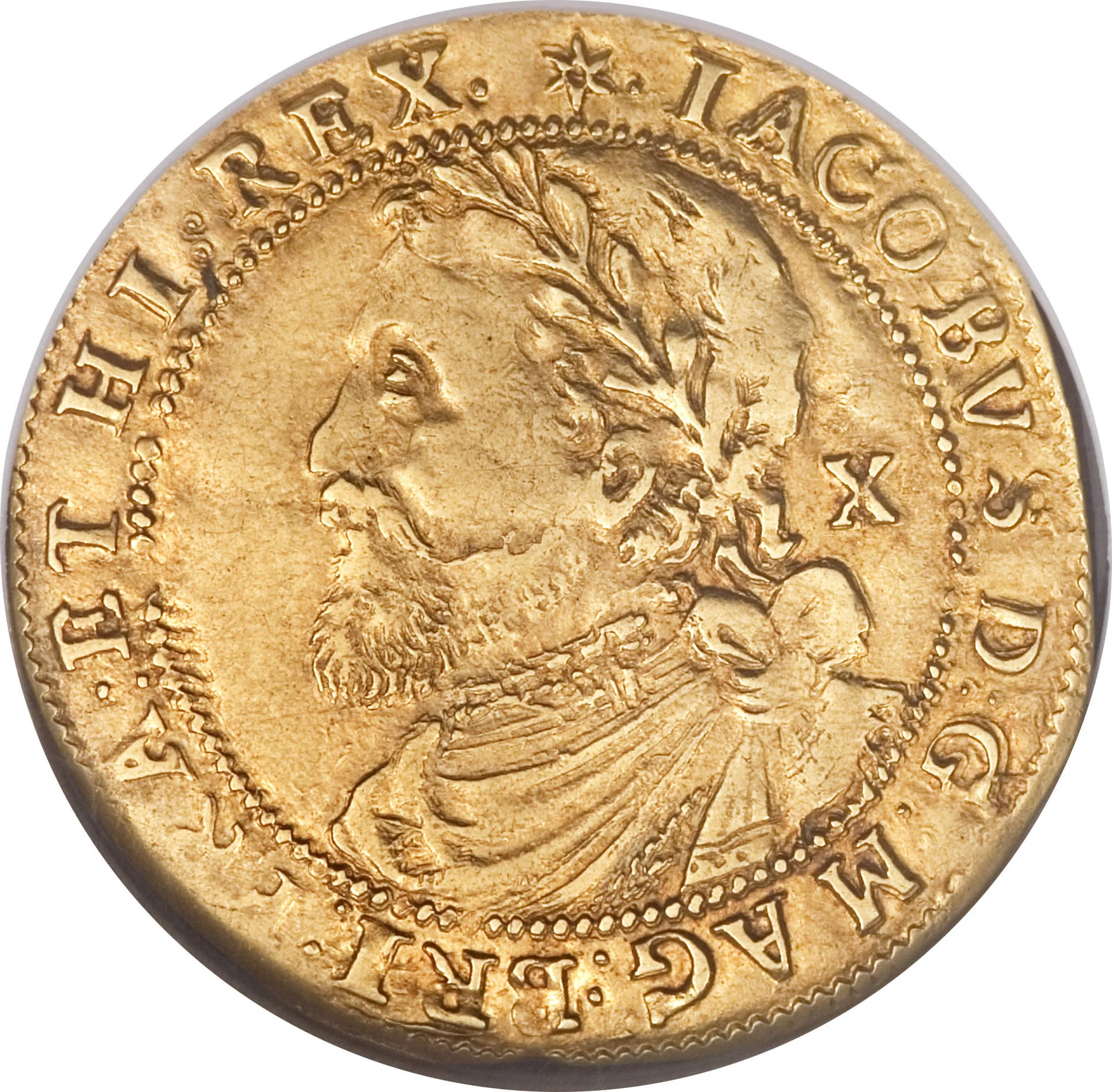
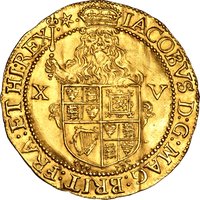
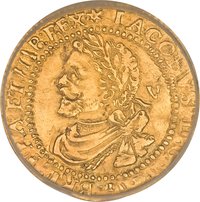
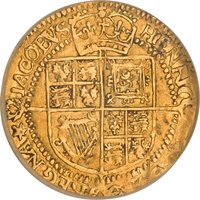
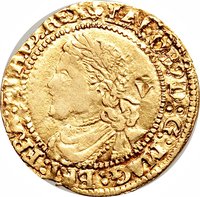
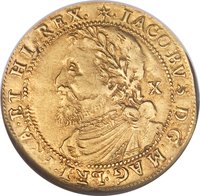
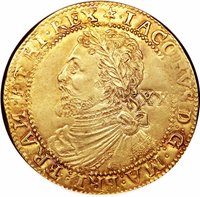
King James I laureate bust left, denomination behind.
Inscription:
IACOBVS D : G : MAG : BRI : FRA : ET HI : REX .
X
X
Script: Latin
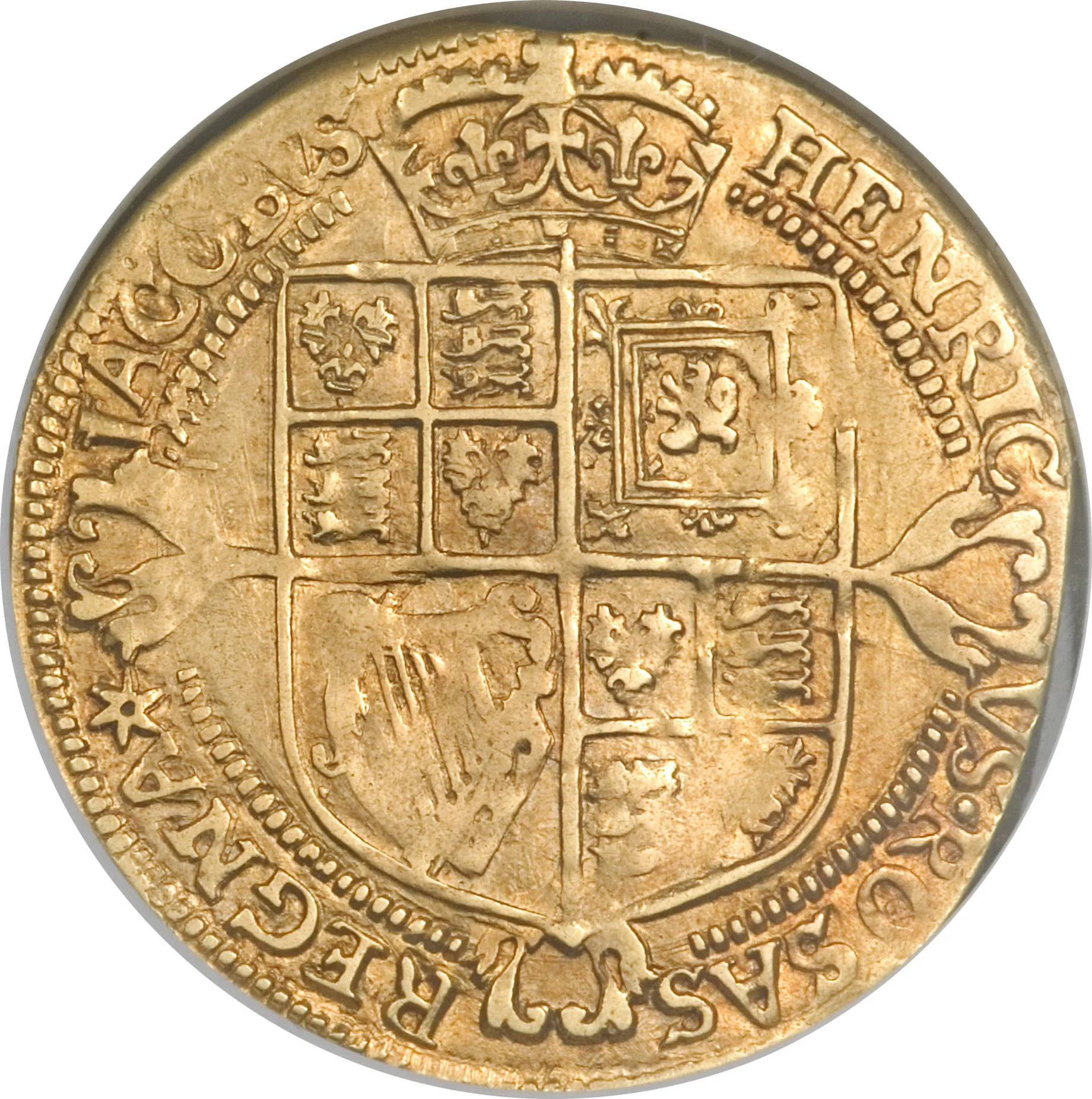
Reverse
Edge
Mintings
| Year | Mint Mark | Mintage | Quality | Collection |
|---|---|---|---|---|
| — | — | — |
Historical background
In 1619, England operated under a bimetallic monetary system, with both silver and gold coins serving as legal tender. The foundation was the silver penny, with larger denominations like shillings and pounds (£1 = 20 shillings = 240 pence) representing units of account. The most important circulating coins were the silver shilling and the gold sovereign (worth 20 shillings). The system's integrity relied on the Crown maintaining a fixed legal ratio between the value of gold and silver, but this was increasingly destabilised by global market forces.
A significant problem was the chronic shortage of high-quality circulating coinage, particularly silver. This was largely due to "clipping" (shaving metal from coin edges) and the more damaging practice of exchanging full-weight English silver coins for undervalued foreign coin or bullion, then melting the English coins for profit. This "bullion drain" meant the coins in everyday use were often worn, clipped, and unreliable, causing friction in trade and a loss of public confidence. Furthermore, the government under James I had engaged in the debasement of the currency by reducing the silver content in the "harp" coinage for Ireland, which damaged the Crown's monetary reputation.
Consequently, the currency was in a state of quiet crisis. While not yet a full-scale emergency, the erosion of the coinage placed strain on commerce and state finances. The situation would eventually compel James I's successor, Charles I, to initiate a major recoinage in the 1620s and would later influence the establishment of the gold standard in the 18th century. Thus, 1619 represents a point of growing monetary weakness, where systemic flaws and market pressures were undermining the Tudor financial stability that had preceded it.
A significant problem was the chronic shortage of high-quality circulating coinage, particularly silver. This was largely due to "clipping" (shaving metal from coin edges) and the more damaging practice of exchanging full-weight English silver coins for undervalued foreign coin or bullion, then melting the English coins for profit. This "bullion drain" meant the coins in everyday use were often worn, clipped, and unreliable, causing friction in trade and a loss of public confidence. Furthermore, the government under James I had engaged in the debasement of the currency by reducing the silver content in the "harp" coinage for Ireland, which damaged the Crown's monetary reputation.
Consequently, the currency was in a state of quiet crisis. While not yet a full-scale emergency, the erosion of the coinage placed strain on commerce and state finances. The situation would eventually compel James I's successor, Charles I, to initiate a major recoinage in the 1620s and would later influence the establishment of the gold standard in the 18th century. Thus, 1619 represents a point of growing monetary weakness, where systemic flaws and market pressures were undermining the Tudor financial stability that had preceded it.
Series: 1619 England circulation coins
✨ Legendary