

1 Unite – England
United Kingdom
Context
Years: 1605–1615
Country: United Kingdom 
Issuer: England 
Ruler: James I
Currency:
(1158—1970)
Demonetized: Yes
Material
Diameter: 36.8 mm
Weight: 9.95 g
Gold weight: 9.11 g
Thickness: 0.7 mm
Shape: Irregular round
Composition: 91.6% Gold
Magnetic: No
Technique: Hammered
References
KM: #Click to copy to clipboard46
Numista: #52466
Value
Bullion value: $1517.89
Obverse
Description:
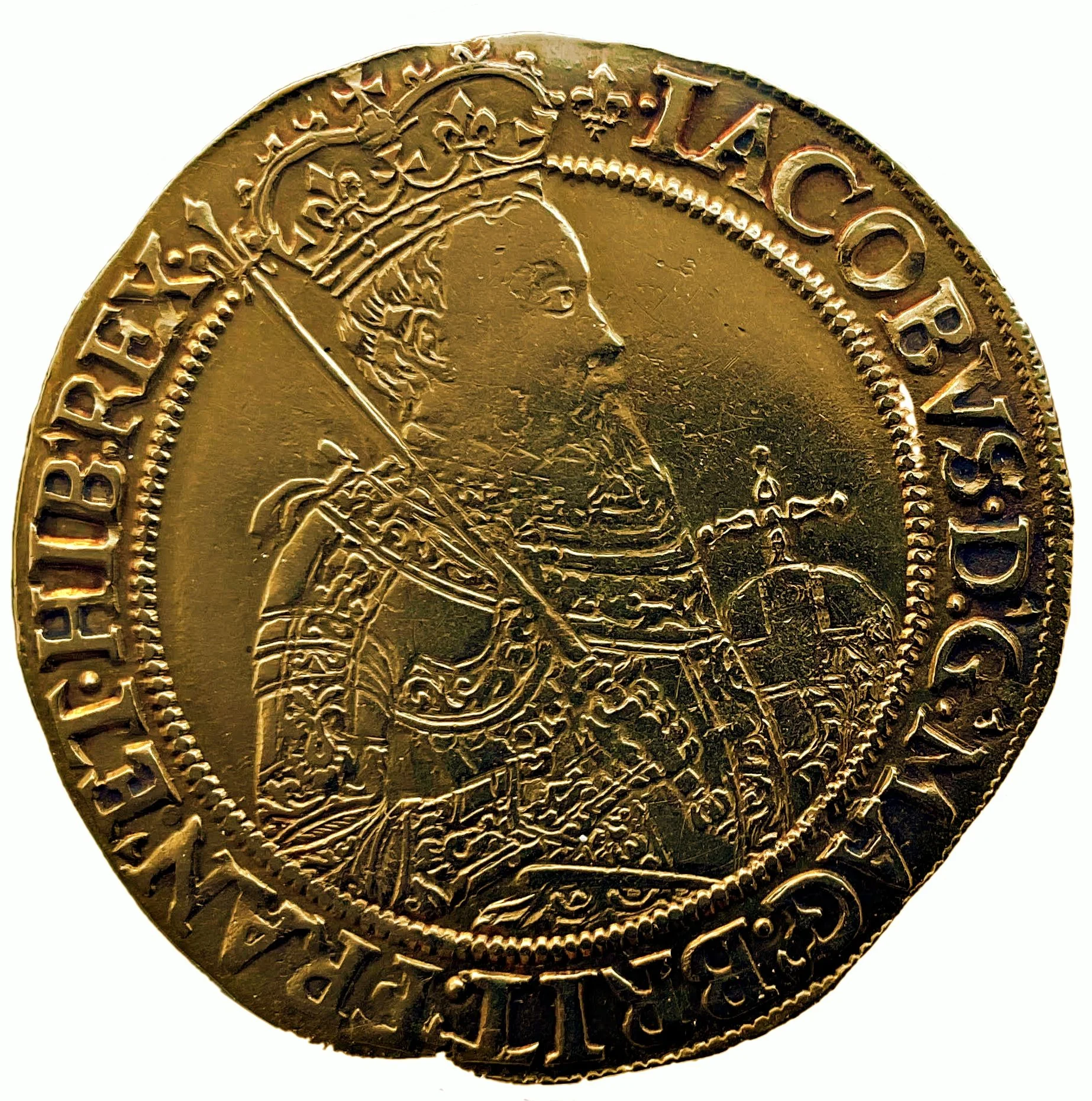
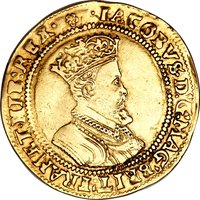
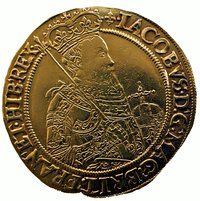
Crowned bust right with orb and sceptre, within beaded circle and legend.
Inscription:
[mm] IACOBVS·MAG·BRIT·FRAN·ET·HIB·REX·
Script: Latin
Reverse
Description:
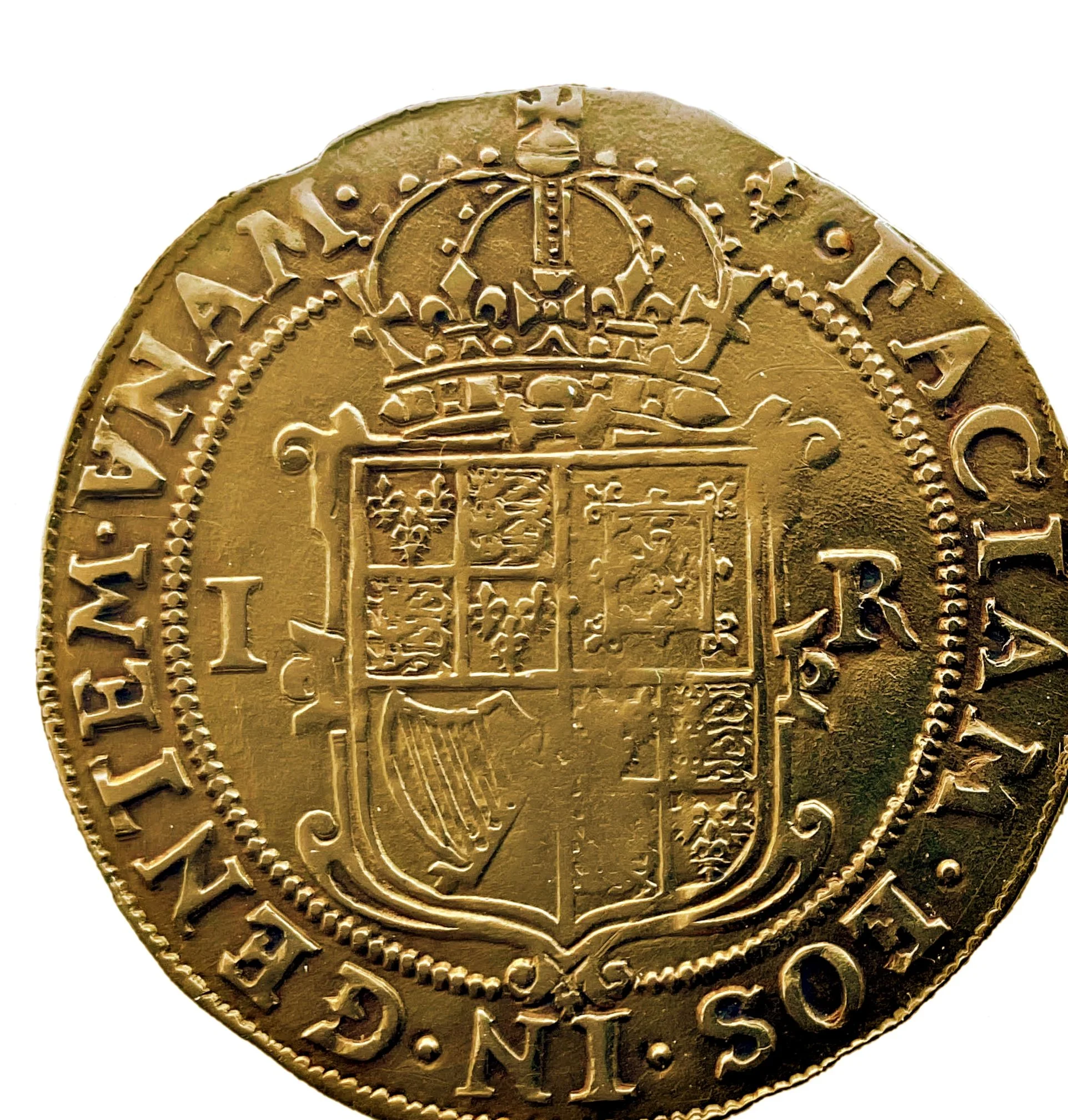
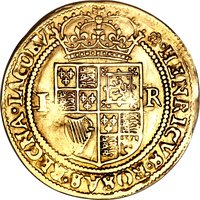
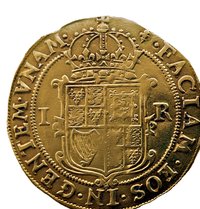
Shield quartered, crowned, with cypher in beaded circle, surrounded by legend.
Inscription:
[mm] FACIAM·EOS·IN·GENTEM·VNAM·
I R
I R
Script: Latin
Edge
Mintings
| Year | Mint Mark | Mintage | Quality | Collection |
|---|---|---|---|---|
| 1607 | — | — | ||
| 1613 | — | — | ||
| — | — | — |
Historical background
In 1605, England operated under a bimetallic system based on silver and gold, with the silver penny as its foundational unit. The most common coins in circulation were the silver shilling (12 pence), the gold sovereign (20 shillings), and the silver crown (5 shillings). However, the currency was under significant strain due to the widespread practice of "clipping" (shaving metal from coin edges) and counterfeiting, which reduced the precious metal content and undermined public trust in the coinage's value. This was exacerbated by the "Great Debasement" under Henry VIII a century earlier, the effects of which still lingered in the mixed-quality coins in circulation.
The reign of James I, who had united the English and Scottish crowns in 1603, brought new monetary challenges and initiatives. A major reform occurred in 1604 with the introduction of a new gold coin, the Unite (valued at 20 shillings), symbolising the union of the two kingdoms. While an attempt to modernise the coinage, this period also saw rising tension between the face value of coins and their intrinsic metal worth, particularly as European bullion markets fluctuated. The government struggled to enforce the legal tender values it proclaimed, leading to complex exchange rates in practice.
For the average person, this instability meant daily transactions could be fraught with suspicion over a coin's weight and authenticity. The economy was still largely agrarian, and many workers were paid in kind or with a mix of goods and coin. For larger ventures, such as the establishment of the Virginia Company in 1606 or the funding of the Crown itself, currency instability complicated taxation, lending, and long-term investment. Thus, in 1605, England's monetary system was in a transitional and somewhat fragile state, caught between medieval practices and the demands of a growing commercial age.
The reign of James I, who had united the English and Scottish crowns in 1603, brought new monetary challenges and initiatives. A major reform occurred in 1604 with the introduction of a new gold coin, the Unite (valued at 20 shillings), symbolising the union of the two kingdoms. While an attempt to modernise the coinage, this period also saw rising tension between the face value of coins and their intrinsic metal worth, particularly as European bullion markets fluctuated. The government struggled to enforce the legal tender values it proclaimed, leading to complex exchange rates in practice.
For the average person, this instability meant daily transactions could be fraught with suspicion over a coin's weight and authenticity. The economy was still largely agrarian, and many workers were paid in kind or with a mix of goods and coin. For larger ventures, such as the establishment of the Virginia Company in 1606 or the funding of the Crown itself, currency instability complicated taxation, lending, and long-term investment. Thus, in 1605, England's monetary system was in a transitional and somewhat fragile state, caught between medieval practices and the demands of a growing commercial age.
Series: 1605 England circulation coins
✨ Legendary