

2 deniers – France
Add to wishlist
France
Context
Material
References
KM: #
Numista: #52457
Obverse
Description:
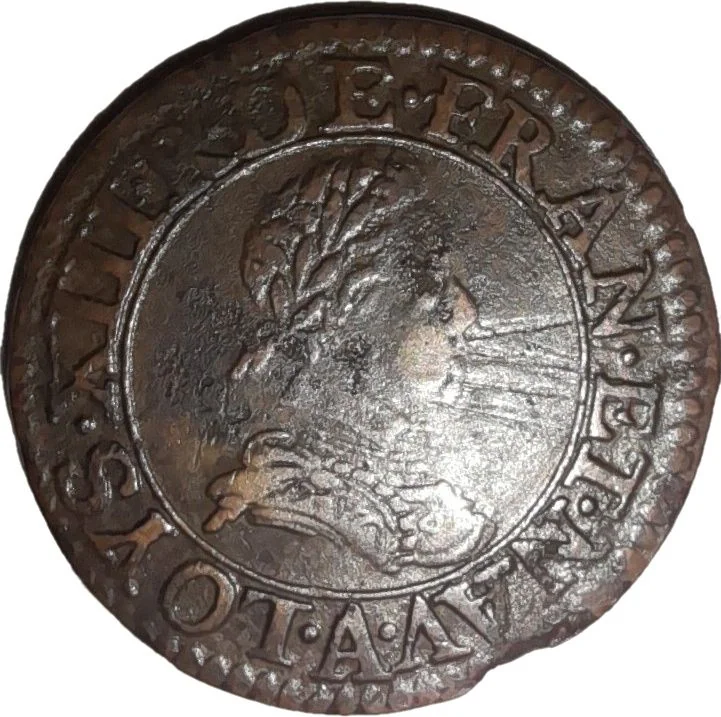
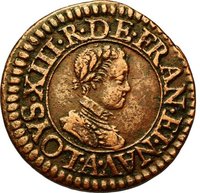
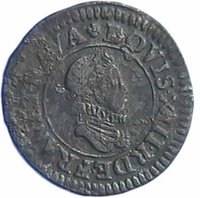
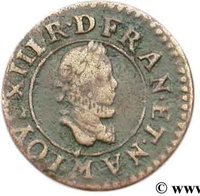
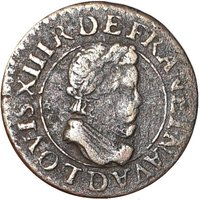
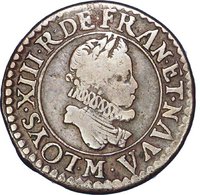
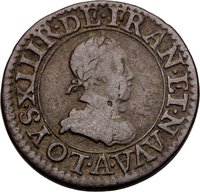
Laureate draped bust of Louis XIII in armor, facing right.
Inscription:
LOYS.XIII.R.DE.FRAN.ET.NAVA.A. (a)
LOYS.XIII.R.DE.FRAN.ET.NAV.A. (b)
LOYS.XIII.R.DE.FRAN.ET.NAV.A. (b)
Script: Latin
Reverse
Description:
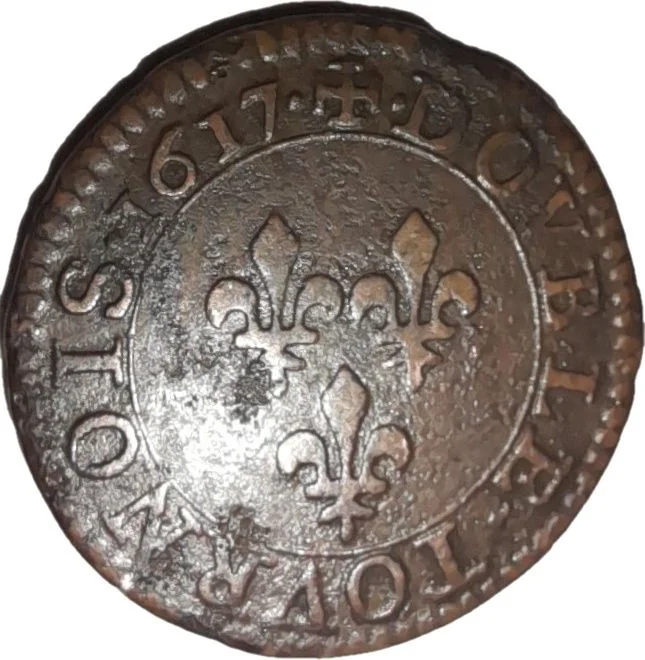
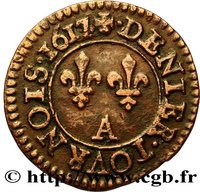
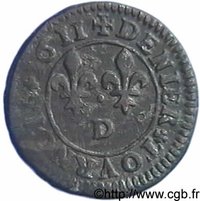
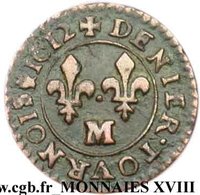
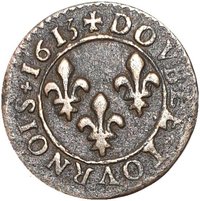
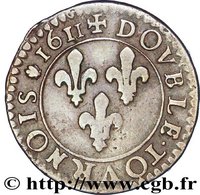
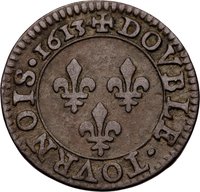
Three lilies arranged two and one.
Inscription:
+.DOVBLE.TOVRNOIS.(millésime). (1)
+ DOVBLE.TOVRNOIS.(millésime). (2)
+ DOVBLE.TOVRNOIS.(millésime) (3)
+.DOVBLE.TOVRNOIS.(millésime) (4)
+ DOVBLE.TOVRNOIS.(millésime). (2)
+ DOVBLE.TOVRNOIS.(millésime) (3)
+.DOVBLE.TOVRNOIS.(millésime) (4)
Script: Latin
Edge
Plain
Mints
| Name | Mark |
|---|---|
| Monnaie de Paris | A |
Mintings
Historical background
In 1611, France was navigating a complex and often chaotic monetary landscape under the reign of King Louis XIII, though effective power lay with his mother, Marie de’ Medici, as regent. The kingdom did not have a single, unified currency. Instead, it operated on a bimetallic system of gold écus and silver livres tournois (the pound of Tours), which was the primary unit of account. However, the actual coins in circulation were a bewildering array of domestic and foreign issues, including Spanish reales, Dutch leeuwendaalders, and various Italian coins, all fluctuating in value based on their metallic weight and the volatile international precious metal markets.
This period was marked by severe currency instability and deliberate royal manipulation. The French monarchy frequently engaged in the practice of augmentation and diminution—officially altering the face value of coins relative to the livre tournois. By 1611, the government of the regency was attempting to stabilize the currency after previous devaluations, but confidence was low. The intrinsic value of a coin (its metal content) and its nominal value (its proclaimed worth) were often drastically different, leading to Gresham’s Law in action: "bad" debased coins drove "good" full-weight coins out of circulation, as people hoarded the latter or used them for foreign trade.
The situation created significant economic strain and social tension. Merchants, peasants, and creditors were all vulnerable to sudden shifts in valuation, which could erode purchasing power or the real value of debts overnight. This monetary confusion hampered commerce, encouraged speculation, and strained the royal treasury, which was perpetually in debt from the wars of the previous century. The currency woes of 1611 were symptomatic of the broader financial weaknesses of the early Bourbon monarchy, setting the stage for the more systematic reforms that would later be demanded by ministers like Cardinal Richelieu.
This period was marked by severe currency instability and deliberate royal manipulation. The French monarchy frequently engaged in the practice of augmentation and diminution—officially altering the face value of coins relative to the livre tournois. By 1611, the government of the regency was attempting to stabilize the currency after previous devaluations, but confidence was low. The intrinsic value of a coin (its metal content) and its nominal value (its proclaimed worth) were often drastically different, leading to Gresham’s Law in action: "bad" debased coins drove "good" full-weight coins out of circulation, as people hoarded the latter or used them for foreign trade.
The situation created significant economic strain and social tension. Merchants, peasants, and creditors were all vulnerable to sudden shifts in valuation, which could erode purchasing power or the real value of debts overnight. This monetary confusion hampered commerce, encouraged speculation, and strained the royal treasury, which was perpetually in debt from the wars of the previous century. The currency woes of 1611 were symptomatic of the broader financial weaknesses of the early Bourbon monarchy, setting the stage for the more systematic reforms that would later be demanded by ministers like Cardinal Richelieu.
Series: 1611 France circulation coins
🌱 Fairly Common