

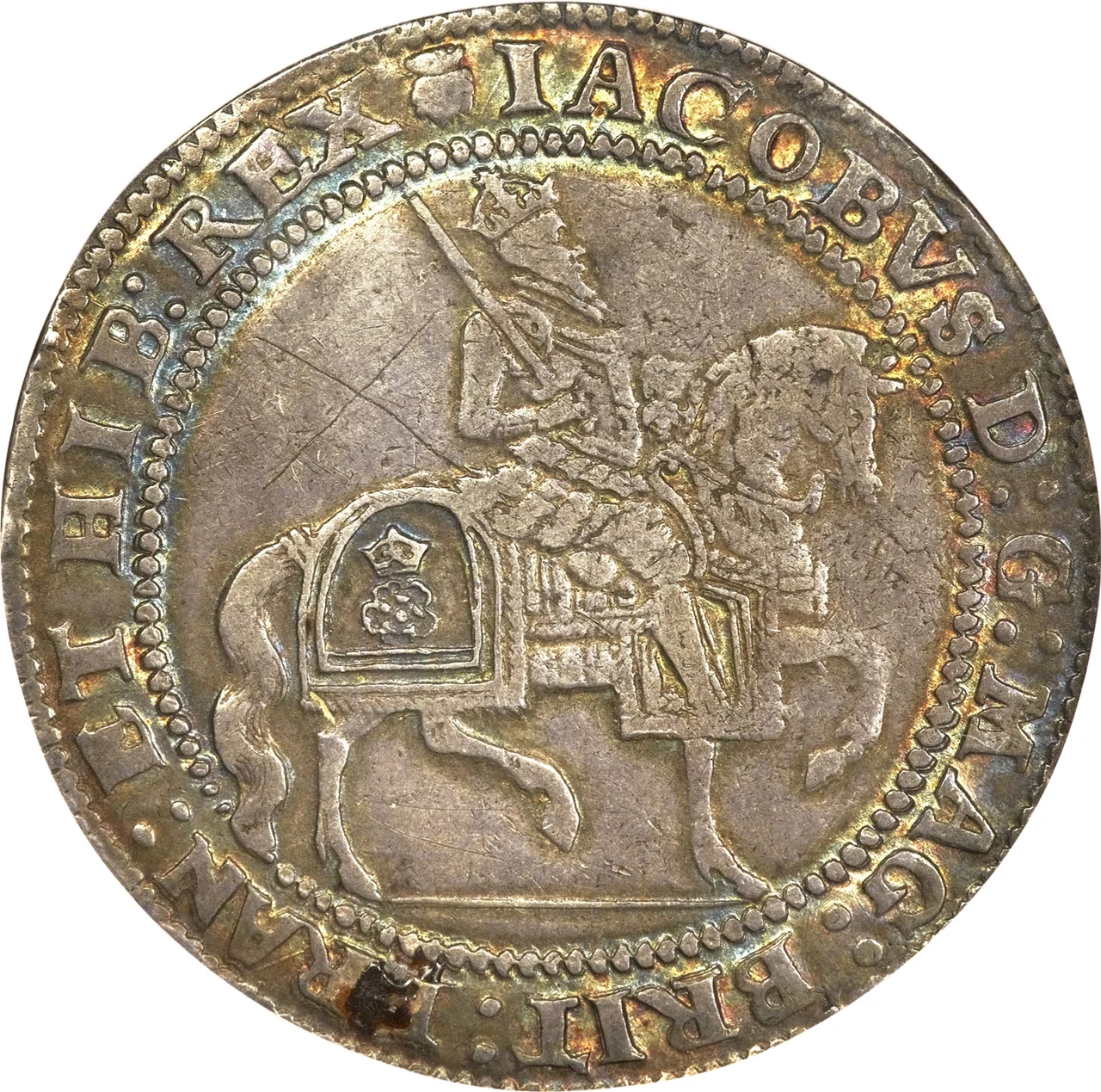
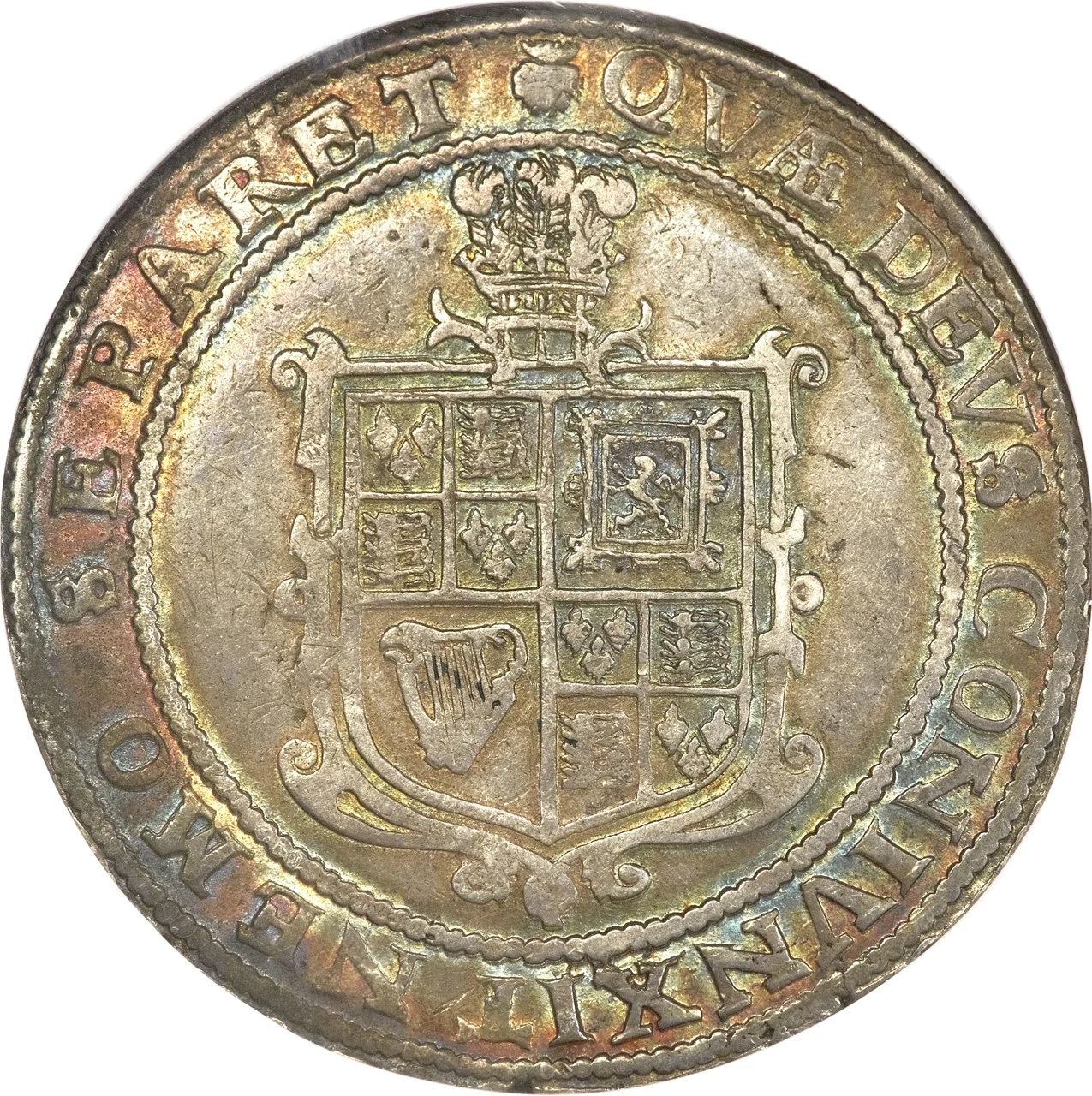
1 Crown – England
United Kingdom
Context
Years: 1621–1624
Country: United Kingdom 
Issuer: England 
Ruler: James I
Currency:
(1158—1970)
Demonetized: Yes
References
KM: #Click to copy to clipboard64
Numista: #52451
Value
Bullion value: $80.39
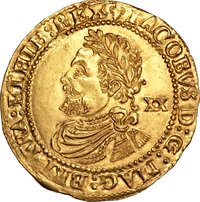
Obverse
Description:
King on horseback, sword raised.
Script: Latin
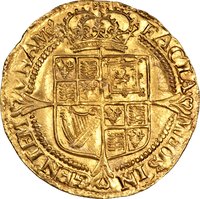
Reverse
Description:
Plume above quartered shield.
Script: Latin
Edge
Mintings
| Year | Mint Mark | Mintage | Quality | Collection |
|---|---|---|---|---|
| — | — | — | ||
| 1624 | — | — |
Historical background
In 1621, England’s currency was in a state of significant crisis, primarily driven by the practice of "clipping" and the export of full-weight silver coin. The English pound sterling was a silver-based currency, but its official mint price was set below the market value of silver bullion in Europe. This discrepancy created a powerful incentive for merchants and money-changers to melt down or export English coins to the Continent for profit, draining the kingdom of its sound money. Consequently, the coinage in circulation became increasingly degraded, consisting of underweight and clipped coins, which eroded public trust in the currency's value and complicated everyday trade.
This monetary instability occurred within a fraught economic and political context. England was experiencing a severe trade depression, and King James I was in persistent conflict with Parliament over royal finances and foreign policy. The "Cockayne Project," a disastrous attempt to monopolize cloth finishing, had collapsed in 1616, damaging a key export. Furthermore, the early stages of the Thirty Years' War disrupted European markets. Parliament, which convened in 1621 for the first time in seven years, viewed the currency decay as both an economic emergency and a symptom of the Crown's mismanagement. They established a committee to investigate the "scarcity of coin," directly linking the monetary crisis to the broader economic woes affecting the nation.
Despite recognizing the problem, a solution proved elusive. Proposals to restore the coinage, such as a call for a recoinage at the Crown's expense, were politically and financially untenable for a crown already deep in debt. Devaluing the currency by officially raising the mint price of silver was considered but rejected for fear it would be seen as a breach of royal promise and further destabilize confidence. Thus, 1621 ended with the issue unresolved, leaving a debased currency in circulation. The fundamental problem would persist for decades until the Great Recoinage of the 1690s under William III finally addressed it comprehensively.
This monetary instability occurred within a fraught economic and political context. England was experiencing a severe trade depression, and King James I was in persistent conflict with Parliament over royal finances and foreign policy. The "Cockayne Project," a disastrous attempt to monopolize cloth finishing, had collapsed in 1616, damaging a key export. Furthermore, the early stages of the Thirty Years' War disrupted European markets. Parliament, which convened in 1621 for the first time in seven years, viewed the currency decay as both an economic emergency and a symptom of the Crown's mismanagement. They established a committee to investigate the "scarcity of coin," directly linking the monetary crisis to the broader economic woes affecting the nation.
Despite recognizing the problem, a solution proved elusive. Proposals to restore the coinage, such as a call for a recoinage at the Crown's expense, were politically and financially untenable for a crown already deep in debt. Devaluing the currency by officially raising the mint price of silver was considered but rejected for fear it would be seen as a breach of royal promise and further destabilize confidence. Thus, 1621 ended with the issue unresolved, leaving a debased currency in circulation. The fundamental problem would persist for decades until the Great Recoinage of the 1690s under William III finally addressed it comprehensively.
✨ Legendary