

1 Laurel – England
United Kingdom
Context
Years: 1623–1624
Country: United Kingdom 
Issuer: England 
Ruler: James I
Currency:
(1158—1970)
Demonetized: Yes
Material
References
KM: #Click to copy to clipboard75
Numista: #52373
Value
Bullion value: $1376.37
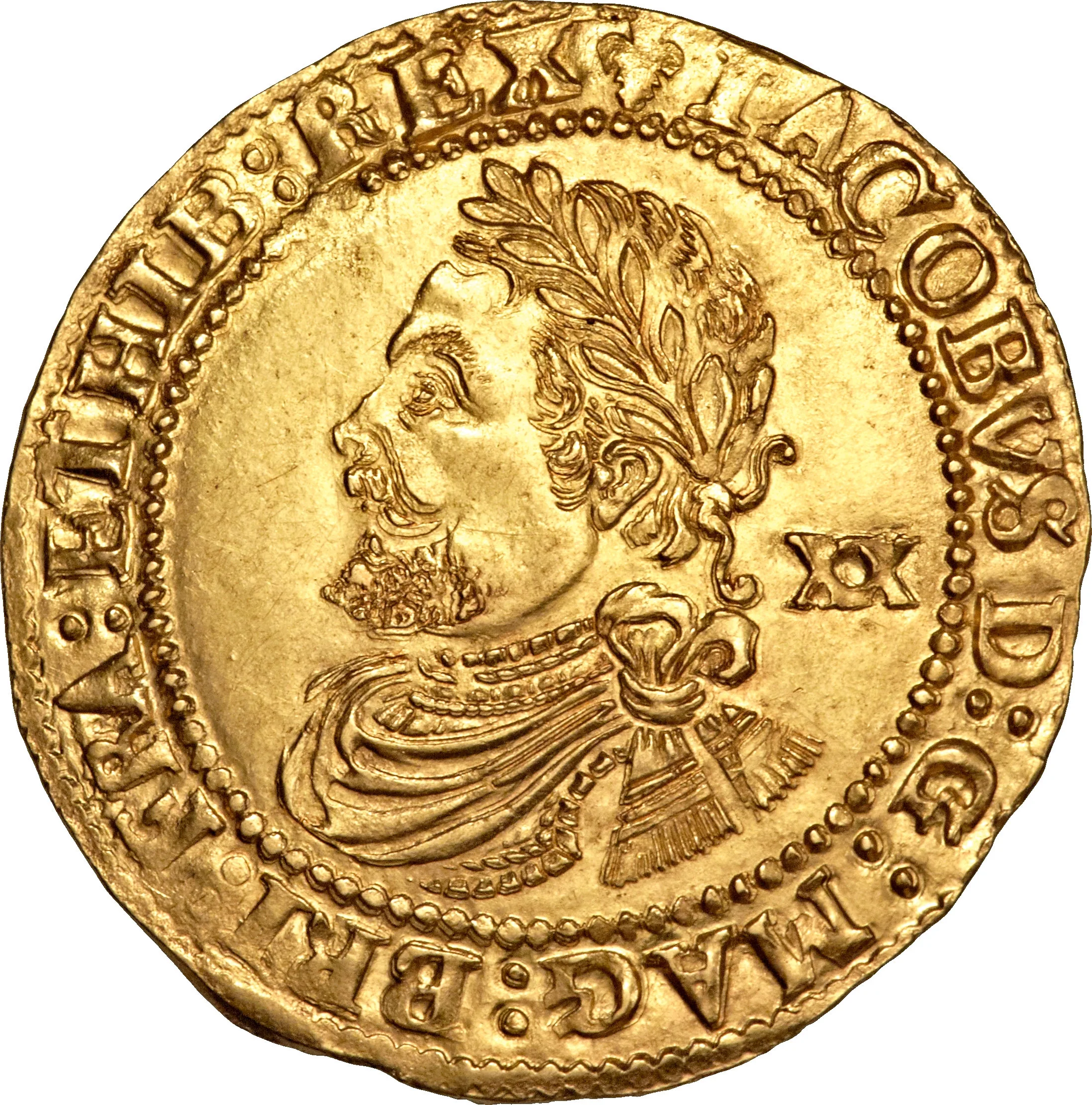
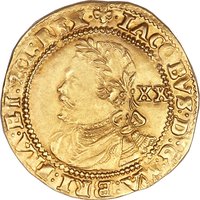
Obverse
Description:
Fourth head: tie ends bracket the value.
Inscription:
IACOBVS D:G:MAG:BRI:FRA:ET HIB:REX
Script: Latin
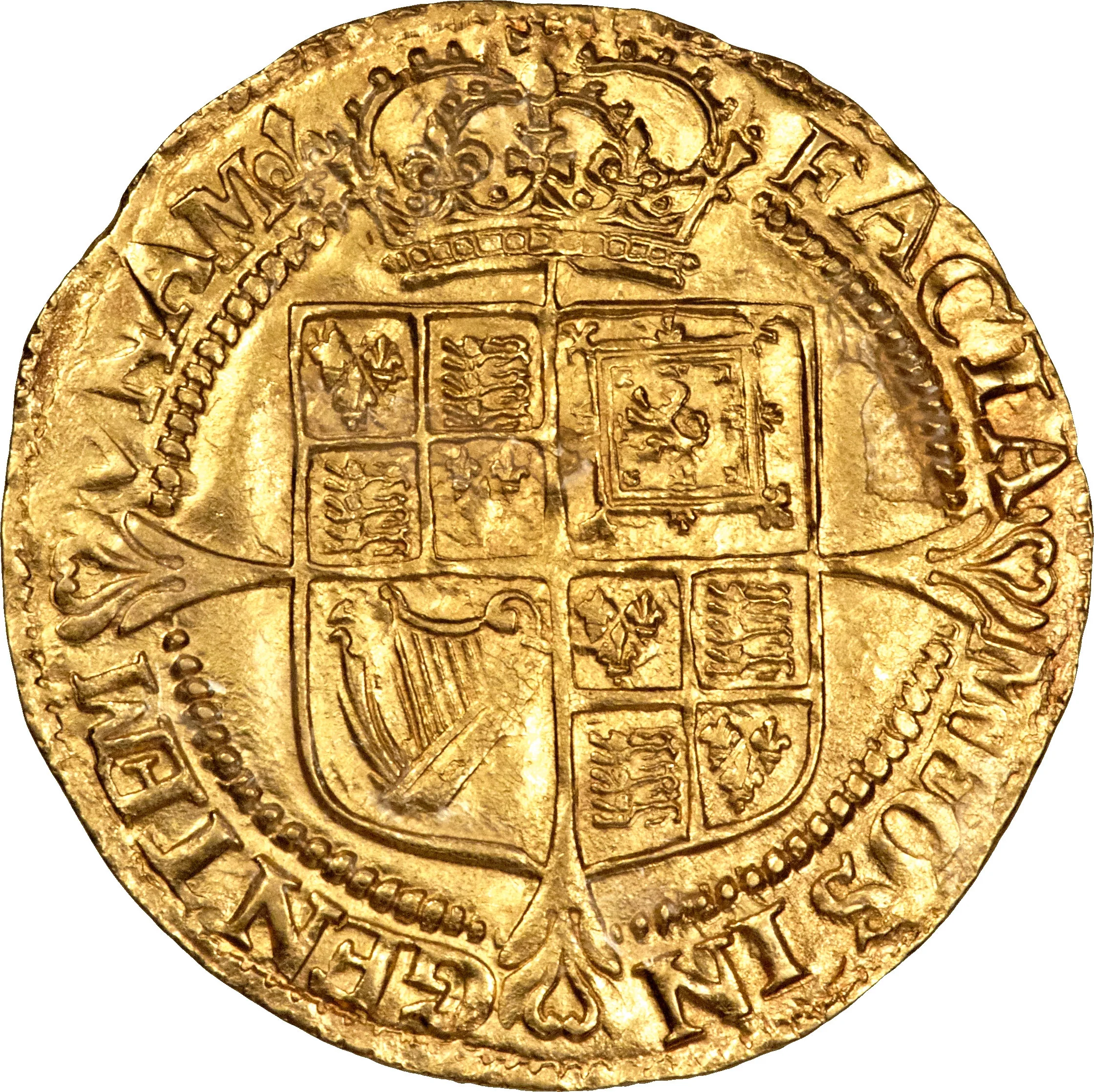
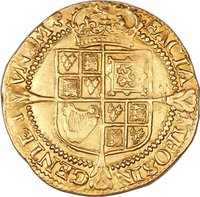
Reverse
Edge
Mintings
| Year | Mint Mark | Mintage | Quality | Collection |
|---|---|---|---|---|
| — | — | — |
Historical background
In 1623, England operated under a bimetallic monetary system, where both silver and gold coins were legal tender, but the kingdom was in the throes of a severe and worsening currency crisis. The core problem was the disparity between the official mint price of silver and its higher market value abroad, particularly in the Netherlands. This encouraged the widespread practice of clipping (shaving metal from coin edges) and, more destructively, the melting down of full-weight English silver coins to sell the bullion overseas for profit. The result was a circulating coinage that was increasingly debased, lightweight, and unreliable, eroding public trust and disrupting trade.
King James I and his officials were acutely aware of the problem, which had been escalating for decades. Previous attempts at a remedy, most notably the failed "Great Recoinage" project proposed by financiers like Lord Treasurer Lionel Cranfield in 1621, had stalled due to political opposition and the immense cost of recalling and reminting the entire silver coinage. By 1623, the situation was dire. The Exchequer was struggling with debt, trade was hampered by the lack of sound money, and the common people bore the brunt through price inflation and the refusal of merchants to accept clipped coins except at a heavy discount.
Consequently, 1623 was a year of urgent deliberation rather than decisive action. The government, under the guidance of the Master of the Mint, Sir Robert Harley, was actively investigating solutions, including the possibility of issuing new milled coins (made with machinery to prevent clipping) and adjusting the legal ratios between gold and silver. However, no major reform was implemented that year. The crisis would persist until finally being addressed by the Great Recoinage of the 1690s under King William III, a project that ultimately required the financial revolution brought about by the founding of the Bank of England to succeed.
King James I and his officials were acutely aware of the problem, which had been escalating for decades. Previous attempts at a remedy, most notably the failed "Great Recoinage" project proposed by financiers like Lord Treasurer Lionel Cranfield in 1621, had stalled due to political opposition and the immense cost of recalling and reminting the entire silver coinage. By 1623, the situation was dire. The Exchequer was struggling with debt, trade was hampered by the lack of sound money, and the common people bore the brunt through price inflation and the refusal of merchants to accept clipped coins except at a heavy discount.
Consequently, 1623 was a year of urgent deliberation rather than decisive action. The government, under the guidance of the Master of the Mint, Sir Robert Harley, was actively investigating solutions, including the possibility of issuing new milled coins (made with machinery to prevent clipping) and adjusting the legal ratios between gold and silver. However, no major reform was implemented that year. The crisis would persist until finally being addressed by the Great Recoinage of the 1690s under King William III, a project that ultimately required the financial revolution brought about by the founding of the Bank of England to succeed.
✨ Legendary