

1 duit – Dutch India
Add to wishlist
India
Context
Material
Diameter: 13 mm
Weight: 3.65 g
Thickness: 2.6 mm
Shape: Irregular round
Composition: Copper
Magnetic: No
References
KM: #
Numista: #52443
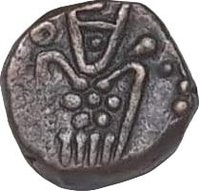
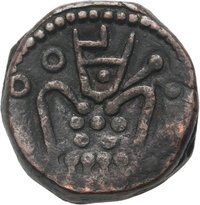
Obverse
Description:
Kali, front view.
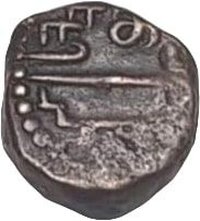
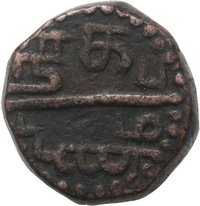
Reverse
Description:
Tamil inscription
Inscription:
Nakapattanam
Edge
Mints
| Name | Mark |
|---|---|
| Negapatnam | N |
Mintings
| Year | Mint Mark | Mintage | Quality | Collection |
|---|---|---|---|---|
| 1695 | — | — |
Historical background
In 1695, the currency situation in Dutch India, administered by the Dutch East India Company (VOC), was characterized by a complex and often chaotic multi-currency system. The VOC's primary hub was the port of Cochin in Malabar, but its economic activities spanned the Coromandel Coast, Surat, and Ceylon. The Company did not impose a single unified currency; instead, its trade relied on a plethora of existing local and imported coins. These included various Indian gold pagodas and silver rupees, Japanese koban, Spanish-American reales of eight, and a limited number of VOC-minted copper duits and silver rijksdaalders. This monetary bazaar was necessary to facilitate the intricate web of intra-Asian trade, where different coins were demanded in different markets for purchasing spices, textiles, and other commodities.
A significant crisis emerged in the mid-1690s due to the widespread circulation of severely debased and counterfeit coins, particularly in the Malabar region. Local Indian rulers, notably the Zamorin of Calicut, were accused by the VOC of systematically issuing silver fanams with drastically reduced precious metal content. This "bad money" flooded the market, driving out the "good money" of full-weight coins (Gresham's Law in practice), causing rampant inflation and crippling the Company's purchasing power. The VOC's own attempts to introduce reliable currency were hampered by the sheer volume of debased coins and the political difficulty of compelling local rulers to cease their minting practices.
Consequently, the VOC authorities in Cochin were engaged in a constant struggle to manage this instability. Their efforts focused on assaying (testing the purity of) coins, setting and adjusting exchange rates between the myriad currencies in their ledgers, and lobbying local powers for monetary reform. The situation underscored a fundamental weakness in the VOC's territorial control in India: while it held fortified trading posts, it lacked the sovereign authority to fully control the monetary system, leaving its lucrative trade vulnerable to the inflationary policies of neighbouring states. This currency chaos of 1695 was a persistent financial headache, eroding profits and complicating every transaction in the Company's Indian operations.
A significant crisis emerged in the mid-1690s due to the widespread circulation of severely debased and counterfeit coins, particularly in the Malabar region. Local Indian rulers, notably the Zamorin of Calicut, were accused by the VOC of systematically issuing silver fanams with drastically reduced precious metal content. This "bad money" flooded the market, driving out the "good money" of full-weight coins (Gresham's Law in practice), causing rampant inflation and crippling the Company's purchasing power. The VOC's own attempts to introduce reliable currency were hampered by the sheer volume of debased coins and the political difficulty of compelling local rulers to cease their minting practices.
Consequently, the VOC authorities in Cochin were engaged in a constant struggle to manage this instability. Their efforts focused on assaying (testing the purity of) coins, setting and adjusting exchange rates between the myriad currencies in their ledgers, and lobbying local powers for monetary reform. The situation underscored a fundamental weakness in the VOC's territorial control in India: while it held fortified trading posts, it lacked the sovereign authority to fully control the monetary system, leaving its lucrative trade vulnerable to the inflationary policies of neighbouring states. This currency chaos of 1695 was a persistent financial headache, eroding profits and complicating every transaction in the Company's Indian operations.

⭐ Somewhat Rare