

6 Pence – England
United Kingdom
Context
Years: 1636–1640
Country: United Kingdom 
Issuer: England 
Ruler: Charles I
Currency:
(1158—1970)
Demonetized: Yes
References
KM: #Click to copy to clipboard96
Numista: #52430
Value
Bullion value: $7.60
Obverse
Description:
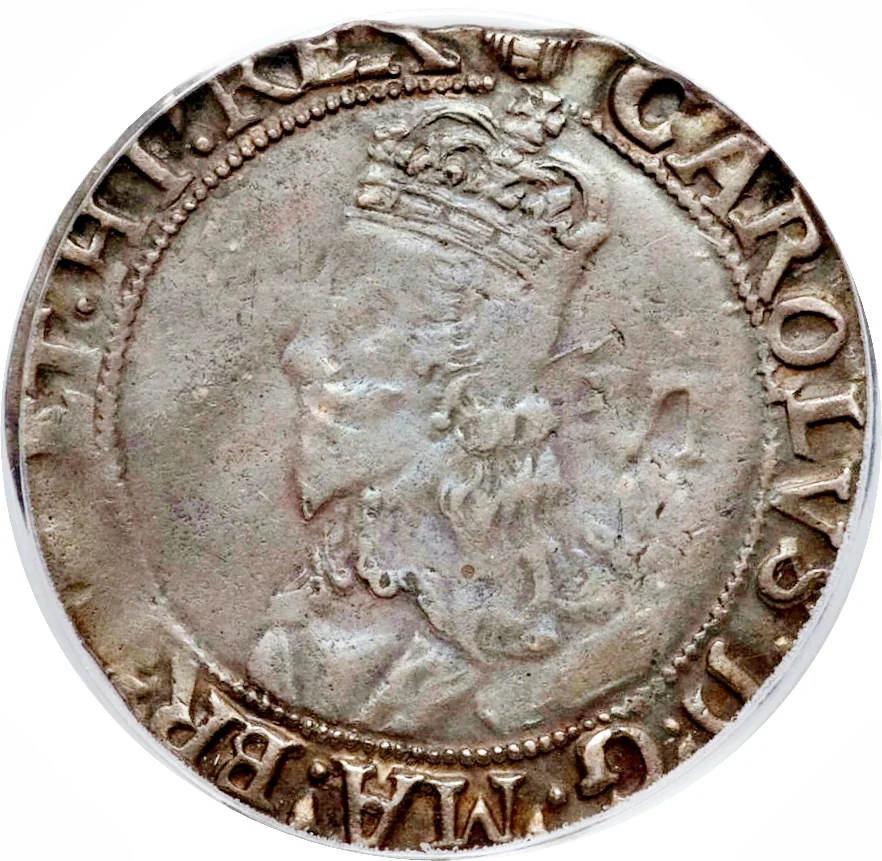
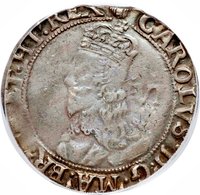
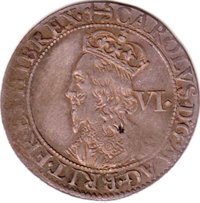
King Charles I crowned bust left, denomination right, legend around. Varieties exist.
Inscription:
CAROLVS'.D'.G'.MA'.BR'.FR'.ET'.HI'.REX·[mint mark]·
VI
VI
Script: Latin
Reverse
Description:
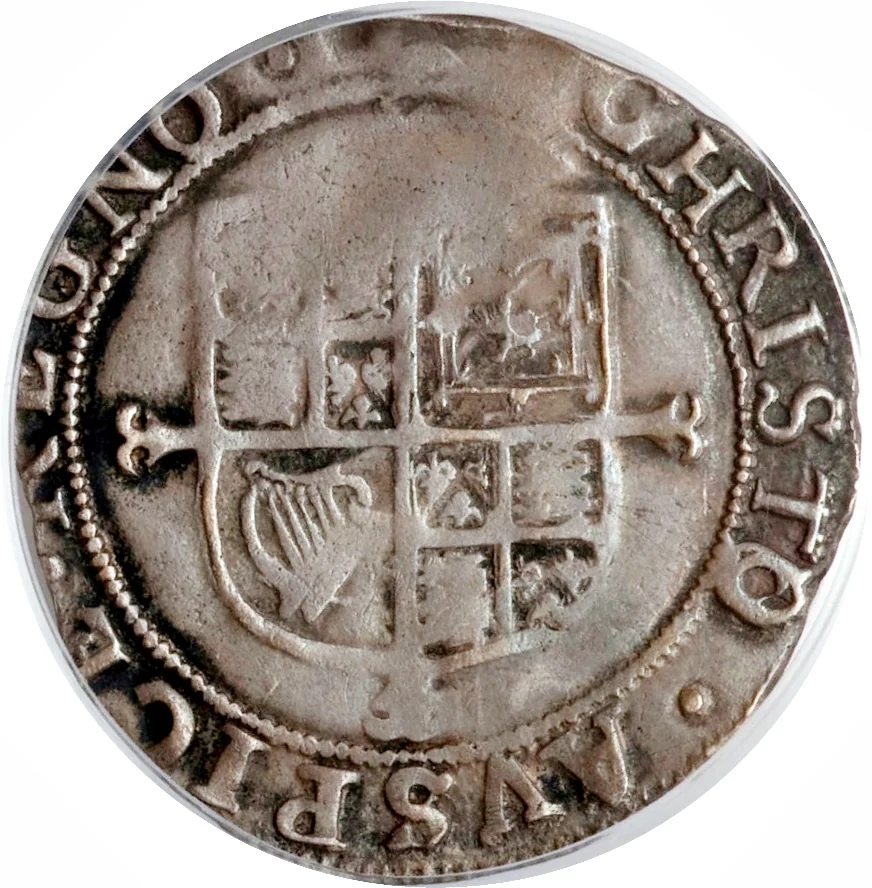
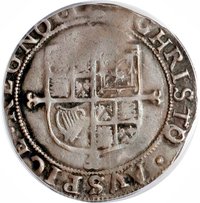
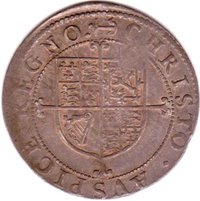
Quartered shield with square top, cross moline at center, encircled by legend. Varieties exist (see below).
Inscription:
CHRISTO · AVSPICE · REGNO · [mint mark] ·
Script: Latin
Edge
Mints
| Name | Mark |
|---|---|
| Royal Mint (Tower of London) | — |
Mintings
| Year | Mint Mark | Mintage | Quality | Collection |
|---|---|---|---|---|
| — | — | — |
Historical background
In 1636, England operated under a bimetallic monetary system, with the pound sterling (£) defined as a unit of account equivalent to one pound weight of sterling silver. The primary circulating coins were the silver penny, shilling (12 pence), and pound (20 shillings), alongside gold coins like the sovereign and unite. However, the system was under significant strain. A key problem was the chronic shortage of small-denomination coinage for everyday transactions, which hampered trade and led to widespread clipping and counterfeiting of worn silver coins, eroding public confidence in the currency's value.
This instability was exacerbated by the monetary policies of King Charles I and his government, which were often driven by fiscal desperation rather than sound economic management. In 1627, the King had seized approximately £130,000 of private gold bullion stored at the Mint for safekeeping, promising repayment but severely damaging trust in the Crown's financial integrity. Furthermore, the government frequently resorted to debasement—reducing the silver content in coins—and manipulating the official exchange rate between gold and silver to generate short-term revenue. This created arbitrage opportunities, causing good-quality, full-weight coins to be hoarded or exported, leaving only the poorest specimens in circulation, a phenomenon known as Gresham's Law.
Consequently, by 1636, England's currency was in a state of practical degradation and confusion, contributing to economic inefficiency and social grievance. The situation reflected the broader tensions between the Crown's autocratic financial expedients and the economic needs of the country, becoming one of many friction points that would culminate in the political conflicts of the 1640s. The lack of reliable specie underscored the need for a major recoinage, a project that would not be successfully undertaken until the 1690s following the financial revolution.
This instability was exacerbated by the monetary policies of King Charles I and his government, which were often driven by fiscal desperation rather than sound economic management. In 1627, the King had seized approximately £130,000 of private gold bullion stored at the Mint for safekeeping, promising repayment but severely damaging trust in the Crown's financial integrity. Furthermore, the government frequently resorted to debasement—reducing the silver content in coins—and manipulating the official exchange rate between gold and silver to generate short-term revenue. This created arbitrage opportunities, causing good-quality, full-weight coins to be hoarded or exported, leaving only the poorest specimens in circulation, a phenomenon known as Gresham's Law.
Consequently, by 1636, England's currency was in a state of practical degradation and confusion, contributing to economic inefficiency and social grievance. The situation reflected the broader tensions between the Crown's autocratic financial expedients and the economic needs of the country, becoming one of many friction points that would culminate in the political conflicts of the 1640s. The lack of reliable specie underscored the need for a major recoinage, a project that would not be successfully undertaken until the 1690s following the financial revolution.
💎 Extremely Rare