

1 Crown – England
United Kingdom
Context
Years: 1632–1633
Country: United Kingdom 
Issuer: England 
Ruler: Charles I
Currency:
(1158—1970)
Demonetized: Yes
References
KM: #Click to copy to clipboard129
Numista: #52423
Obverse
Description:
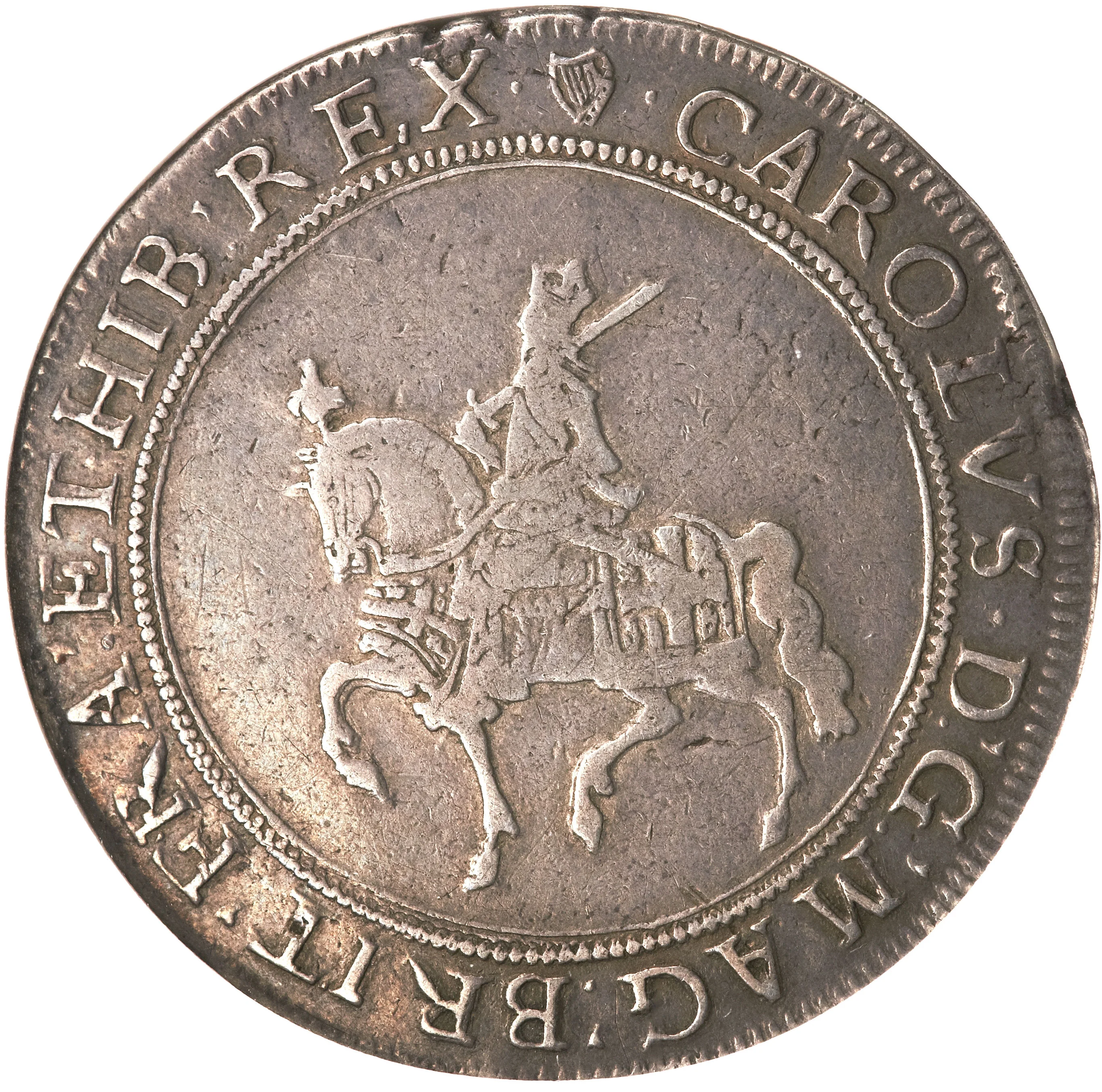
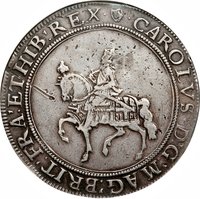
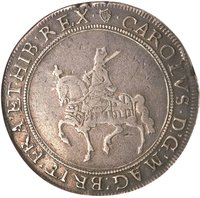
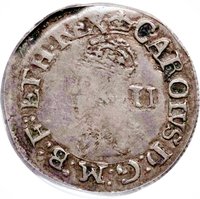
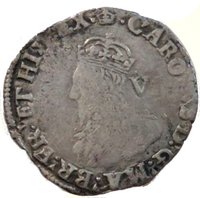
King Charles I on horseback, sword raised.
Script: Latin
Reverse
Description:
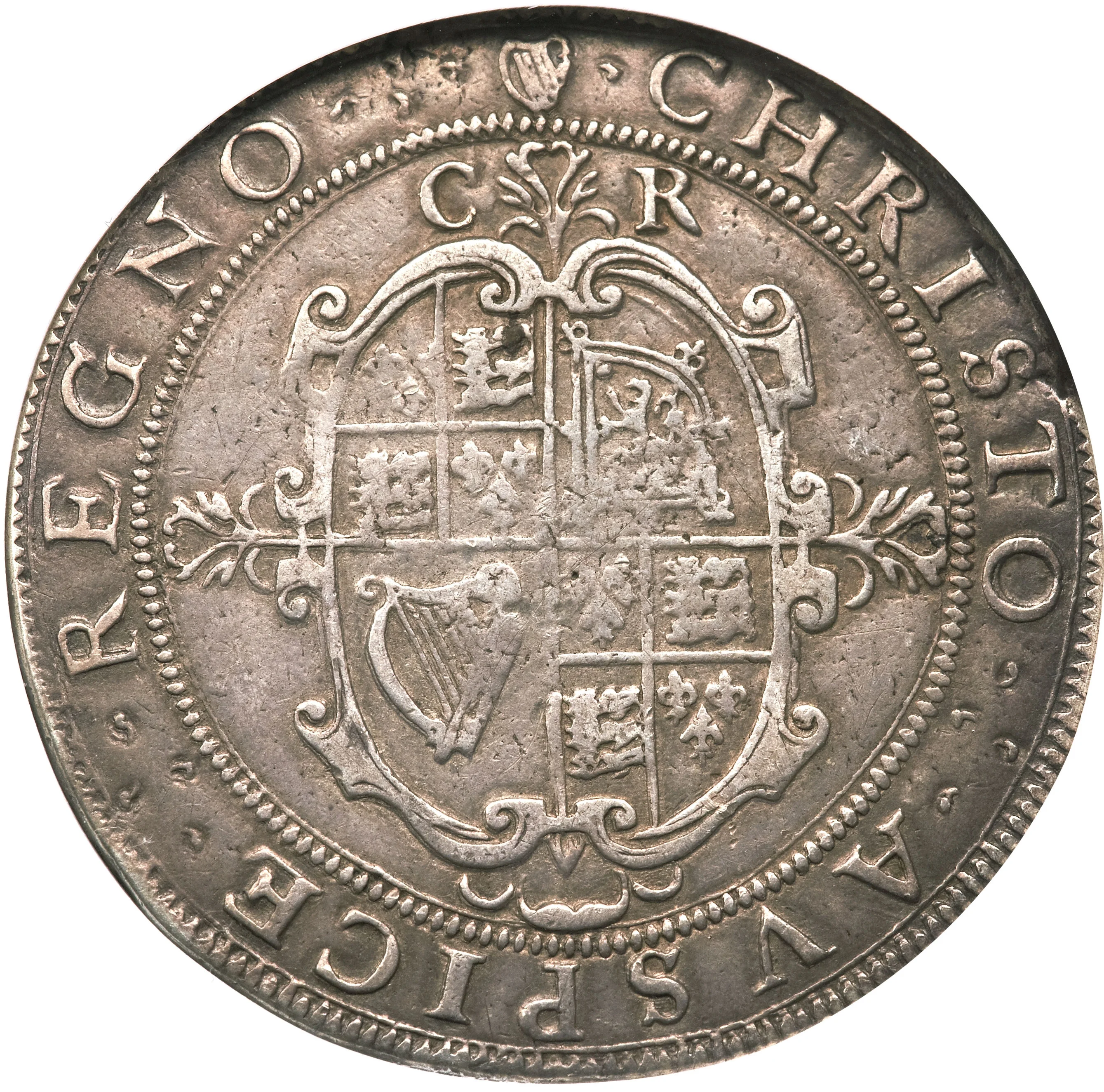
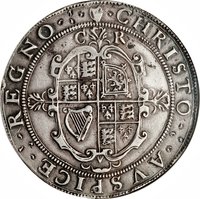
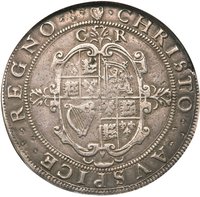
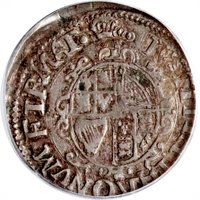
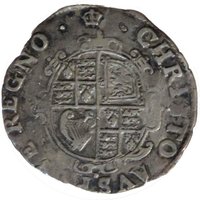
Shield with plume and monogram, cross behind.
Script: Latin
Edge
Mints
| Name | Mark |
|---|---|
| Royal Mint (Tower of London) | — |
Mintings
| Year | Mint Mark | Mintage | Quality | Collection |
|---|---|---|---|---|
| — | — | — |
Historical background
In 1632, England operated under a bimetallic monetary system, with the currency based on the value of both silver and gold. The primary unit was the silver pound sterling, subdivided into 20 shillings or 240 pence. The coinage in circulation was a mixture of hand-hammered coins, including the silver shilling and gold sovereign, and their physical condition was often poor due to clipping and wear, which eroded public confidence in their intrinsic value. This period fell within the "Great Debasement" hangover and preceding the mechanised minting of the Civil War era, meaning the currency was physically crude and vulnerable to manipulation.
King Charles I, ruling without Parliament since 1629, faced persistent financial difficulties. His government relied heavily on controversial extra-parliamentary revenues like Ship Money and monopolies, but the state of the coinage itself was not yet a major political crisis. However, a significant and disruptive event occurred in 1630 when Charles seized approximately £130,000 of private bullion merchants had deposited in the Tower of London for safekeeping, offering repayment from future customs duties. This act, known as the "Seizure of the Mint," severely damaged royal credit and trust in the security of the monetary system, creating a lingering atmosphere of financial uncertainty among merchants and financiers.
Internationally, England's currency was part of a complex European system where the value of precious metals fluctuated. The official mint ratios between gold and silver sometimes failed to match market rates, leading to the export or hoarding of the undervalued metal—a process known as Gresham's Law. While not in a state of acute crisis in 1632, the monetary system was fragile, underpinned by manual production and susceptible to the Crown's fiscal expedients. This underlying instability would later contribute to the economic tensions that fuelled the conflict between Crown and Parliament in the 1640s.
King Charles I, ruling without Parliament since 1629, faced persistent financial difficulties. His government relied heavily on controversial extra-parliamentary revenues like Ship Money and monopolies, but the state of the coinage itself was not yet a major political crisis. However, a significant and disruptive event occurred in 1630 when Charles seized approximately £130,000 of private bullion merchants had deposited in the Tower of London for safekeeping, offering repayment from future customs duties. This act, known as the "Seizure of the Mint," severely damaged royal credit and trust in the security of the monetary system, creating a lingering atmosphere of financial uncertainty among merchants and financiers.
Internationally, England's currency was part of a complex European system where the value of precious metals fluctuated. The official mint ratios between gold and silver sometimes failed to match market rates, leading to the export or hoarding of the undervalued metal—a process known as Gresham's Law. While not in a state of acute crisis in 1632, the monetary system was fragile, underpinned by manual production and susceptible to the Crown's fiscal expedients. This underlying instability would later contribute to the economic tensions that fuelled the conflict between Crown and Parliament in the 1640s.
Series: 1632 England circulation coins
✨ Legendary