

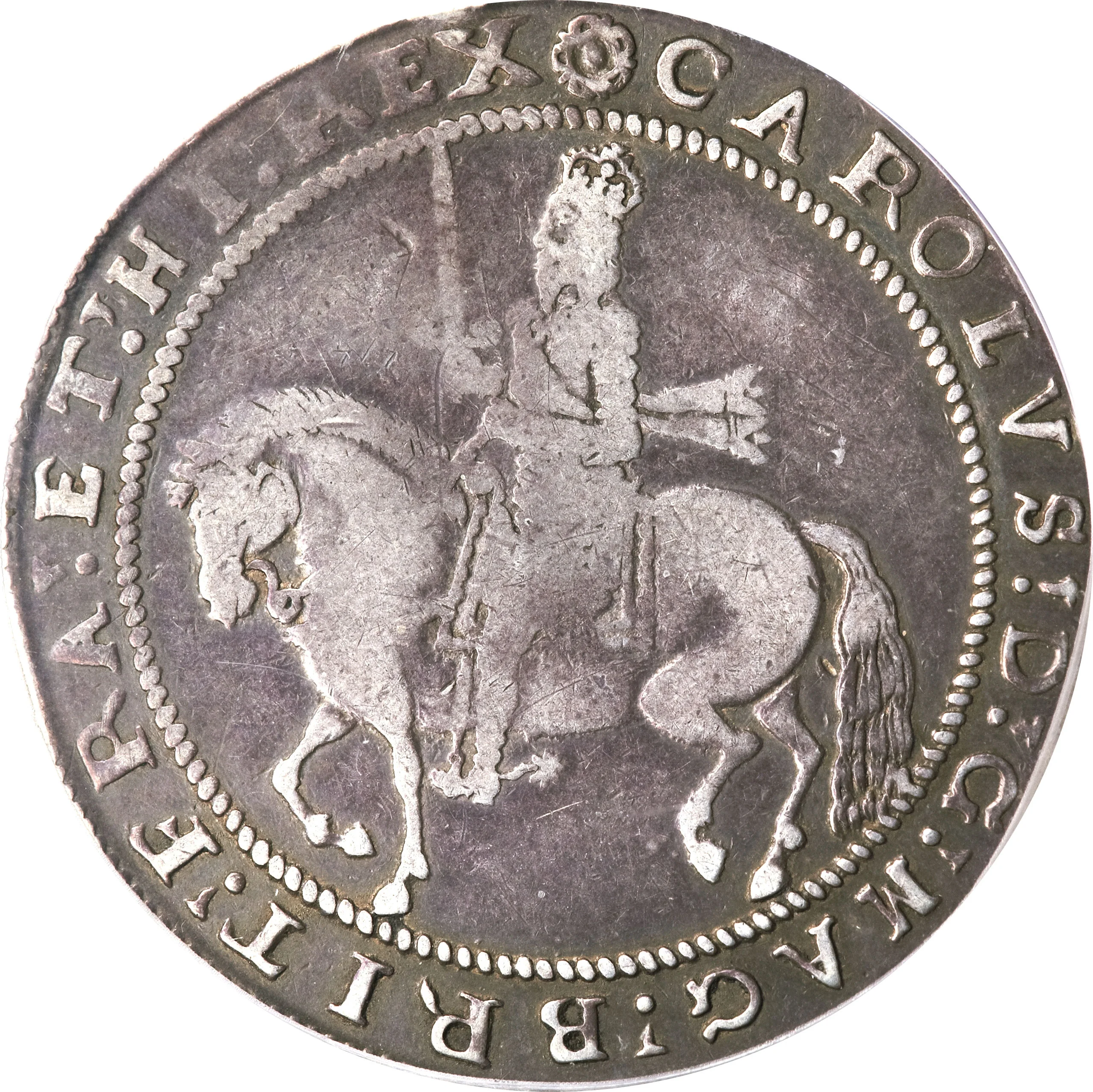
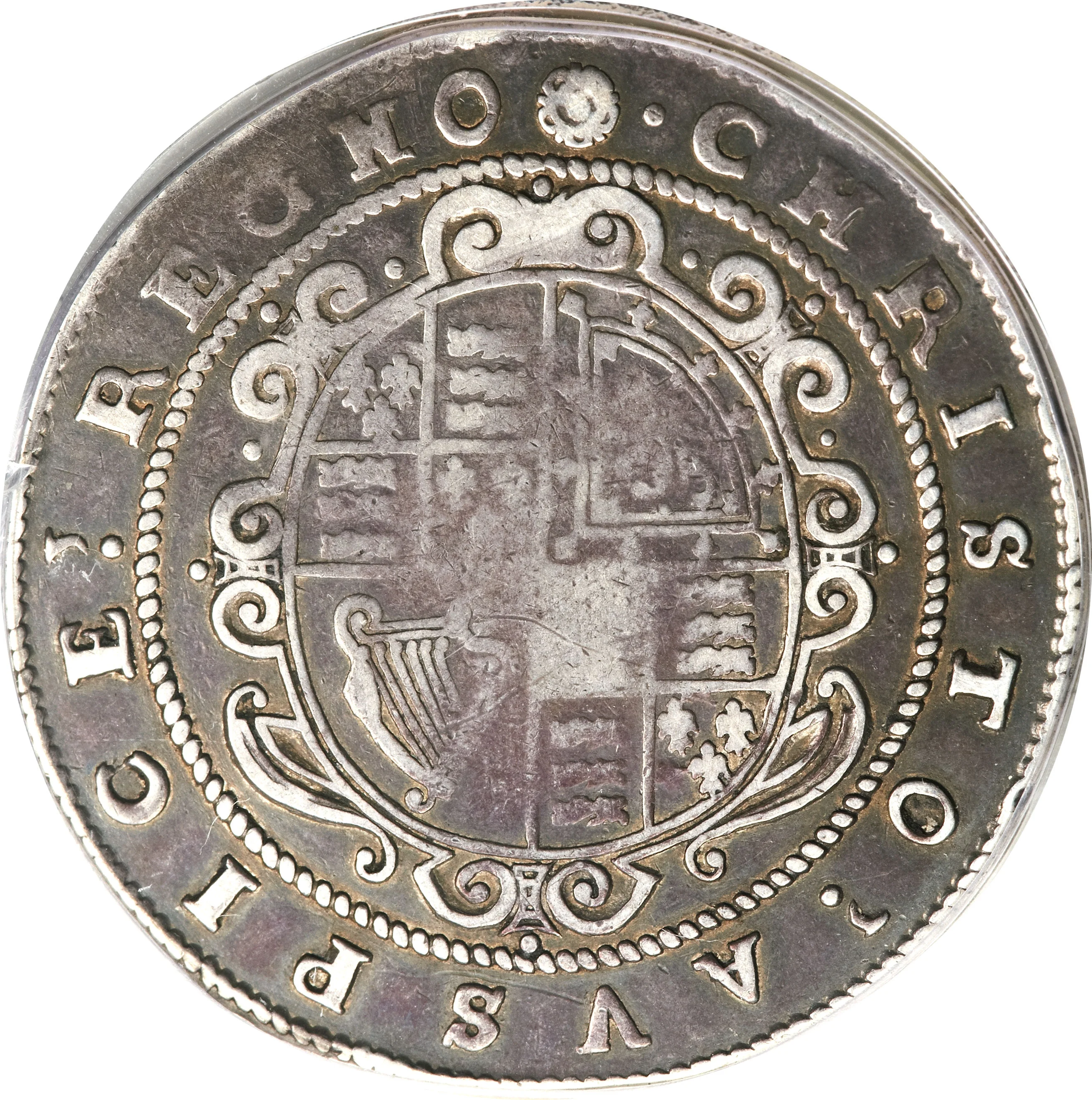
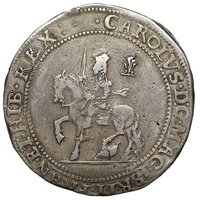
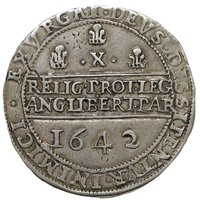
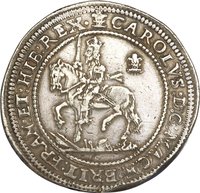
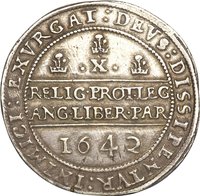
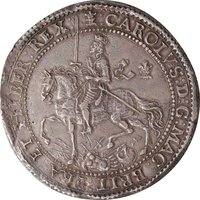
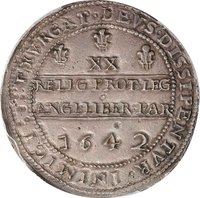
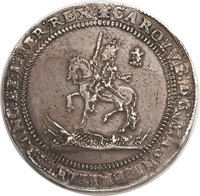
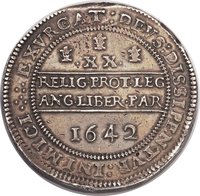
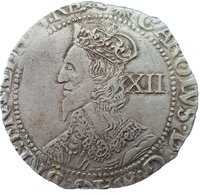
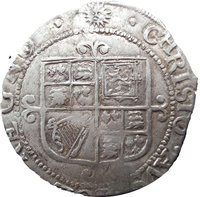
1 Crown – England
United Kingdom
Context
Years: 1642–1643
Country: United Kingdom 
Issuer: England 
Ruler: Charles I
Currency:
(1158—1970)
Demonetized: Yes
References
KM: #Click to copy to clipboard331
Numista: #52422
Mintings
| Year | Mint Mark | Mintage | Quality | Collection |
|---|---|---|---|---|
| — | — | — |
Historical background
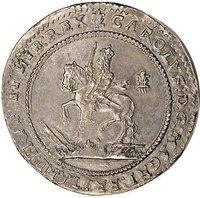
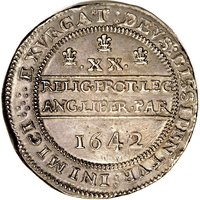
In 1642, England's currency system was in a precarious state, fundamentally reliant on silver coinage that was severely degraded. For decades, the practice of "clipping" (shaving metal from coin edges) and counterfeiting had drastically reduced the silver content and weight of coins in circulation. This was compounded by the government's own actions under the early Stuart kings, who engaged in "debasement" by issuing coins with lower precious metal content to generate short-term revenue. Consequently, the face value of coins exceeded their intrinsic bullion value, leading to Gresham's Law in action: "good" unclipped coins were hoarded or melted down for export, while "bad" light coins flooded the market, crippling trade and causing inflation as merchants demanded more coins for goods.
The political crisis between King Charles I and Parliament directly exacerbated the monetary turmoil. In 1640, the King's seizure of the London mint's bullion reserves (the "London Treasure") and his later repudiation of debts had shattered financial confidence. As the nation moved toward civil war in 1642, the machinery of state that might have reformed the coinage—the Tower Mint in London—fell under Parliamentary control, while the King established his own mints in provincial towns like Shrewsbury and Oxford. This territorial split prevented any unified monetary policy and led to competing issues of coinage, further confusing the economy and undermining trust in the currency as a stable store of value.
The deteriorating coinage had profound social and economic effects. It disrupted everyday commerce, harmed creditors who were repaid in debased coin, and created widespread uncertainty. While both sides in the conflict recognized the problem, the immediate demands of financing their armies took precedence over long-term reform. Parliament and the King both resorted to expedients like requisitioning plate from civilians to mint new coins and issuing promises of future payment. Thus, in 1642, the currency crisis was both a symptom of the broader collapse of royal authority and a contributing factor to the economic distress that fueled the escalating conflict, with a comprehensive recoinage having to wait until the 1690s after the political settlement.
The political crisis between King Charles I and Parliament directly exacerbated the monetary turmoil. In 1640, the King's seizure of the London mint's bullion reserves (the "London Treasure") and his later repudiation of debts had shattered financial confidence. As the nation moved toward civil war in 1642, the machinery of state that might have reformed the coinage—the Tower Mint in London—fell under Parliamentary control, while the King established his own mints in provincial towns like Shrewsbury and Oxford. This territorial split prevented any unified monetary policy and led to competing issues of coinage, further confusing the economy and undermining trust in the currency as a stable store of value.
The deteriorating coinage had profound social and economic effects. It disrupted everyday commerce, harmed creditors who were repaid in debased coin, and created widespread uncertainty. While both sides in the conflict recognized the problem, the immediate demands of financing their armies took precedence over long-term reform. Parliament and the King both resorted to expedients like requisitioning plate from civilians to mint new coins and issuing promises of future payment. Thus, in 1642, the currency crisis was both a symptom of the broader collapse of royal authority and a contributing factor to the economic distress that fueled the escalating conflict, with a comprehensive recoinage having to wait until the 1690s after the political settlement.
Series: 1642 England circulation coins
✨ Legendary