

1 Unite – England
United Kingdom
Context
Years: 1625–1630
Country: United Kingdom 
Issuer: England 
Ruler: Charles I
Currency:
(1158—1970)
Demonetized: Yes
Material
References
KM: #Click to copy to clipboard151
Numista: #52368
Value
Bullion value: $1376.03
Obverse
Description:
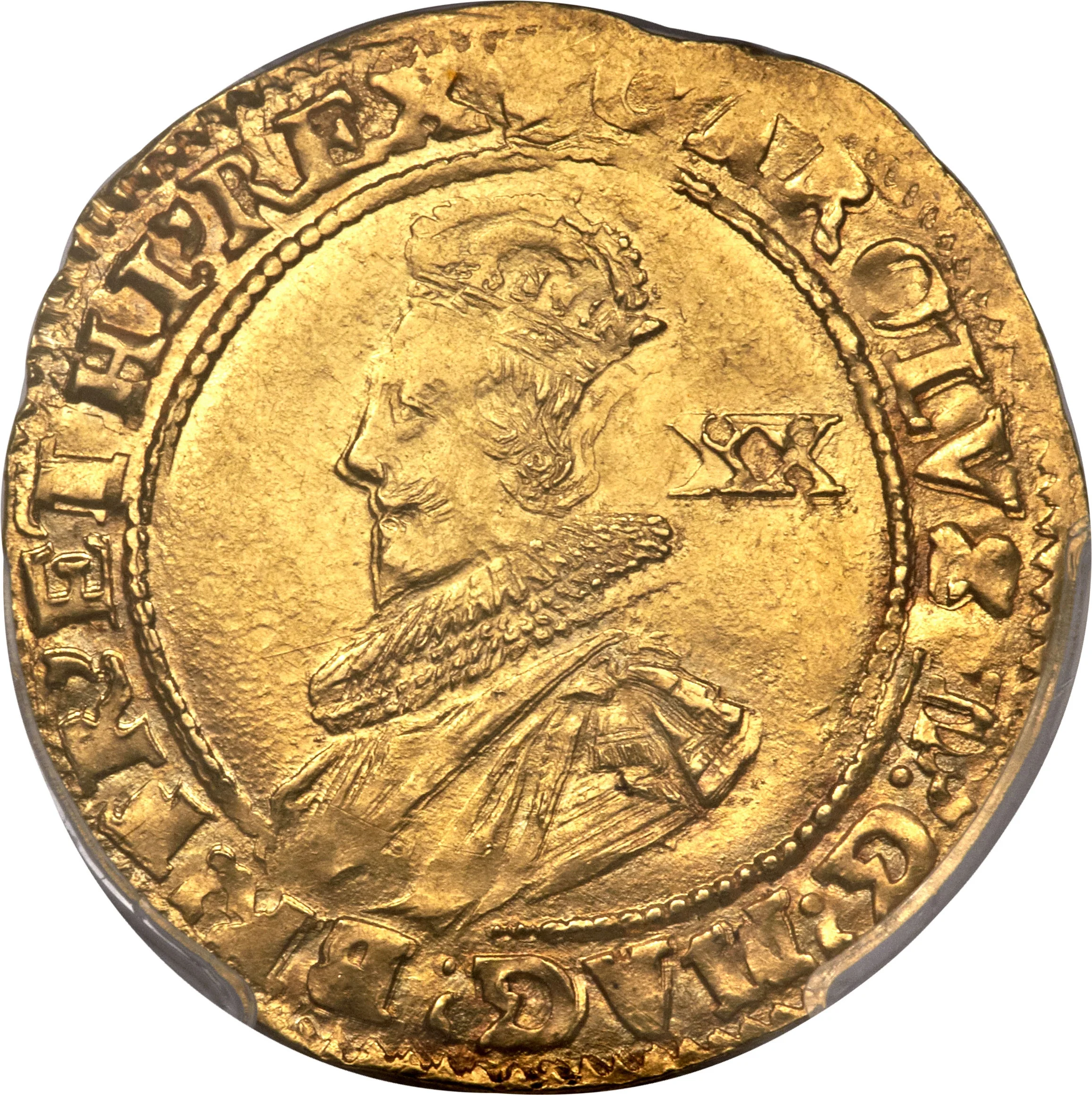
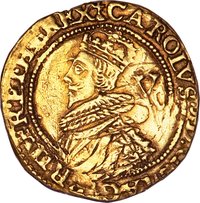
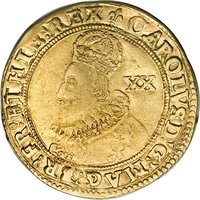
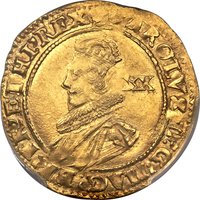
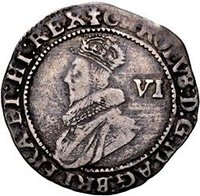
King Charles I crowned left, in ruff and armor, with denomination behind.
Inscription:
· CAROLVS D : G : MAG : BR : FR : ET HI : REX ·
XX
XX
Script: Latin
Reverse
Description:
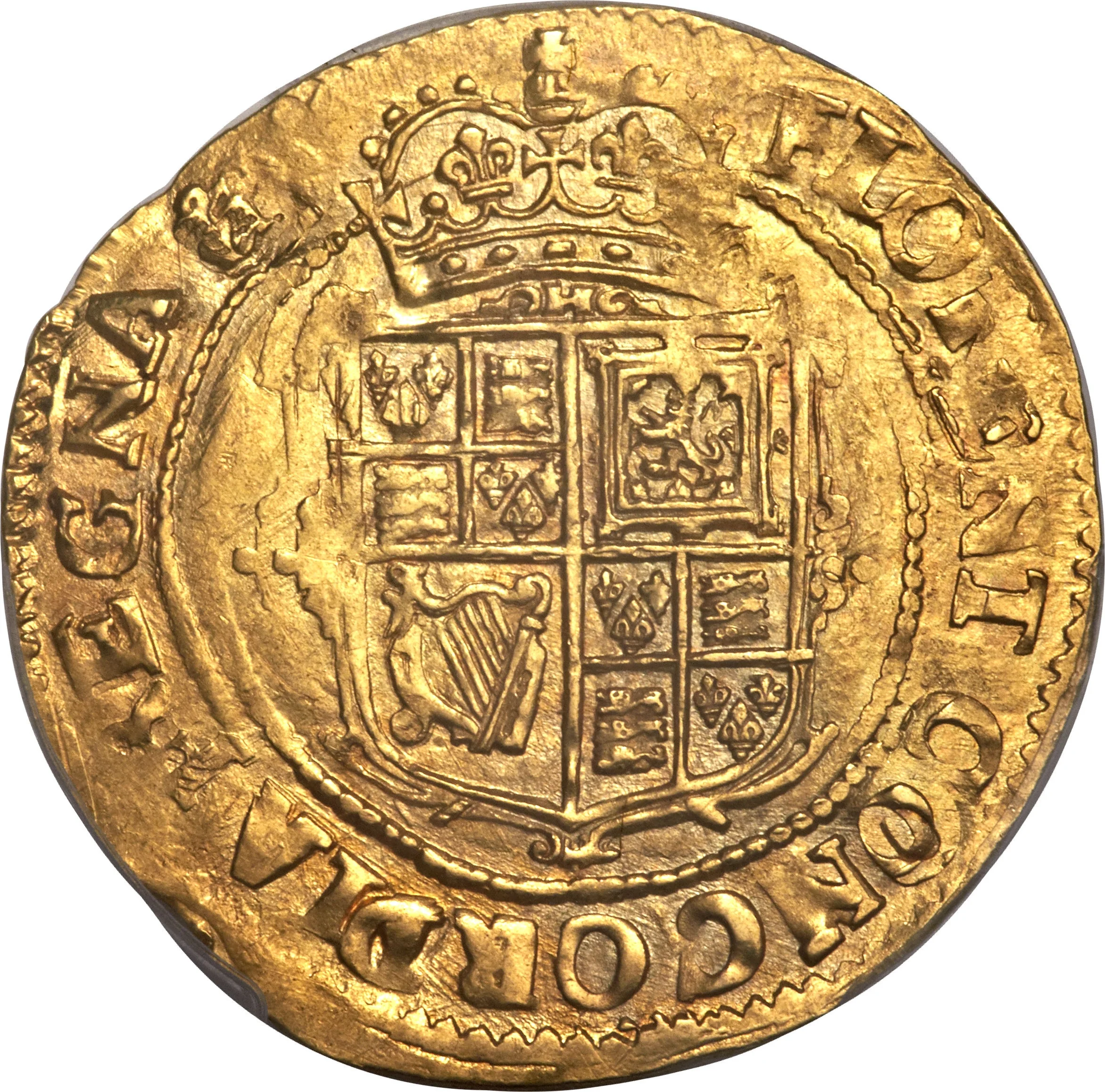
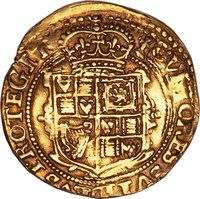
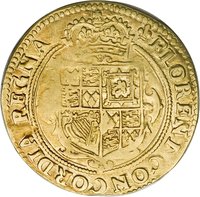
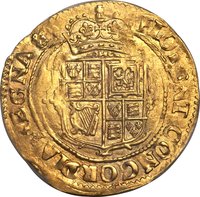
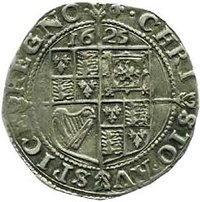
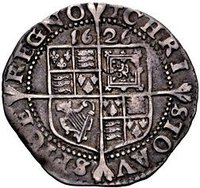
Quartered shield with crown, encircled by legend.
Inscription:
FLORENT CONCORDIA REGNA
Script: Latin
Edge
Mints
| Name | Mark |
|---|---|
| Royal Mint (Tower of London) | — |
Mintings
| Year | Mint Mark | Mintage | Quality | Collection |
|---|---|---|---|---|
| — | — | — |
Historical background
In 1625, England’s currency was fundamentally based on a bimetallic system of silver and gold coins, most famously the silver penny, shilling, and pound sterling, and the gold sovereign. However, the reign of James I (1603-1625) had left a precarious monetary situation. A critical problem was the physical degradation of the coinage due to decades of "clipping" (shaving metal from coin edges) and counterfeiting, which reduced the actual silver content in circulation. More damagingly, the official mint price for silver was set below the market value in Europe, leading to the widespread melting down and export of full-weight English silver coins. This left the domestic economy with a circulating medium that was both physically diminished and in short supply of high-value coin, undermining trade and confidence.
This "bad money" crisis was exacerbated by the fiscal policies of the Crown. England operated on a system where the monarch was expected to "live of his own" from customary revenues, with Parliament granting additional taxes for extraordinary needs. James I had left the treasury deeply in debt, and his son, Charles I, who ascended the throne in March 1625, inherited these financial strains. Charles’s urgent need for funds to pursue war with Spain, and soon France, placed immense strain on a monetary system already under stress. His attempts to raise revenue without Parliament—through forced loans, the sale of monopolies, and other contentious measures—created political friction but did not directly address the structural flaws in the coinage itself.
Consequently, the currency situation in 1625 was one of underlying fragility masked by immediate political crisis. The economy suffered from a shortage of sound coin, which hampered commercial transactions. While a full-scale recoinage was not undertaken until the 1690s, the deteriorating quality of money was a persistent background concern throughout the early Stuart period. Thus, as Charles I embarked on his reign, he faced a dual challenge: a contentious fiscal battle with Parliament over royal income and a deteriorating physical currency that weakened the very economy from which that income was derived.
This "bad money" crisis was exacerbated by the fiscal policies of the Crown. England operated on a system where the monarch was expected to "live of his own" from customary revenues, with Parliament granting additional taxes for extraordinary needs. James I had left the treasury deeply in debt, and his son, Charles I, who ascended the throne in March 1625, inherited these financial strains. Charles’s urgent need for funds to pursue war with Spain, and soon France, placed immense strain on a monetary system already under stress. His attempts to raise revenue without Parliament—through forced loans, the sale of monopolies, and other contentious measures—created political friction but did not directly address the structural flaws in the coinage itself.
Consequently, the currency situation in 1625 was one of underlying fragility masked by immediate political crisis. The economy suffered from a shortage of sound coin, which hampered commercial transactions. While a full-scale recoinage was not undertaken until the 1690s, the deteriorating quality of money was a persistent background concern throughout the early Stuart period. Thus, as Charles I embarked on his reign, he faced a dual challenge: a contentious fiscal battle with Parliament over royal income and a deteriorating physical currency that weakened the very economy from which that income was derived.
Series: 1625 England circulation coins

✨ Legendary