

2 deniers – France
Add to wishlist
France
Context
Material
References
KM: #
Numista: #52139
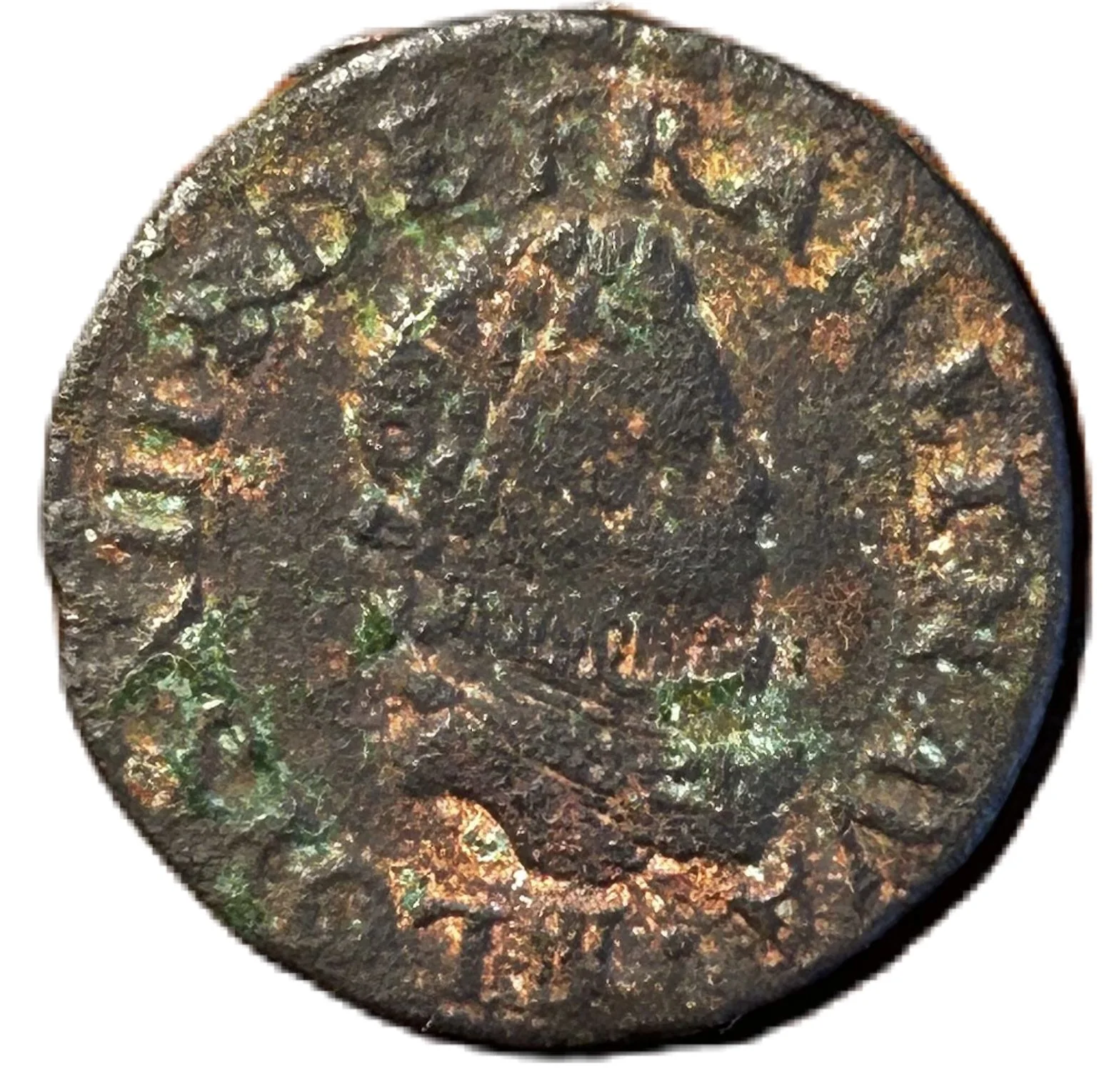
Obverse
Description:
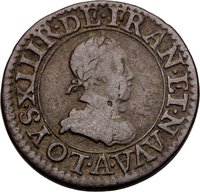
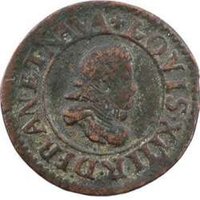
Bust right.
Inscription:
LOYS.XIII.D G FRAN.ET.NAVAR.R.& (a)
LOYS.XIII.D.G.FRAN.ET.NAVA.REX & (b)
LOYS.XIII.D.G.FRAN.ET NAVA.R.& (c)
LOYS.XIII.R.D.G.FRAN.ET.NAVA.R.& (d)
LOYS.XIII.R.DE.FRAN.ET.NAVA.& (e)
LOYS.XIII.R.D.FRAN.E.NAV.& (f)
LOYS.XIII.R.D.FRAN.ET.NAVA.& (g)
LOYS.XIII.D.G.FRAN.ET.NAVA.REX & (b)
LOYS.XIII.D.G.FRAN.ET NAVA.R.& (c)
LOYS.XIII.R.D.G.FRAN.ET.NAVA.R.& (d)
LOYS.XIII.R.DE.FRAN.ET.NAVA.& (e)
LOYS.XIII.R.D.FRAN.E.NAV.& (f)
LOYS.XIII.R.D.FRAN.ET.NAVA.& (g)
Script: Latin
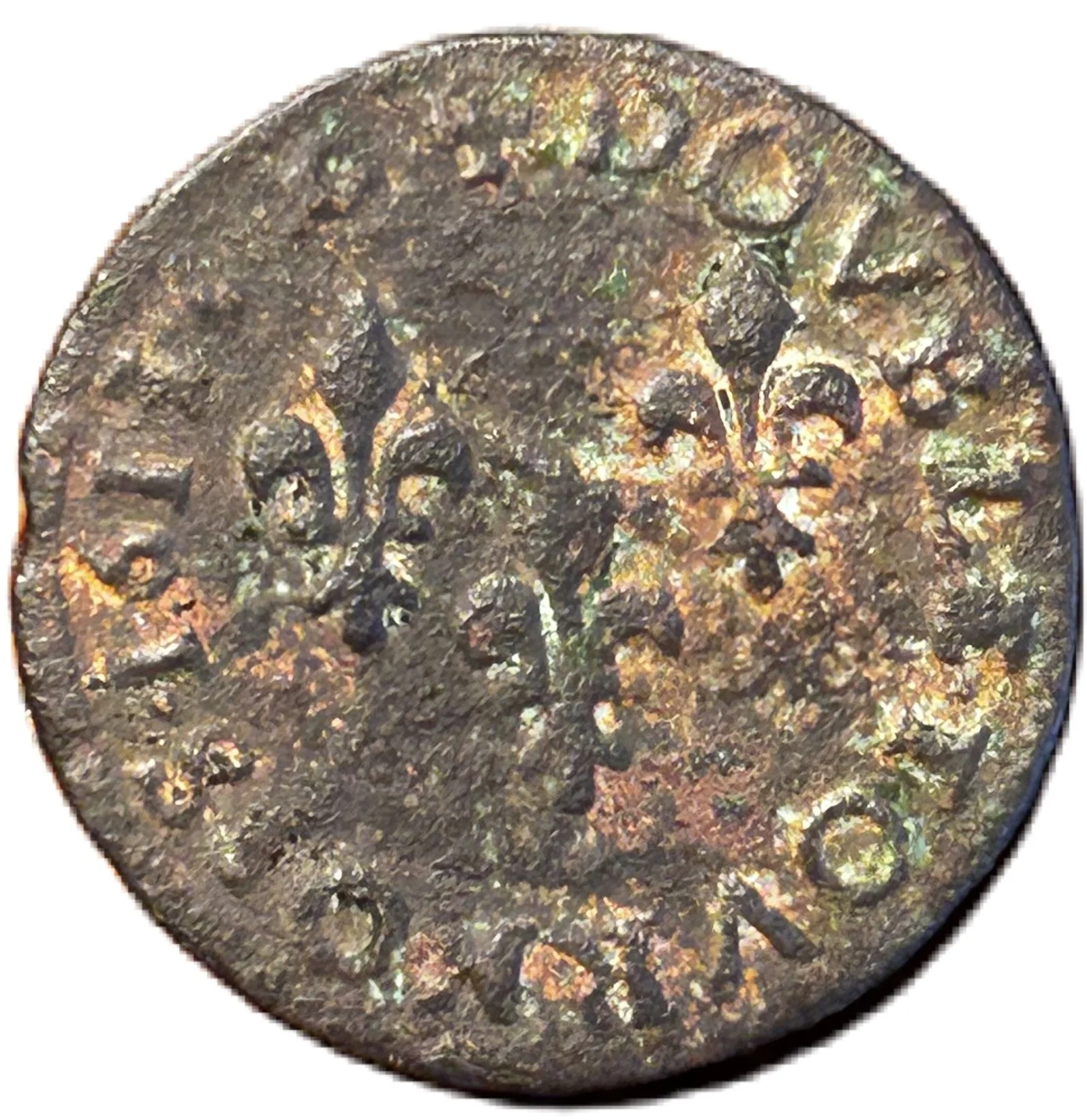
Reverse
Description:
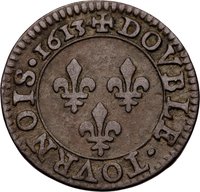
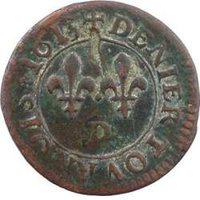
Three lilies.
Inscription:
+ DOVBLE.TOVRNOIS.(millésime).(différent).x. (1)
Script: Latin
Edge
Plain
Mints
| Name | Mark |
|---|---|
| Aix-en-Provence | & |
Historical background
In 1612, France was navigating a complex and often chaotic currency landscape under the regency of Marie de' Medici, ruling on behalf of her young son, Louis XIII. The kingdom lacked a single, unified monetary system, operating instead with a bewildering array of coins. These included French-minted écus, livres, and sous, but also a multitude of foreign coins from Spain, Italy, and the German states that circulated freely due to international trade. The value of these coins was not fixed by face value but by their official tariff—a government-set worth in livres tournois (the accounting unit)—which was frequently adjusted, causing public confusion and market instability.
The core problem was the chronic manipulation of coinage by the crown to address fiscal shortfalls. The government regularly engaged in practices like augmentation (raising the official tariff of coins) and diminution (lowering it), effectively creating artificial devaluations. More damaging was the physical debasement of coins, reducing their precious metal content to mint more currency from existing reserves. This led to Gresham's Law in action: "bad" debased coins drove "good" full-weight coins out of circulation, as people hoarded the latter or exported them. The result was a loss of confidence in currency as a stable store of value, price inflation, and disruption to commerce and credit.
These monetary disorders were symptomatic of deeper issues: a weak central financial administration, constant budgetary pressure from royal debt, and the economic strain of funding France's geopolitical ambitions. While efforts at reform were discussed, substantive change would not come until the more forceful ministries of Cardinal Richelieu in the 1630s and the sweeping reforms of Louis XIV's minister, Jean-Baptiste Colbert, later in the century. Thus, in 1612, France's currency remained a tool of short-term fiscal expediency rather than a pillar of a robust national economy.
The core problem was the chronic manipulation of coinage by the crown to address fiscal shortfalls. The government regularly engaged in practices like augmentation (raising the official tariff of coins) and diminution (lowering it), effectively creating artificial devaluations. More damaging was the physical debasement of coins, reducing their precious metal content to mint more currency from existing reserves. This led to Gresham's Law in action: "bad" debased coins drove "good" full-weight coins out of circulation, as people hoarded the latter or exported them. The result was a loss of confidence in currency as a stable store of value, price inflation, and disruption to commerce and credit.
These monetary disorders were symptomatic of deeper issues: a weak central financial administration, constant budgetary pressure from royal debt, and the economic strain of funding France's geopolitical ambitions. While efforts at reform were discussed, substantive change would not come until the more forceful ministries of Cardinal Richelieu in the 1630s and the sweeping reforms of Louis XIV's minister, Jean-Baptiste Colbert, later in the century. Thus, in 1612, France's currency remained a tool of short-term fiscal expediency rather than a pillar of a robust national economy.
💎 Very Rare