

½ larin – Maldives
Add to wishlist
Maldives
Context
Year: 1780
Islamic (Hijri) Year:: 1194
Issuer: Maldives
Ruler: Hassan Nooraddeen I
Currency:
(1660—1947)
Demonetized: Yes
Material
References
KM: #
Numista: #117857
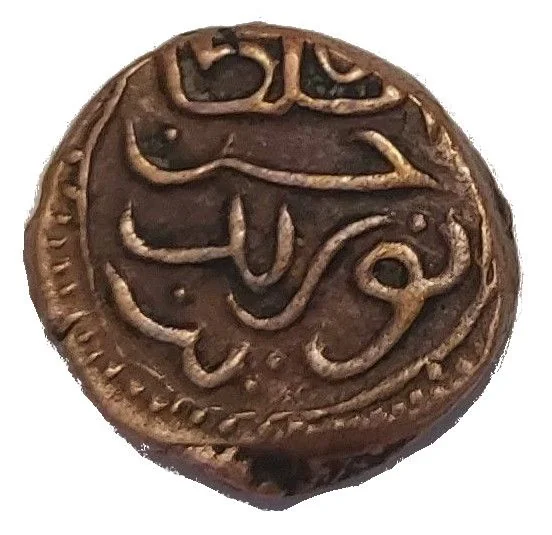
Obverse
Description:
Sultan's title
Inscription:
السلطان
حسن
نور الدين
حسن
نور الدين
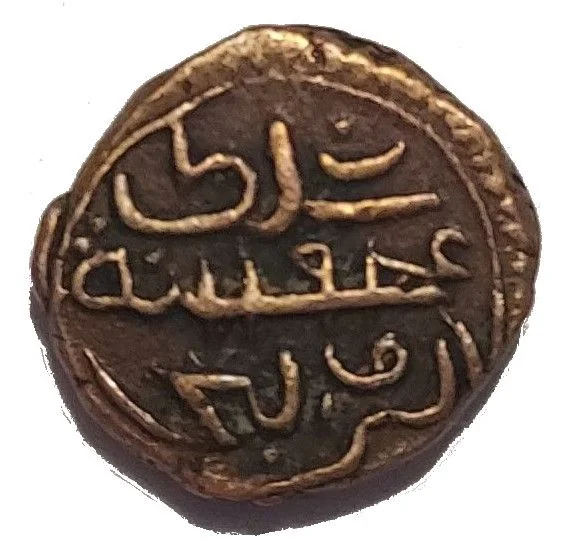
Reverse
Description:
Inscription and date; line over date.
Inscription:
١١٩٧
Edge
Plain
Mintings
| Year | Mint Mark | Mintage | Quality | Collection |
|---|---|---|---|---|
| 1780 | — | — |
Historical background
In 1780, the Maldives operated under a complex and fragmented monetary system, heavily influenced by its position as a key trading hub in the Indian Ocean. The primary medium of exchange was the Larín, a silver wire currency often bent into a hook or "fishhook" shape, which had been in regional use for centuries. However, the archipelago's economy was not dominated by a single, state-issued coinage. Instead, a multitude of foreign silver coins circulated freely, reflecting the islands' connections to wider trade networks. These included Dutch rixdollars, Spanish pieces of eight (reales), and various Indian rupees, all valued by their intrinsic silver weight rather than a fixed exchange rate.
This reliance on foreign specie was a symptom of the Maldives' limited natural resources and its economic model, which was based on the export of cowrie shells, dried fish (Maldive fish), coconut rope (coir), and ambergris. These commodities were traded for essential imports like rice, textiles, and metals, with transactions often settled in the aforementioned foreign silver. The Sultanate in Malé had little capacity to mint its own high-value coinage, though it did produce low-denomination laari (copper coins) for local small-scale trade. The state's revenue came largely from customs duties on imports and taxes on exports, collected in whatever sound currency was available.
Consequently, the monetary situation was one of practical adaptation but inherent vulnerability. The value and supply of money were subject to the ebb and flow of regional trade and the quality of coins presented, leading to potential instability. While the system functioned for daily commerce, it left the Maldivian economy exposed to external shifts in bullion flows and the debasement of foreign currencies, with the central authority having limited tools to manage its currency in a modern sense. The economy remained pre-modern, monetized yet without a unified national currency.
This reliance on foreign specie was a symptom of the Maldives' limited natural resources and its economic model, which was based on the export of cowrie shells, dried fish (Maldive fish), coconut rope (coir), and ambergris. These commodities were traded for essential imports like rice, textiles, and metals, with transactions often settled in the aforementioned foreign silver. The Sultanate in Malé had little capacity to mint its own high-value coinage, though it did produce low-denomination laari (copper coins) for local small-scale trade. The state's revenue came largely from customs duties on imports and taxes on exports, collected in whatever sound currency was available.
Consequently, the monetary situation was one of practical adaptation but inherent vulnerability. The value and supply of money were subject to the ebb and flow of regional trade and the quality of coins presented, leading to potential instability. While the system functioned for daily commerce, it left the Maldivian economy exposed to external shifts in bullion flows and the debasement of foreign currencies, with the central authority having limited tools to manage its currency in a modern sense. The economy remained pre-modern, monetized yet without a unified national currency.

💎 Extremely Rare