

2 lariat – Maldives
Add to wishlist
Maldives
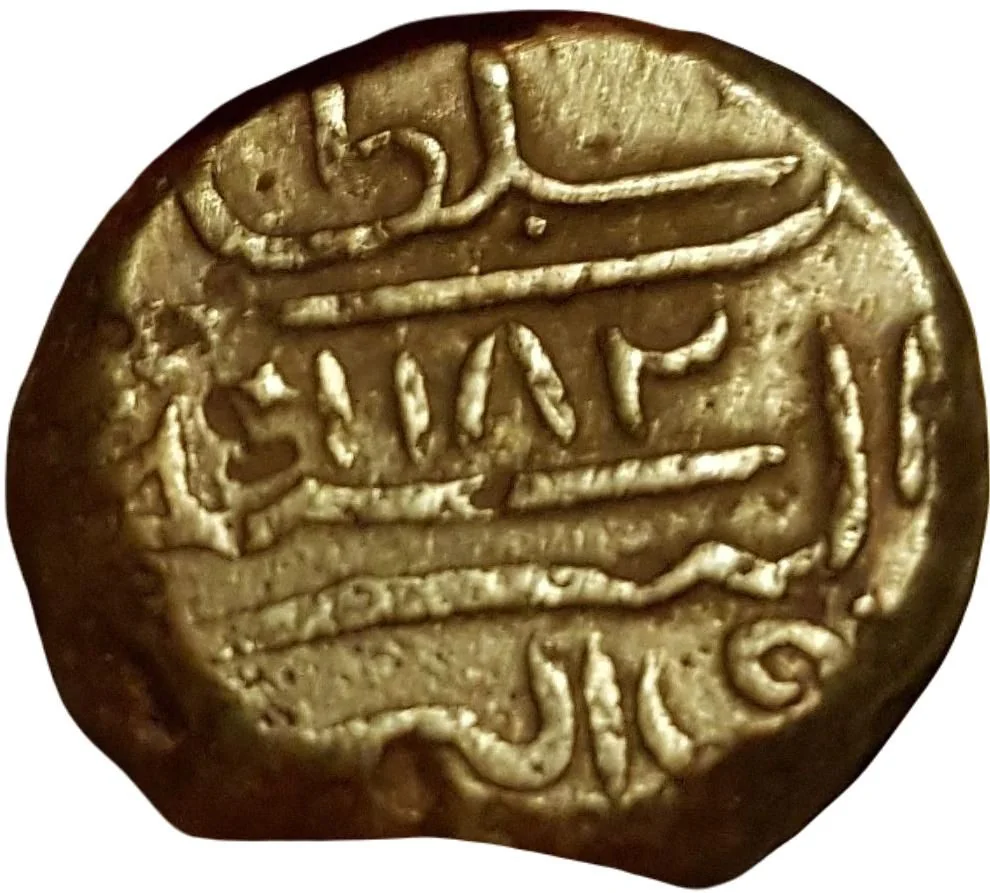
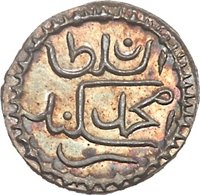
Obverse
Description:
Carved words.
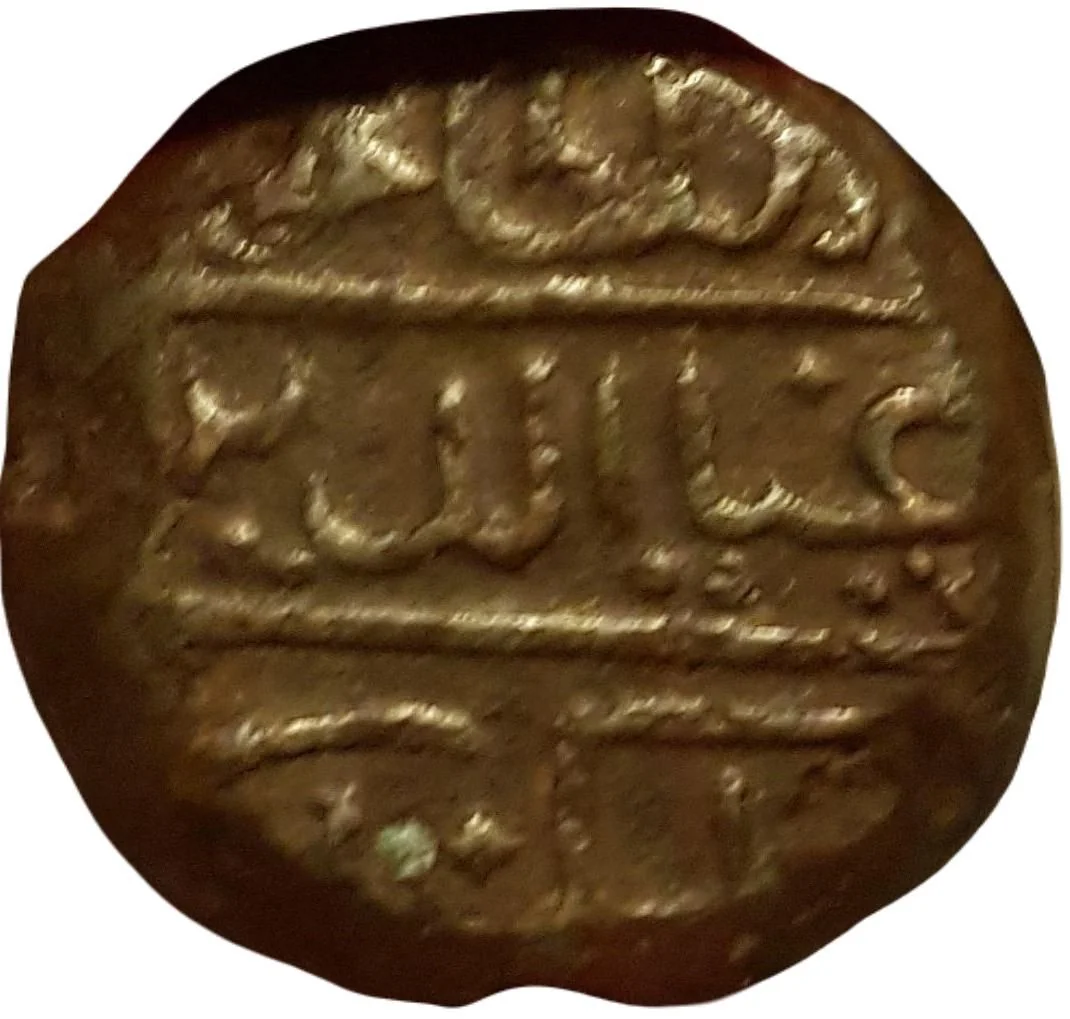
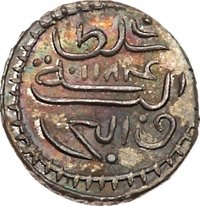
Reverse
Description:
Diamond border with inscription and date.
Inscription:
١١٨۴
Edge
Mintings
| Year | Mint Mark | Mintage | Quality | Collection |
|---|---|---|---|---|
| 1769 | — | — | ||
| 1771 | — | — |
Historical background
In 1769, the Maldives operated within a complex and fragmented monetary system, heavily influenced by its position as a node in the Indian Ocean trade network. The official currency, mandated by the sultanate in Malé, was the Larin, a distinctive, fishhook-shaped silver wire that was often bent double. Originally of Persian origin, the Larin was a widely accepted trade currency across the region. However, its supply was inconsistent, dependent on foreign trade surpluses and the influx of silver from merchants.
Alongside the Larin, a multitude of foreign coins circulated freely, reflecting the archipelago's economic dependencies. Portuguese, Dutch, and later British trade coins, especially silver rupees (like the Surat rupee and Fanams), were common in markets and ports. This created a variable exchange environment where the value of coins was often determined by their intrinsic silver weight and the credibility of the minting authority rather than a fixed state decree. The coexistence of these currencies made daily commerce a practical exercise in metallurgy and trust.
The internal economy of the outer atolls further complicated this picture. For local, small-scale transactions, many Maldivians continued to rely on a traditional system of cowrie shells (known as boli) and even barter for essentials like dried fish, coir rope, and woven mats. Thus, the monetary landscape of 1769 Maldives was tripartite: an official but sporadic state currency (Larin), a dominant layer of foreign silver for regional trade, and a foundational, informal subsistence economy using non-metal mediums, all functioning simultaneously across the scattered islands.
Alongside the Larin, a multitude of foreign coins circulated freely, reflecting the archipelago's economic dependencies. Portuguese, Dutch, and later British trade coins, especially silver rupees (like the Surat rupee and Fanams), were common in markets and ports. This created a variable exchange environment where the value of coins was often determined by their intrinsic silver weight and the credibility of the minting authority rather than a fixed state decree. The coexistence of these currencies made daily commerce a practical exercise in metallurgy and trust.
The internal economy of the outer atolls further complicated this picture. For local, small-scale transactions, many Maldivians continued to rely on a traditional system of cowrie shells (known as boli) and even barter for essentials like dried fish, coir rope, and woven mats. Thus, the monetary landscape of 1769 Maldives was tripartite: an official but sporadic state currency (Larin), a dominant layer of foreign silver for regional trade, and a foundational, informal subsistence economy using non-metal mediums, all functioning simultaneously across the scattered islands.
✨ Legendary