

2 Lariat – Maldives
Maldives
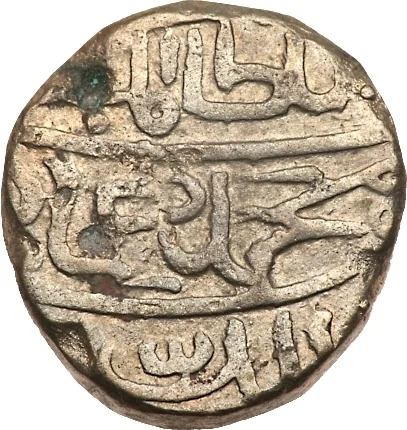
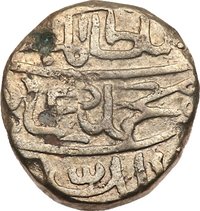
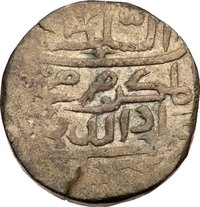
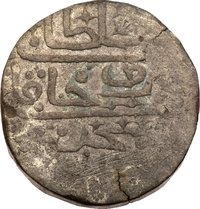
Obverse
Description:
Sultan's title
Inscription:
السلطان المكرم
محمد عماد
الدين
محمد عماد
الدين
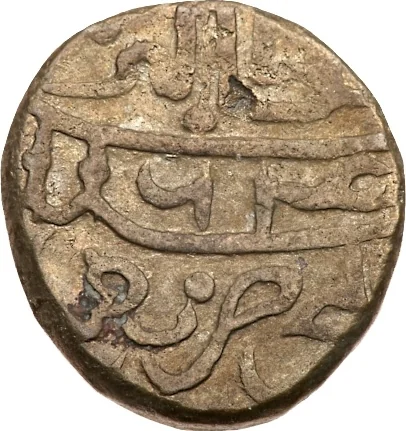
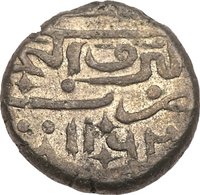
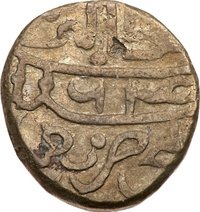
Reverse
Description:
Sultan, [date]
Inscription:
البر والبحر
١١٦۴
سنة
ضرب محلى
١١٦۴
سنة
ضرب محلى
Edge
Mintings
| Year | Mint Mark | Mintage | Quality | Collection |
|---|---|---|---|---|
| 1750 | — | — | ||
| 1751 | — | — | ||
| 1753 | — | — | ||
| 1755 | — | — |
Historical background
In the mid-18th century, the Maldives operated within a complex and multi-layered monetary system, heavily influenced by its strategic position in Indian Ocean trade networks. The official currency, issued by the Sultanate in Malé, was the larin, a silver wire coin bent into a hook shape that was a regional standard. However, the economy was not monetized uniformly; on many outer atolls, traditional barter systems persisted, with dried tuna (Maldive fish), cowrie shells, and woven coir rope serving as essential mediums of exchange for everyday transactions.
International trade dictated the inflow of more valuable currencies. The Maldives' main exports—cowrie shells (used as currency in parts of Africa and Asia), dried fish, and coir—were exchanged for essential imports like rice, textiles, and metals. This trade brought a flood of foreign silver coins into the port of Malé, most notably Spanish dollars (pieces of eight) and Dutch rijksdaalders. These large, high-value silver coins became the de facto standard for significant commercial transactions, government finance, and external trade, circulating alongside and often overshadowing the local larin.
Consequently, the currency situation was one of fragmentation and duality. The Sultanate in Malé attempted to centralize authority through its minting of larins, but its control over the monetary system was limited. The economy effectively functioned with a dual system: a foreign-dominated silver standard for long-distance trade and state affairs, and a localized system of barter and low-value commodities for the daily subsistence of the majority of the population across the scattered islands. This reflected the broader reality of the Maldives at the time: a polity engaged with global economic currents while maintaining deeply rooted local subsistence traditions.
International trade dictated the inflow of more valuable currencies. The Maldives' main exports—cowrie shells (used as currency in parts of Africa and Asia), dried fish, and coir—were exchanged for essential imports like rice, textiles, and metals. This trade brought a flood of foreign silver coins into the port of Malé, most notably Spanish dollars (pieces of eight) and Dutch rijksdaalders. These large, high-value silver coins became the de facto standard for significant commercial transactions, government finance, and external trade, circulating alongside and often overshadowing the local larin.
Consequently, the currency situation was one of fragmentation and duality. The Sultanate in Malé attempted to centralize authority through its minting of larins, but its control over the monetary system was limited. The economy effectively functioned with a dual system: a foreign-dominated silver standard for long-distance trade and state affairs, and a localized system of barter and low-value commodities for the daily subsistence of the majority of the population across the scattered islands. This reflected the broader reality of the Maldives at the time: a polity engaged with global economic currents while maintaining deeply rooted local subsistence traditions.
Series: 1750 Maldives circulation coins

✨ Legendary