

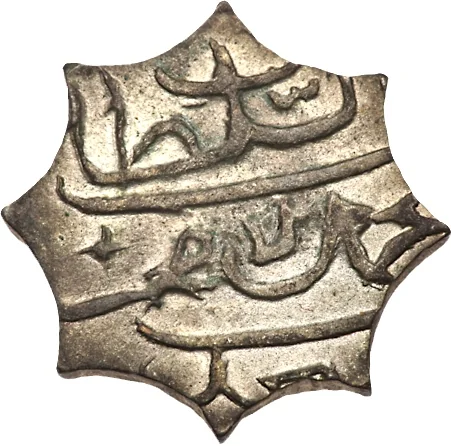
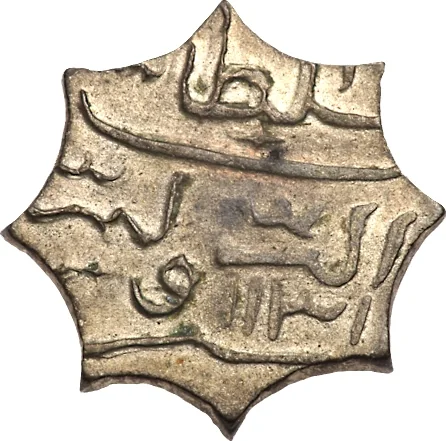
1 Larin – Maldives
Maldives
Context
Year: 1719
Islamic (Hijri) Year: 1131
Issuer: Maldives 
Ruler: Muhammad Imaduddin II
Currency:
(1660—1947)
Demonetized: Yes
References
KM: #Click to copy to clipboard14.3
Numista: #117835
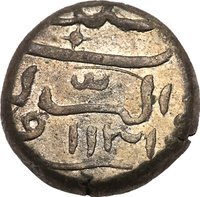
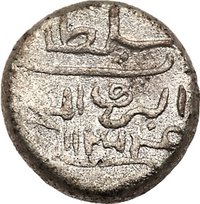
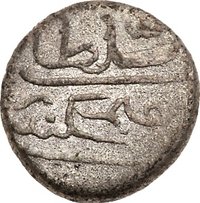
Obverse
Description:
Sultan's title
Inscription:
السلطان
محمد
محمد
Reverse
Description:
Sultan, [date]
Inscription:
سلطان
البر والبحر
١١٣١
البر والبحر
١١٣١
Edge
Mintings
| Year | Mint Mark | Mintage | Quality | Collection |
|---|---|---|---|---|
| 1719 | — | — |
Historical background
In 1719, the Maldives operated within a complex and constrained monetary system, heavily influenced by its strategic position in Indian Ocean trade networks. The primary medium of exchange was the Larín, a hook-shaped silver wire currency that was not minted locally but imported in vast quantities. These larins, often bent into their characteristic shape in the Persian Gulf and Indian regions, were the de facto standard for larger transactions and external trade, circulating alongside a variety of foreign silver coins like Spanish Reales and Indian Rupees.
For everyday local commerce, however, the economy relied on a traditional shell currency: cowrie shells (Cypraea moneta), specifically the small, white shells imported in bulk from the Maldives' own atolls and, increasingly, from East African sources like the Maldives and Zanzibar. These cowries were used for smaller purchases and wages, with their value tied to complex exchange rates against silver. The state exercised control by regulating the import and distribution of both larins and cowries, with the latter being a significant source of royal revenue.
This dual-currency system was under subtle strain. The influx of European trading companies and the fluctuating supply of both silver and cowries created inflationary pressures. Furthermore, the Maldivian economy's dependence on the export of dried fish, coir rope, and cowrie shells—and its need to import virtually all precious metal—meant its currency stability was vulnerable to external market shifts and the political fortunes of regional powers like the Sultanate of Aceh and the Mughal Empire, with whom it maintained crucial trade links.
For everyday local commerce, however, the economy relied on a traditional shell currency: cowrie shells (Cypraea moneta), specifically the small, white shells imported in bulk from the Maldives' own atolls and, increasingly, from East African sources like the Maldives and Zanzibar. These cowries were used for smaller purchases and wages, with their value tied to complex exchange rates against silver. The state exercised control by regulating the import and distribution of both larins and cowries, with the latter being a significant source of royal revenue.
This dual-currency system was under subtle strain. The influx of European trading companies and the fluctuating supply of both silver and cowries created inflationary pressures. Furthermore, the Maldivian economy's dependence on the export of dried fish, coir rope, and cowrie shells—and its need to import virtually all precious metal—meant its currency stability was vulnerable to external market shifts and the political fortunes of regional powers like the Sultanate of Aceh and the Mughal Empire, with whom it maintained crucial trade links.
✨ Legendary