

1 Larin – Maldives
Maldives
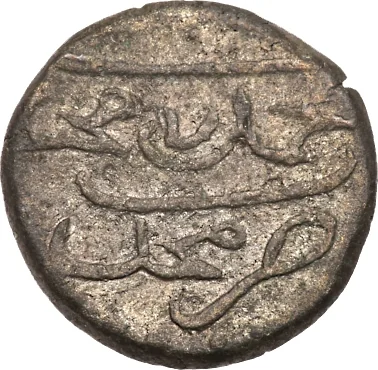
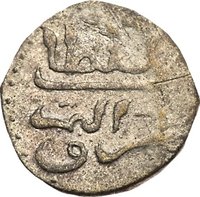
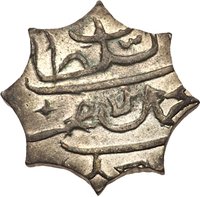
Obverse
Description:
Sultan and mint.
Inscription:
السلطان
محمد
ضرب محلى
محمد
ضرب محلى
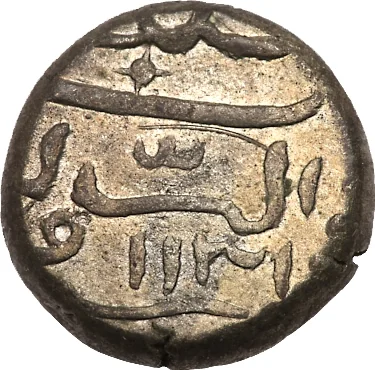
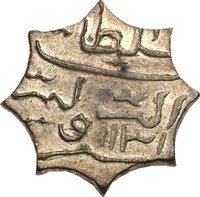
Reverse
Description:
Sultan, [date]
Inscription:
سلطان
البر والبحر
١١٣١
سنة
البر والبحر
١١٣١
سنة
Edge
Mintings
| Year | Mint Mark | Mintage | Quality | Collection |
|---|---|---|---|---|
| 1717 | — | — | ||
| 1719 | — | — |
Historical background
In 1717, the Maldives operated within a complex and fragmented monetary system, heavily influenced by its strategic position on Indian Ocean trade routes. The primary medium of exchange was the Larín, a silver wire currency bent into a hook shape, which was not native to the Maldives but was widely used across the Persian Gulf and South Asia. These were supplemented by a variety of foreign silver coins, most notably the Dutch Leeuwendaalder (or "Lion Dollar"), Spanish Reales, and various Indian Rupees, all brought by merchants trading for the archipelago's main exports: dried fish, cowrie shells, and coir rope.
Alongside this imported metallic currency, the Maldives maintained a unique and ancient parallel system based on cowrie shells (Cypraea moneta). Collected from the islands' shores, these shells were strung into standardized lengths and served as small change for local transactions. Their value was officially regulated by the sultanate, demonstrating a deliberate monetary policy. This dual system allowed the Maldivian state to profit from the cowrie trade—exporting vast quantities to Bengal and West Africa where they were used as currency—while importing the silver needed for larger commercial and state expenditures.
The political context under Sultan Ibrahim Iskandar II (reigned 1720-1750) was one of consolidation, following a period of instability. While 1717 falls just before his reign, the monetary landscape reflected a sultanate asserting control over both internal and external trade. The state treasury (Bait al-Mal) would have managed revenues from tariffs and taxes, often collected in silver, while cowries facilitated the daily subsistence economy. Thus, the currency situation was a pragmatic hybrid, balancing global connectivity with local necessity, and underpinning the sultanate's administrative and economic stability.
Alongside this imported metallic currency, the Maldives maintained a unique and ancient parallel system based on cowrie shells (Cypraea moneta). Collected from the islands' shores, these shells were strung into standardized lengths and served as small change for local transactions. Their value was officially regulated by the sultanate, demonstrating a deliberate monetary policy. This dual system allowed the Maldivian state to profit from the cowrie trade—exporting vast quantities to Bengal and West Africa where they were used as currency—while importing the silver needed for larger commercial and state expenditures.
The political context under Sultan Ibrahim Iskandar II (reigned 1720-1750) was one of consolidation, following a period of instability. While 1717 falls just before his reign, the monetary landscape reflected a sultanate asserting control over both internal and external trade. The state treasury (Bait al-Mal) would have managed revenues from tariffs and taxes, often collected in silver, while cowries facilitated the daily subsistence economy. Thus, the currency situation was a pragmatic hybrid, balancing global connectivity with local necessity, and underpinning the sultanate's administrative and economic stability.
✨ Legendary