

1 larin – Maldives
Add to wishlist
Maldives
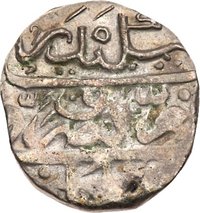
Obverse
Description:
Sultan and mint.
Inscription:
محمد محي
ضرب في
ضرب في
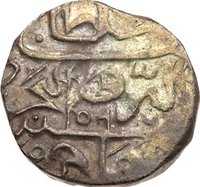
Reverse
Description:
Sultan: a Muslim ruler's title.
Inscription:
سلطان
البر والبحر
السلطان
البر والبحر
السلطان
Edge
Mintings
| Year | Mint Mark | Mintage | Quality | Collection |
|---|---|---|---|---|
| 1690 | — | — |
Historical background
In the late 17th century, the Maldives operated within a complex and multi-layered monetary system, heavily influenced by its strategic position in Indian Ocean trade networks. The official and most prestigious currency was the larin, a distinctive, fishhook-shaped silver wire often stamped with the name of the ruling Sultan. However, the actual circulation was dominated by a diverse array of foreign coins, reflecting the archipelago's role as a trading hub. Portuguese cruzados, Dutch leeuwendaalders (lion dollars), and most prominently, a flood of small denomination copper coins from the Dutch East India Company (VOC) and the English East India Company were ubiquitous in daily transactions.
This reliance on foreign coinage, particularly low-value copper dubbeltjes and stuivers, created significant economic challenges by the 1690s. The Maldivian state had little control over the supply or quality of this imported money, leading to issues of inflation and debasement. Furthermore, the export of higher-value silver larins to India and Sri Lanka in exchange for essential goods like rice and cloth resulted in a chronic shortage of sound silver currency domestically. This "bad money driving out good" scenario left the local economy dependent on unstable foreign copper, complicating tax collection and state finance.
The monetary situation was intrinsically linked to the political climate under Sultan Ibrahim Mudzhiruddin (r. 1687-1701). His reign was marked by efforts to centralize authority and assert Maldivian sovereignty, which included attempts to regulate the currency. While the production of the traditional silver larin continued as a symbol of royal authority, the practical reality for Maldivian fishermen, merchants, and officials was a daily reliance on a jumble of foreign copper coins, making the archipelago's economy vulnerable to the commercial and political whims of distant European trading companies.
This reliance on foreign coinage, particularly low-value copper dubbeltjes and stuivers, created significant economic challenges by the 1690s. The Maldivian state had little control over the supply or quality of this imported money, leading to issues of inflation and debasement. Furthermore, the export of higher-value silver larins to India and Sri Lanka in exchange for essential goods like rice and cloth resulted in a chronic shortage of sound silver currency domestically. This "bad money driving out good" scenario left the local economy dependent on unstable foreign copper, complicating tax collection and state finance.
The monetary situation was intrinsically linked to the political climate under Sultan Ibrahim Mudzhiruddin (r. 1687-1701). His reign was marked by efforts to centralize authority and assert Maldivian sovereignty, which included attempts to regulate the currency. While the production of the traditional silver larin continued as a symbol of royal authority, the practical reality for Maldivian fishermen, merchants, and officials was a daily reliance on a jumble of foreign copper coins, making the archipelago's economy vulnerable to the commercial and political whims of distant European trading companies.

✨ Legendary