



1 Larin – Maldives
Maldives
Context
References
KM: #Click to copy to clipboard1
Numista: #117812
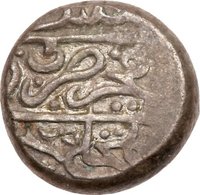
Obverse
Description:
Sultan's title
Inscription:
سلطان محمد عماد الدين
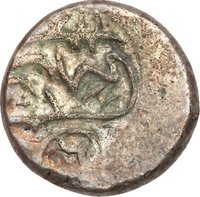
Reverse
Edge
Mintings
| Year | Mint Mark | Mintage | Quality | Collection |
|---|---|---|---|---|
| — | — | — |
Historical background
In 1609, the Maldives operated within a complex and multi-layered currency system, heavily influenced by its strategic position in the Indian Ocean trade network. The primary medium of exchange for most daily transactions was not minted coin but the cowrie shell, specifically the Monetaria moneta variety imported in vast quantities from the Maldives' own atolls and neighboring regions. These small, durable shells served as a ubiquitous "small change" currency across the Indian Ocean world, with the Maldives being a historic epicenter of their harvest and export.
Alongside cowries, the archipelago saw the circulation of various foreign silver coins, reflecting its integration into global commerce. The most significant were Portuguese português and Spanish reales (pieces of eight), which arrived via traders from Goa and the wider Iberian empires. Additionally, coins from other regional powers, such as the Mughal rupee and various South Indian fanams and larins, were present, used for higher-value trade, state finance, and external dealings. The Maldivian state itself did not mint its own significant coinage at this time, relying instead on this influx of foreign specie.
This monetary landscape existed under the shadow of political upheaval. In 1609, the Maldives was a sultanate recovering from a 15-year period of Portuguese occupation (1558-1573) and was facing renewed European pressure. While formal Portuguese rule had ended, their economic and political influence persisted, and the Dutch and English were beginning to vie for dominance in the region. Therefore, the currency situation—a blend of indigenous cowries and competing foreign silver—directly mirrored the Maldives' precarious position: a sovereign entity with a valuable export commodity (cowries), yet caught in the crosscurrents of emerging colonial powers whose coins were increasingly shaping its economy.
Alongside cowries, the archipelago saw the circulation of various foreign silver coins, reflecting its integration into global commerce. The most significant were Portuguese português and Spanish reales (pieces of eight), which arrived via traders from Goa and the wider Iberian empires. Additionally, coins from other regional powers, such as the Mughal rupee and various South Indian fanams and larins, were present, used for higher-value trade, state finance, and external dealings. The Maldivian state itself did not mint its own significant coinage at this time, relying instead on this influx of foreign specie.
This monetary landscape existed under the shadow of political upheaval. In 1609, the Maldives was a sultanate recovering from a 15-year period of Portuguese occupation (1558-1573) and was facing renewed European pressure. While formal Portuguese rule had ended, their economic and political influence persisted, and the Dutch and English were beginning to vie for dominance in the region. Therefore, the currency situation—a blend of indigenous cowries and competing foreign silver—directly mirrored the Maldives' precarious position: a sovereign entity with a valuable export commodity (cowries), yet caught in the crosscurrents of emerging colonial powers whose coins were increasingly shaping its economy.
✨ Legendary