

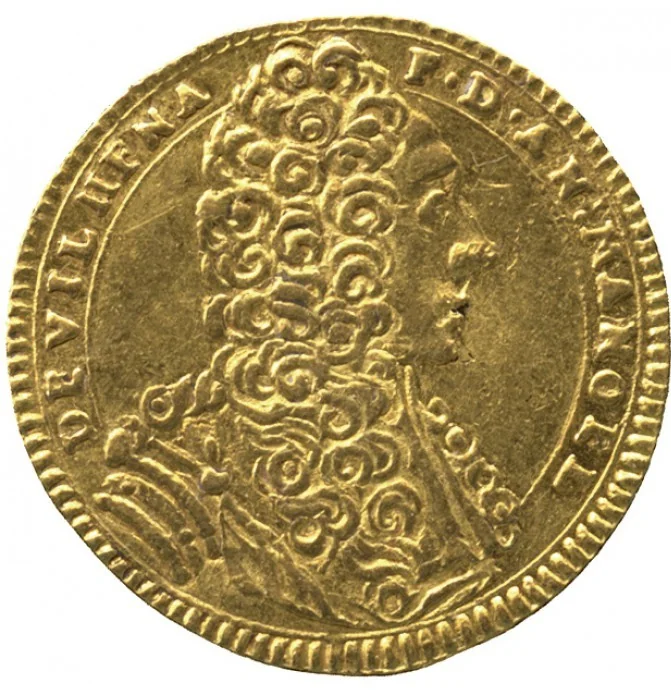
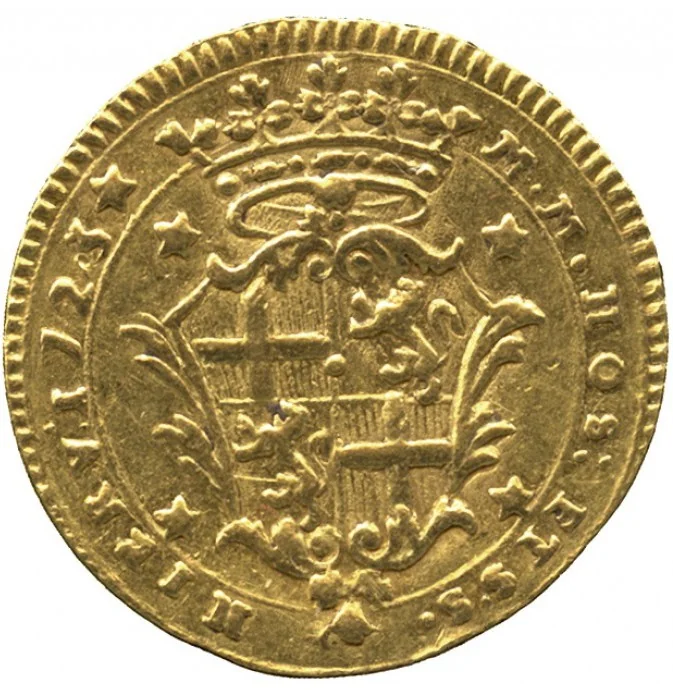
2 Zecchini – Malta
Malta
Context
Material
References
KM: #Click to copy to clipboard183
Numista: #117584
Value
Bullion value: $1140.93
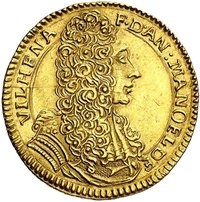
Obverse
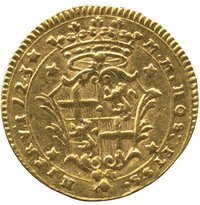
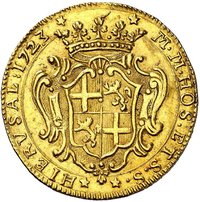
Reverse
Description:
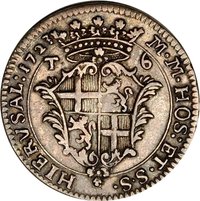
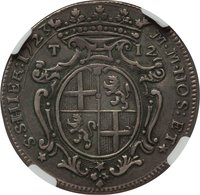
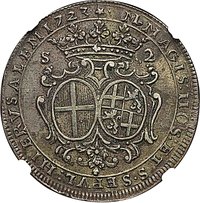
Shield with crown between sprigs, dated legend.
Inscription:
M·M·NOS: ET S·S· NIPRVI·1723
Script: Latin
Edge
Mintings
| Year | Mint Mark | Mintage | Quality | Collection |
|---|---|---|---|---|
| 1723 | — | — | ||
| 1724 | — | — |
Historical background
In 1723, Malta’s currency situation was complex and problematic, reflecting its unique position as a strategic crossroads under the rule of the Sovereign Military Order of St. John. The islands functioned with a chaotic multi-currency system where various foreign coins, primarily Spanish silver pieces of eight (reales) and their fractional coins, circulated alongside a limited local coinage minted by the Order. This reliance on foreign specie, which arrived through trade, corsairing, and the Order’s European revenues, made the local economy vulnerable to external fluctuations and shortages.
The Order’s own mint produced a range of copper and silver coins, such as the scudo, tari, and grani, but these were often insufficient for commercial needs. A significant issue was the persistent shortage of small-denomination coins for everyday transactions, leading to the widespread practice of cutting larger foreign silver coins into pieces to make change. This physical mutilation of currency, along with the circulation of worn and clipped coins, further complicated trade and caused disputes over intrinsic value.
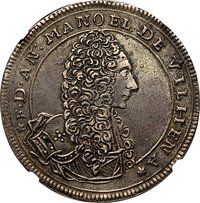
Recognizing the disorder, the Order attempted reforms. In 1723, Grand Master António Manoel de Vilhena was actively addressing the monetary chaos. His administration was working to standardize and regulate the system, which would culminate in a significant monetary proclamation the following year (1724). This reform aimed to fix the exchange rates between the myriad foreign coins and the local monetary units, thereby stabilizing commerce and asserting the Order’s authority over the island’s economic life, though full control over the currency in circulation remained an ongoing challenge.
The Order’s own mint produced a range of copper and silver coins, such as the scudo, tari, and grani, but these were often insufficient for commercial needs. A significant issue was the persistent shortage of small-denomination coins for everyday transactions, leading to the widespread practice of cutting larger foreign silver coins into pieces to make change. This physical mutilation of currency, along with the circulation of worn and clipped coins, further complicated trade and caused disputes over intrinsic value.
Recognizing the disorder, the Order attempted reforms. In 1723, Grand Master António Manoel de Vilhena was actively addressing the monetary chaos. His administration was working to standardize and regulate the system, which would culminate in a significant monetary proclamation the following year (1724). This reform aimed to fix the exchange rates between the myriad foreign coins and the local monetary units, thereby stabilizing commerce and asserting the Order’s authority over the island’s economic life, though full control over the currency in circulation remained an ongoing challenge.
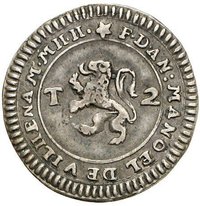
Series: 1723 Malta circulation coins
✨ Legendary