

1 ducat – Norway
Add to wishlist
Norway
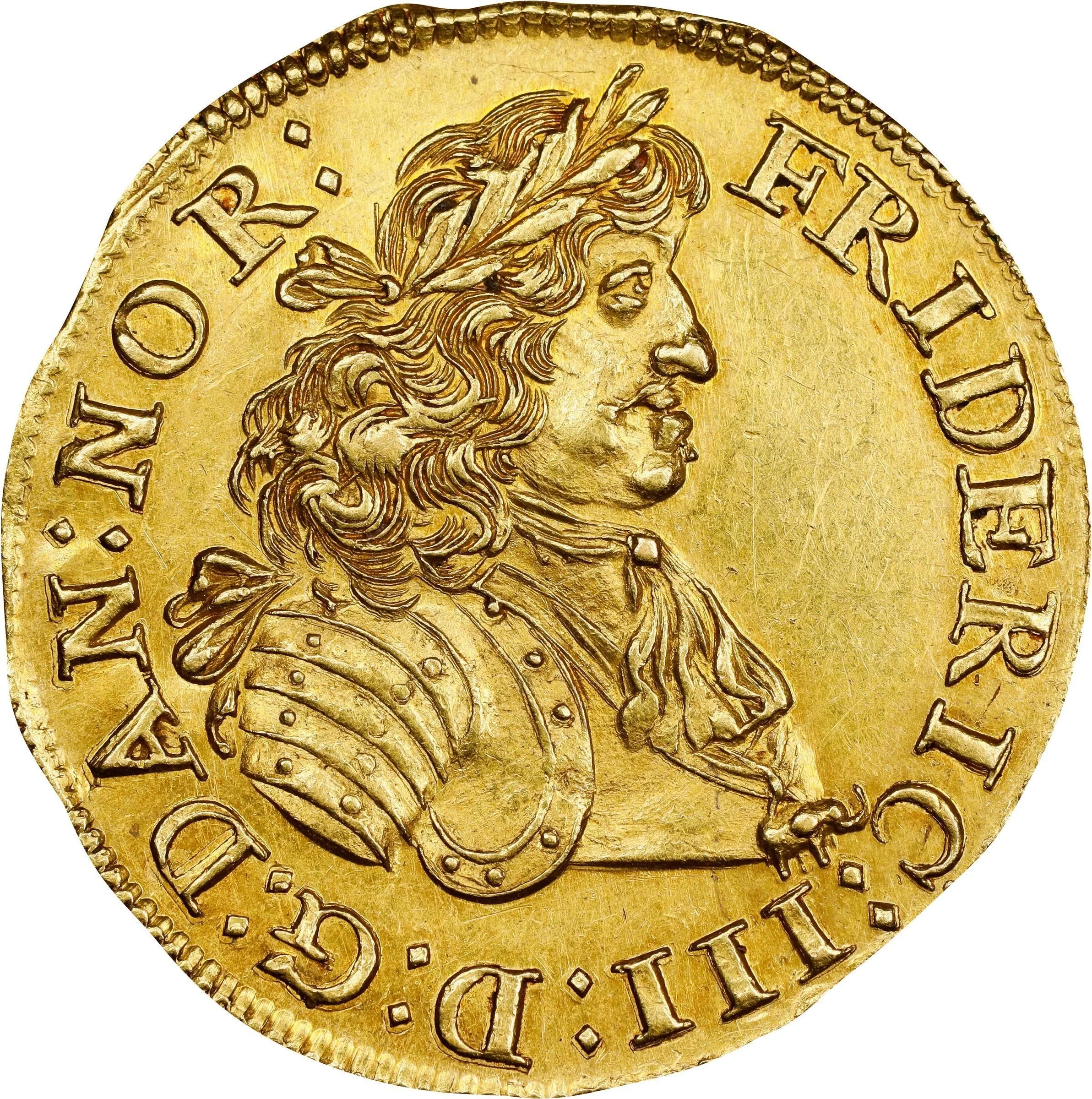
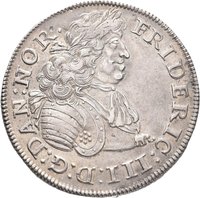
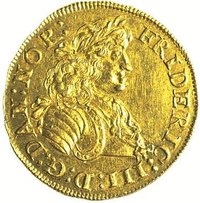
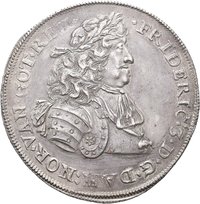
Obverse
Description:
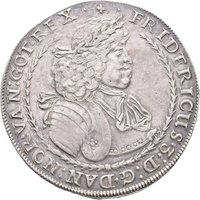
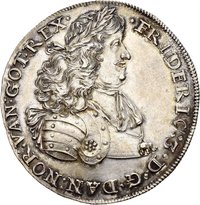
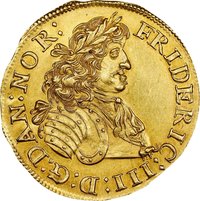
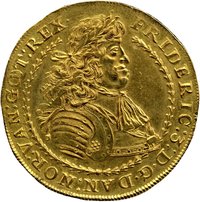
Bust of Frederik III with laurel wreath, facing right, within inscription and beaded rim.
Inscription:
FRIDERIC:III:D:G:DAN:NOR:
Script: Latin
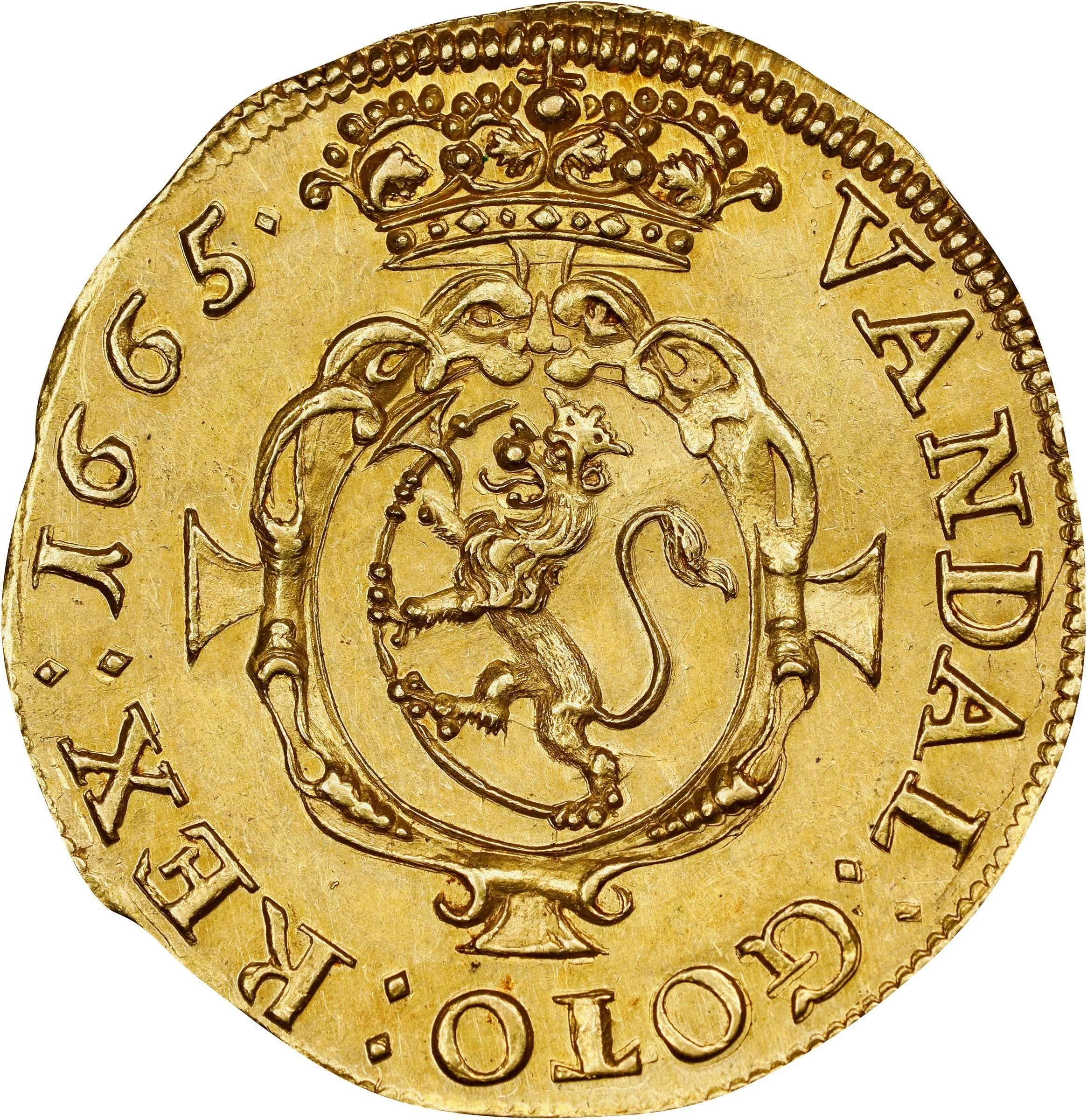
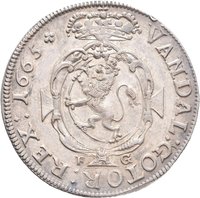
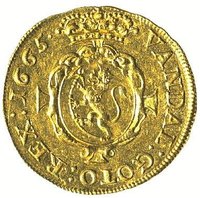
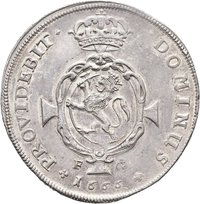
Reverse
Description:
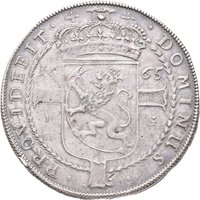
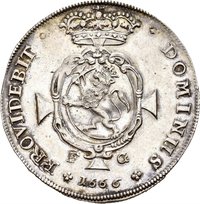
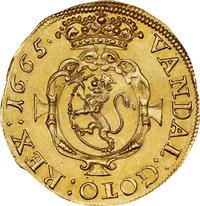
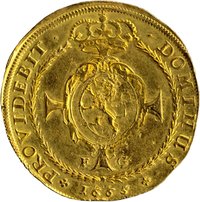
Norwegian lion with axe in crowned oval shield on a cross, surrounded by inscription and date. Beaded rim.
Inscription:
VANDAL:GOTO:REX:1665·
Script: Latin
Edge
Plain.
Categories
| Animal |
| Person> Monarch |
| Symbol> Crown |
| Symbols> Coat of Arms |
| Symbol> Cross |
| Object> Cold weapons |
Mints
| Name | Mark |
|---|---|
| Christiania | — |
Mintings
| Year | Mint Mark | Mintage | Quality | Collection |
|---|---|---|---|---|
| 1665 | — | — |
Historical background
In 1665, Norway was part of the dual monarchy of Denmark-Norway, and its currency system was directly controlled by the Danish crown in Copenhagen. The primary circulating coin was the riksdaler (rix-dollar), a large silver coin that was the backbone of larger transactions. However, the monetary system was chronically troubled by a severe shortage of small-change coins for everyday use among the common people. This forced communities and merchants to resort to primitive means of exchange, such as naturalia (goods like butter, dried fish, and grain) and makeshift tokens, creating a cumbersome and inefficient local economy.
The situation was exacerbated by the ongoing Second Anglo-Dutch War (1665-1667), in which Denmark-Norway was neutral but deeply affected. Norway's vital timber and naval stores trade was disrupted, impacting the flow of silver into the country. Furthermore, the Danish monarchy, under King Frederik III, was financially strained from recent wars and was actively centralizing power following the introduction of absolute monarchy in 1660. This led to periodic currency debasements—reducing the silver content in coins—to generate short-term revenue for the state, which eroded public trust in the coinage and spurred hoarding of older, purer coins.
Consequently, the Norwegian economy in 1665 operated with a fractured monetary system: a theoretical standard based on the riksdaler, a reality of scarce and unreliable small coinage, and a persistent reliance on barter. This instability highlighted the challenges of a remote kingdom within an absolutist state, where fiscal policy was designed for Copenhagen's benefit, often neglecting Norway's specific needs and contributing to local economic hardship and inflation.
The situation was exacerbated by the ongoing Second Anglo-Dutch War (1665-1667), in which Denmark-Norway was neutral but deeply affected. Norway's vital timber and naval stores trade was disrupted, impacting the flow of silver into the country. Furthermore, the Danish monarchy, under King Frederik III, was financially strained from recent wars and was actively centralizing power following the introduction of absolute monarchy in 1660. This led to periodic currency debasements—reducing the silver content in coins—to generate short-term revenue for the state, which eroded public trust in the coinage and spurred hoarding of older, purer coins.
Consequently, the Norwegian economy in 1665 operated with a fractured monetary system: a theoretical standard based on the riksdaler, a reality of scarce and unreliable small coinage, and a persistent reliance on barter. This instability highlighted the challenges of a remote kingdom within an absolutist state, where fiscal policy was designed for Copenhagen's benefit, often neglecting Norway's specific needs and contributing to local economic hardship and inflation.
Series: 1665 Norway circulation coins
✨ Legendary