

1 Real – Bolivia
Bolivia
Context
Years: 1665–1700
Issuer: Bolivia 
Ruler: Charles II
Currency:
(1574—1825)
Demonetized: Yes
Total mintage: 29,863,240
Material
References
KM: #Click to copy to clipboard23
Numista: #51864
Value
Bullion value: $9.11
Obverse
Description:
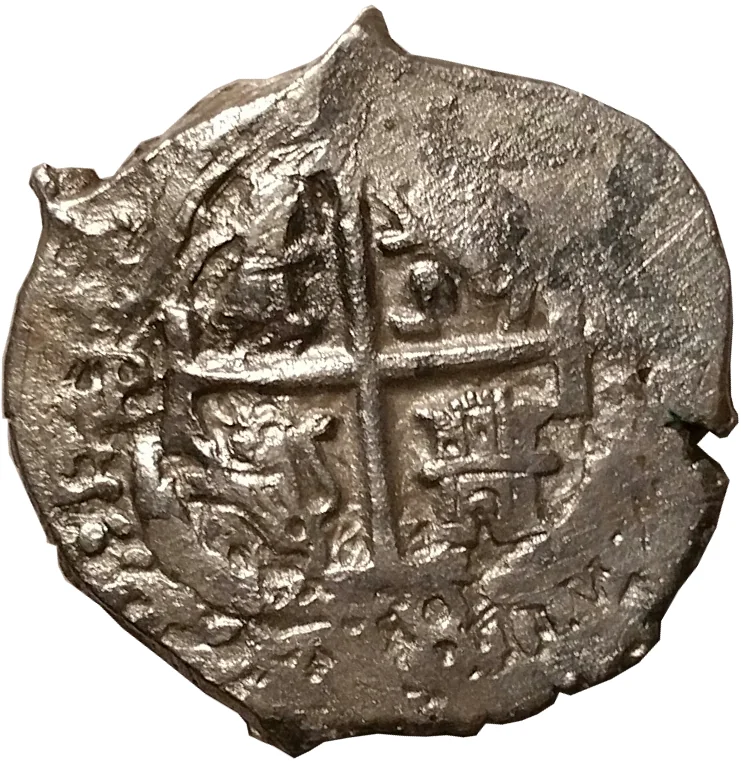
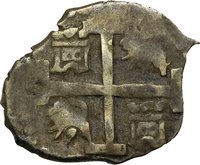
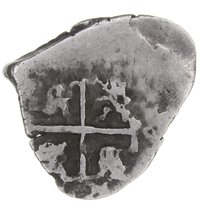
Jerusalem cross with lion and castle quarters. Mintmark right, date below.
Script: Latin
Engraver: Pedro de Villar
Reverse
Description:
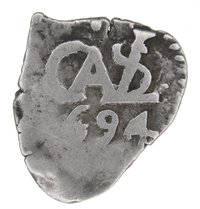
Core supports.
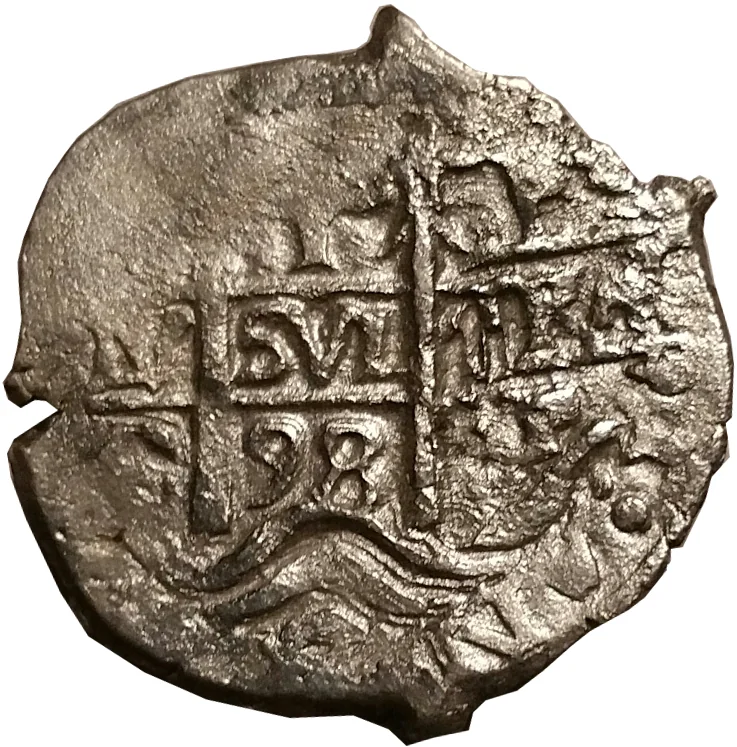
Inscription:
P I F
PLV SVL TRA
F 98 P
PLV SVL TRA
F 98 P
Script: Latin
Engraver: Pedro de Villar
Edge
Mints
| Name | Mark |
|---|---|
| Potosi | — |
Mintings
| Year | Mint Mark | Mintage | Quality | Collection |
|---|---|---|---|---|
| 1665 | E | — | ||
| 1666 | E | — | ||
| 1667 | E | — | ||
| 1668 | E | — | ||
| 1669 | E | — | ||
| 1670 | E | — | ||
| 1671 | E | — | ||
| 1672 | E | — | ||
| 1673 | E | — | ||
| 1674 | E | — | ||
| 1675 | E | — | ||
| 1676 | E | — | ||
| 1677 | E | — | ||
| 1678 | C | — | ||
| 1678 | C/E | — | ||
| 1678 | E | — | ||
| 1679 | C | — | ||
| 1679 | V | — | ||
| 1680 | V | 1,477,618 | ||
| 1681 | V | — | ||
| 1682 | V | 1,553,797 | ||
| 1683 | V | 2,297,899 | ||
| 1684 | V | — | ||
| 1684 | VR | 2,156,127 | ||
| 1685 | — | 1,886,251 | ||
| 1686 | — | 1,740,660 | ||
| 1687 | — | 1,876,536 | ||
| 1688 | — | 1,809,670 | ||
| 1689 | — | 1,726,456 | ||
| 1690 | — | 1,790,240 | ||
| 1691 | — | 1,580,999 | ||
| 1692 | — | 1,487,266 | ||
| 1693 | V | — | ||
| 1693 | R | — | ||
| 1694 | — | 1,632,924 | ||
| 1694 | V | — | ||
| 1695 | — | 1,764,646 | ||
| 1696 | — | 1,518,220 | ||
| 1697 | — | — | ||
| 1697 | F | — | ||
| 1698 | F | 1,177,123 | ||
| 1699 | F | 1,173,170 | ||
| 1700 | F | 1,213,638 |
Historical background
In 1665, the currency situation in the Province of Charcas (modern Bolivia, then part of the Viceroyalty of Peru) was defined by a severe shortage of official coinage and a reliance on disparate, often problematic, mediums of exchange. The primary source of silver, the legendary Cerro Rico of Potosí, continued to produce vast wealth, but the minting of coins was centralized at the Royal Mint in Potosí (Casa de la Moneda), which struggled to meet the demands of a sprawling local economy. This scarcity meant that for most daily transactions, people relied on barter, cobs (crudely cut and stamped pieces of silver known as macuquinas), and even coca leaves as a de facto currency, especially for paying indigenous laborers.
The Spanish Crown’s monetary policy exacerbated the problem. A significant portion of the silver was siphoned off as the Royal Fifth (the crown’s 20% tax) and shipped to Spain, while much of the remaining coinage was exported to pay for imported European goods, draining the local supply. Furthermore, the circulation of debased and counterfeit coins was a persistent issue, undermining trust in the currency. This environment created a dual economy: large-scale silver exports for the global Spanish empire operated alongside a local, often informal, economy struggling with a lack of reliable small-denomination currency.
Consequently, the year 1665 fell within a period of monetary tension that would eventually lead to reform. The inefficiency and irregularity of the hand-struck macuquinas from Potosí, which were easily clipped and counterfeited, prompted ongoing discussions about minting technology. These pressures would culminate decades later, in the 18th century, with the introduction of modern, machine-struck pillar coins. Thus, in 1665, Bolivia's currency situation was one of immense wealth existing alongside acute local scarcity, a paradox that characterized the heart of Spain’s South American silver empire.
The Spanish Crown’s monetary policy exacerbated the problem. A significant portion of the silver was siphoned off as the Royal Fifth (the crown’s 20% tax) and shipped to Spain, while much of the remaining coinage was exported to pay for imported European goods, draining the local supply. Furthermore, the circulation of debased and counterfeit coins was a persistent issue, undermining trust in the currency. This environment created a dual economy: large-scale silver exports for the global Spanish empire operated alongside a local, often informal, economy struggling with a lack of reliable small-denomination currency.
Consequently, the year 1665 fell within a period of monetary tension that would eventually lead to reform. The inefficiency and irregularity of the hand-struck macuquinas from Potosí, which were easily clipped and counterfeited, prompted ongoing discussions about minting technology. These pressures would culminate decades later, in the 18th century, with the introduction of modern, machine-struck pillar coins. Thus, in 1665, Bolivia's currency situation was one of immense wealth existing alongside acute local scarcity, a paradox that characterized the heart of Spain’s South American silver empire.
💎 Very Rare