

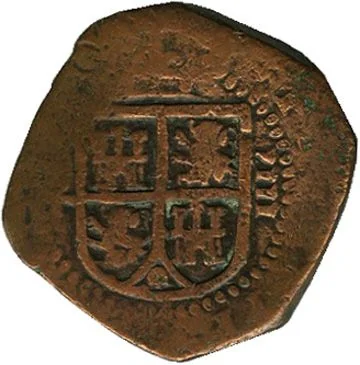
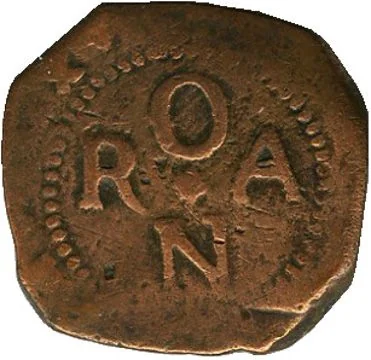
8 maravedis – Spanish possession of Oran
Add to wishlist
Algeria
Context
Year: 1618
Country: Algeria
Issuer: Spanish possession of Oran
Ruler: Philip III
Currency:
(1509—1708)
Demonetized: Yes
Material
Diameter: 33.5 mm
Weight: 13.6 g
Thickness: 2 mm
Shape: Irregular round
Composition: Copper
Magnetic: No
Alignment: Medal alignment
flip
References
KM: #
Numista: #51835
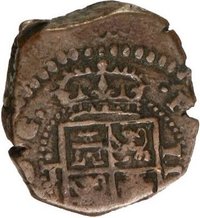
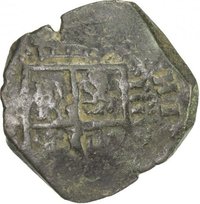
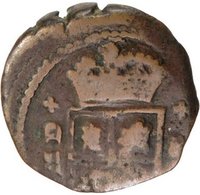
Obverse
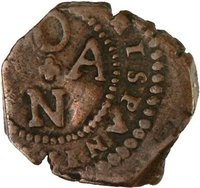
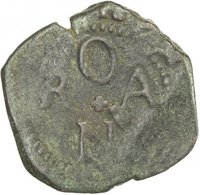
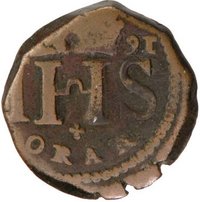
Reverse
Edge
Mintings
| Year | Mint Mark | Mintage | Quality | Collection |
|---|---|---|---|---|
| 1618 | T | — |
Historical background
In 1618, the Spanish presidio of Oran, a fortified enclave on the North African coast, operated within a complex and constrained monetary environment. Officially, the Spanish Crown mandated the use of its own coinage, primarily reales and escudos, for all official transactions, soldier salaries, and trade within the garrison's walls. This reflected Oran's primary identity as a military and religious outpost of the Habsburg monarchy, sustained by the situado—an annual subsidy of silver and goods shipped from Spain via Cadiz. The reliable arrival of this subsidy was the economic lifeblood of the garrison, directly tying its currency circulation to the fortunes of the trans-Mediterranean supply line.
However, the reality on the ground was one of pronounced monetary pluralism. Oran was not an isolated fortress but a node in vibrant regional trade networks with the surrounding Ottoman Regency of Algiers and local Berber tribes. This constant interaction, both licit and illicit, flooded the city with a variety of competing coins. Alongside Spanish silver, Ottoman akçes, Algerian asperos, and even older Spanish reales de a ocho that had circulated globally were all in common use. The value of these coins fluctuated not by royal decree but by their intrinsic silver content and local market demand, creating a dynamic and often unstable exchange environment.
This situation created significant administrative and economic challenges for Spanish authorities. The coexistence of multiple currencies facilitated essential trade for food and goods not supplied from Spain, but it also led to frequent currency shortages and debasement problems. Soldiers often found their silver reales clipped or adulterated, while authorities struggled to impose fixed exchange rates. Thus, Oran in 1618 exemplified the tension between imperial monetary policy and local economic necessity, its currency situation a microcosm of the broader struggle to maintain a European Catholic enclave within a predominantly Muslim and commercially autonomous region.
However, the reality on the ground was one of pronounced monetary pluralism. Oran was not an isolated fortress but a node in vibrant regional trade networks with the surrounding Ottoman Regency of Algiers and local Berber tribes. This constant interaction, both licit and illicit, flooded the city with a variety of competing coins. Alongside Spanish silver, Ottoman akçes, Algerian asperos, and even older Spanish reales de a ocho that had circulated globally were all in common use. The value of these coins fluctuated not by royal decree but by their intrinsic silver content and local market demand, creating a dynamic and often unstable exchange environment.
This situation created significant administrative and economic challenges for Spanish authorities. The coexistence of multiple currencies facilitated essential trade for food and goods not supplied from Spain, but it also led to frequent currency shortages and debasement problems. Soldiers often found their silver reales clipped or adulterated, while authorities struggled to impose fixed exchange rates. Thus, Oran in 1618 exemplified the tension between imperial monetary policy and local economic necessity, its currency situation a microcosm of the broader struggle to maintain a European Catholic enclave within a predominantly Muslim and commercially autonomous region.
💎 Extremely Rare