

Obverse
Description:
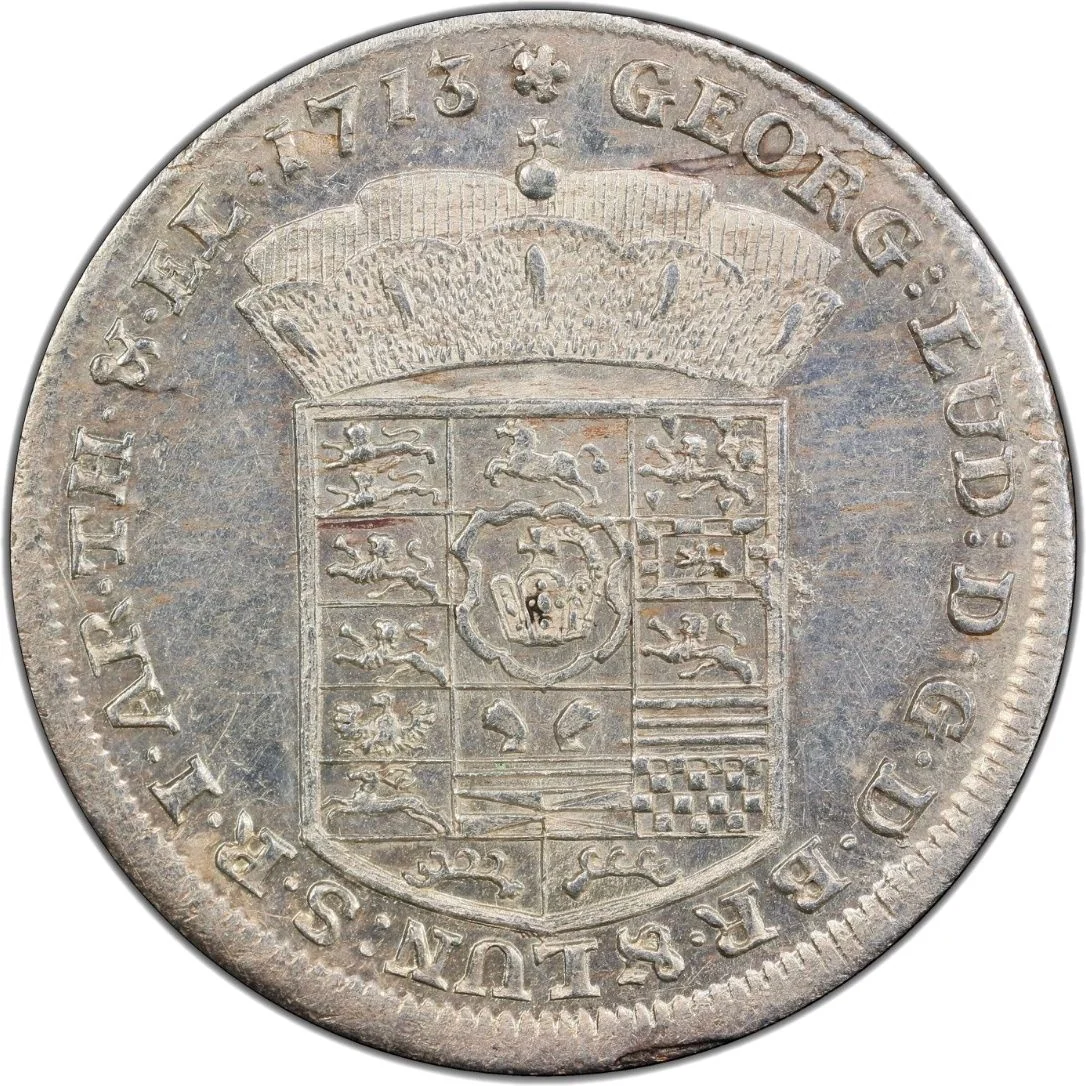
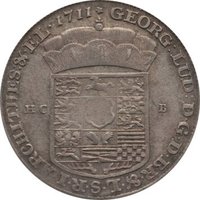
Crest divided, surrounded by legend ending in date.
Inscription:
⋆GEORG:LUD:D.G.D.BR.& LUN:S.R.I.AR.TH.&.EL.1713
Script: Latin
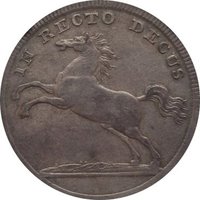
Reverse
Description:
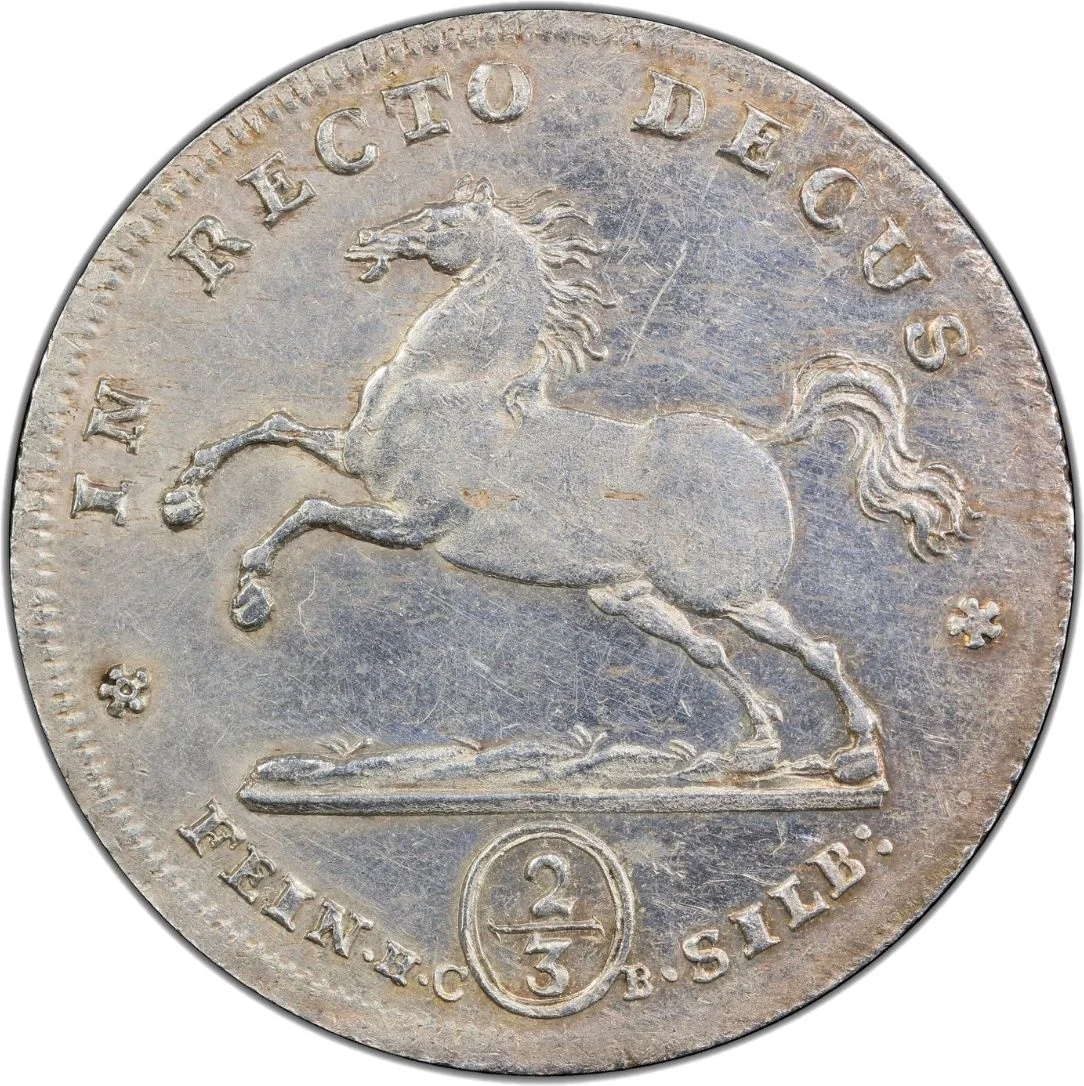
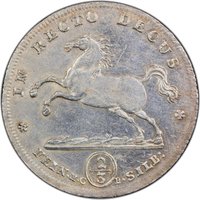
Horse leaping left, legend above, value below, fraction in oval separating mint initials.
Inscription:
IN RECTO DECUS
⋆ ⋆
FEIN.H.C(2/3)B.SILB:
⋆ ⋆
FEIN.H.C(2/3)B.SILB:
Script: Latin
Edge
Mints
| Name | Mark |
|---|---|
| Zellerfeld | — |
Mintings
| Year | Mint Mark | Mintage | Quality | Collection |
|---|---|---|---|---|
| 1711 | — | — | ||
| 1712 | — | — | ||
| 1713 | — | — | ||
| 1714 | — | — | ||
| 1715 | — | — |
Historical background
In 1711, the currency situation in the Duchy of Brunswick-Lüneburg, specifically the Principality of Calenberg (with its capital in Hanover), was characterized by significant complexity and instability. The Holy Roman Empire was a mosaic of over 300 states, each with the right to mint coinage, leading to a chaotic system where numerous foreign and domestic coins circulated simultaneously. The primary unit of account was the Reichsthaler, but everyday transactions relied on a confusing array of smaller regional coins like Gute Groschen and Mariengroschen, whose values fluctuated based on their silver content and the authority of the minting prince.
This period was particularly turbulent due to the financial strains of the Great Northern War (1700-1721) and the ongoing War of the Spanish Succession (1701-1714). Elector George Louis (the future King George I of Great Britain), who ruled Calenberg-Hannover, faced immense military expenses. A common method to raise funds was Kipper- und Wipperzeit practices—debasement of coinage by reducing the precious metal content while maintaining the face value. This led to inflation, a loss of public trust, and the hoarding of older, full-value coins, which only worsened the monetary chaos for merchants and the populace.
Consequently, the year 1711 fell within a protracted era of monetary disorder that would eventually necessitate major reform. While a definitive resolution was still years away, the pressures of this period underscored the urgent need for standardization. This would culminate in the Hanoverian Konventionsmünzfuß of 1754, which finally aligned the principality's currency with a stable imperial standard, but in 1711, the system remained fragmented, unreliable, and a significant hindrance to economic stability and growth.
This period was particularly turbulent due to the financial strains of the Great Northern War (1700-1721) and the ongoing War of the Spanish Succession (1701-1714). Elector George Louis (the future King George I of Great Britain), who ruled Calenberg-Hannover, faced immense military expenses. A common method to raise funds was Kipper- und Wipperzeit practices—debasement of coinage by reducing the precious metal content while maintaining the face value. This led to inflation, a loss of public trust, and the hoarding of older, full-value coins, which only worsened the monetary chaos for merchants and the populace.
Consequently, the year 1711 fell within a protracted era of monetary disorder that would eventually necessitate major reform. While a definitive resolution was still years away, the pressures of this period underscored the urgent need for standardization. This would culminate in the Hanoverian Konventionsmünzfuß of 1754, which finally aligned the principality's currency with a stable imperial standard, but in 1711, the system remained fragmented, unreliable, and a significant hindrance to economic stability and growth.
✨ Legendary