

1 bazaruco – Portuguese India
Add to wishlist
India
Context
Years: 1521–1557
Country: India
Issuer: Portuguese India
Ruler: João III
Currency:
(1509—1580)
Demonetized: Yes
Material
References
KM: #
Numista: #51582
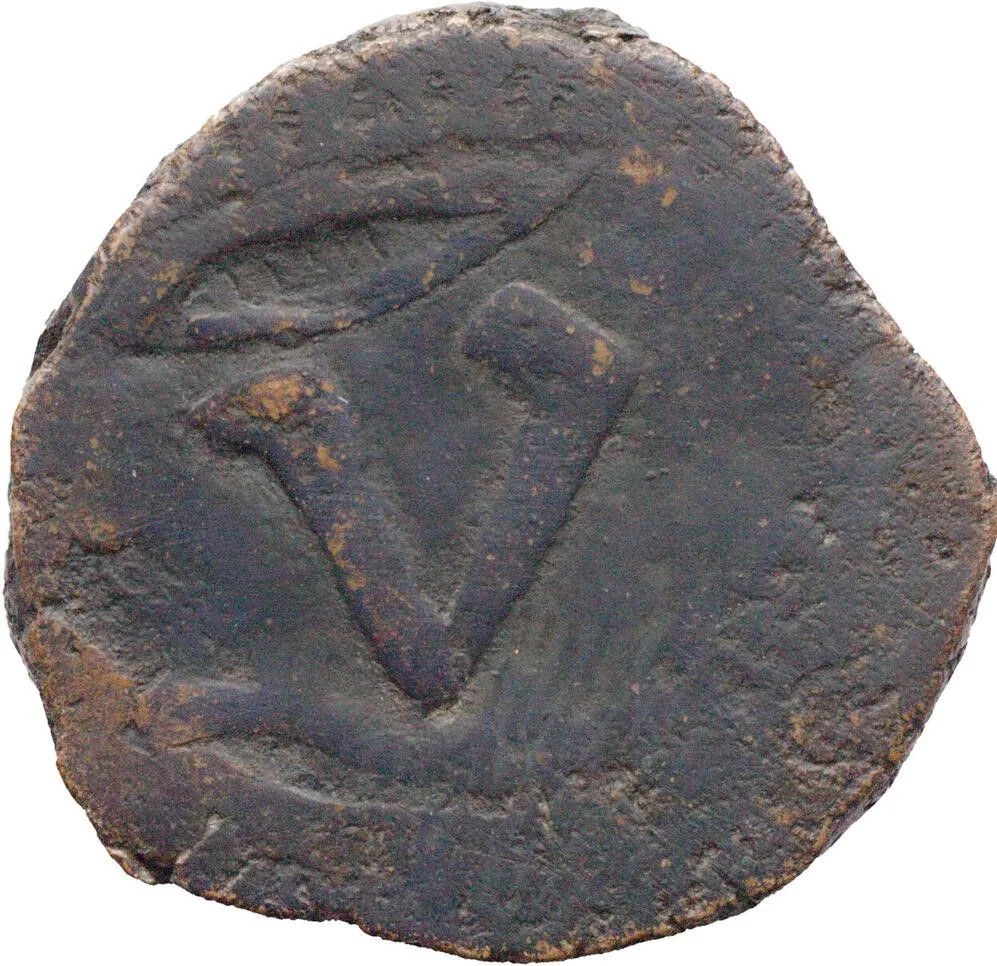
Obverse
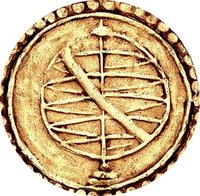
Description:
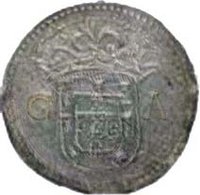
Crown Y
Inscription:
Y(João)
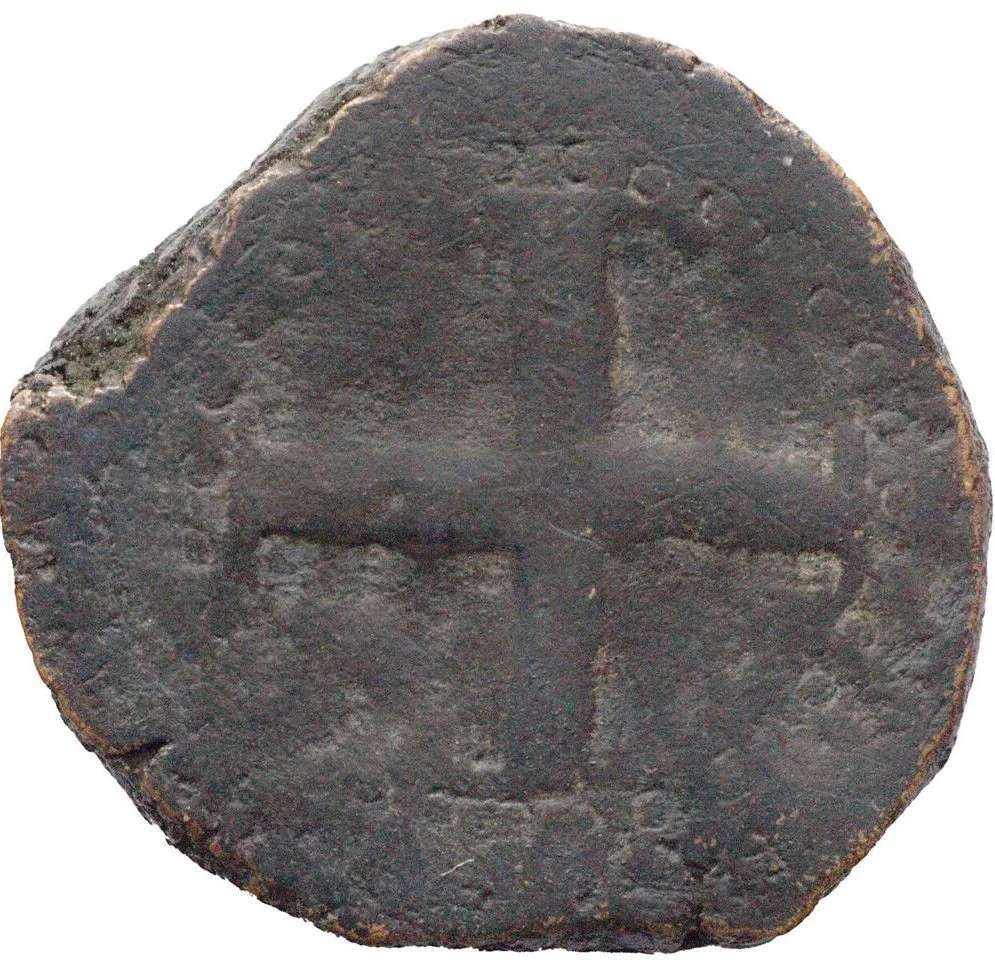
Reverse
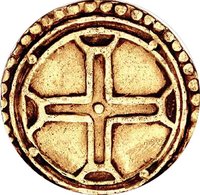
Description:
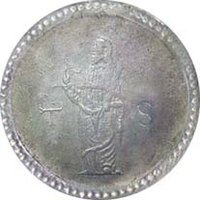
Maltese Cross
Edge
Plain
Mintings
| Year | Mint Mark | Mintage | Quality | Collection |
|---|---|---|---|---|
| — | — | — |
Historical background
In 1521, the currency situation in Portuguese India was a complex tapestry of local, regional, and newly introduced European systems, reflecting the early and tenuous nature of Portuguese commercial dominance. The Portuguese Estado da Índia, with its capital at Goa (captured in 1510), did not yet possess a unified monetary policy. Instead, the local economy continued to rely heavily on longstanding indigenous currencies, particularly the silver tanka and copper dinar issued by the previous Bijapur Sultanate rulers, as well as a multitude of gold hons and pagodas from various South Indian Hindu kingdoms. These coins remained the primary medium for daily transactions and regional trade within the subcontinent.
Alongside this, the Portuguese were actively injecting their own coinage into the economic bloodstream to facilitate their imperial and commercial objectives. The most significant was the cruzado, a gold coin equivalent in value to the Venetian ducat, used for high-value trade, official payments, and remittances to Lisbon. In silver, the tostão and real were circulated, but they struggled to displace the entrenched local systems. The Portuguese state’s fiscal operations, including the payment of soldiers and officials, often had to adapt to this hybrid system, leading to frequent use of coin-assays and complex exchange rates.
Furthermore, the currency landscape was profoundly shaped by the overwhelming importance of the transoceanic trade in spices and other luxury goods. Large-scale commerce was often conducted through barter or settled with high-value commodities like gold bullion and silver ingots, as well as with a flood of foreign coins. Spanish silver reales and other European coins entered the port markets through trade, while the ubiquitous Xerafim (originally a unit of account based on a silver coin) was becoming the standard for Portuguese bookkeeping and taxation in Goa. Thus, 1521 represents a period of monetary coexistence and competition, where Portuguese authority was asserted not through currency replacement, but through layered and pragmatic integration into the vibrant Asian bullion and coin networks.
Alongside this, the Portuguese were actively injecting their own coinage into the economic bloodstream to facilitate their imperial and commercial objectives. The most significant was the cruzado, a gold coin equivalent in value to the Venetian ducat, used for high-value trade, official payments, and remittances to Lisbon. In silver, the tostão and real were circulated, but they struggled to displace the entrenched local systems. The Portuguese state’s fiscal operations, including the payment of soldiers and officials, often had to adapt to this hybrid system, leading to frequent use of coin-assays and complex exchange rates.
Furthermore, the currency landscape was profoundly shaped by the overwhelming importance of the transoceanic trade in spices and other luxury goods. Large-scale commerce was often conducted through barter or settled with high-value commodities like gold bullion and silver ingots, as well as with a flood of foreign coins. Spanish silver reales and other European coins entered the port markets through trade, while the ubiquitous Xerafim (originally a unit of account based on a silver coin) was becoming the standard for Portuguese bookkeeping and taxation in Goa. Thus, 1521 represents a period of monetary coexistence and competition, where Portuguese authority was asserted not through currency replacement, but through layered and pragmatic integration into the vibrant Asian bullion and coin networks.
✨ Legendary