

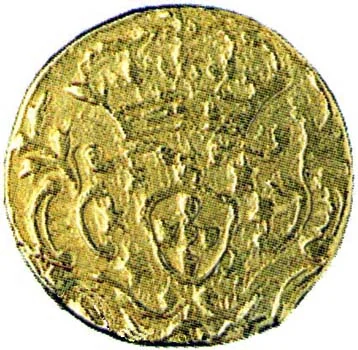
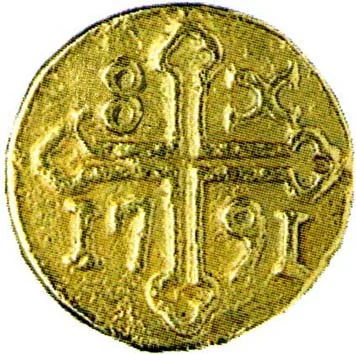
8 xerafins – Portuguese India
Add to wishlist
India
Context
Years: 1788–1805
Country: India
Issuer: Portuguese India
Ruler: Maria I
Currency:
(1706—1880)
Subdivision: 8 xerafins = 4 Rupias
Demonetized: Yes
Material
Diameter: 15 mm
Weight: 3.3 g
Gold Weight:: 3.30 g
Shape: Irregular round
Composition: Gold
Magnetic: No
Technique: Hammered
References
KM: #
Numista: #51144
Value
Bullion value: $513.77
Obverse
Description:
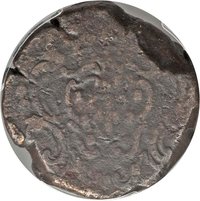
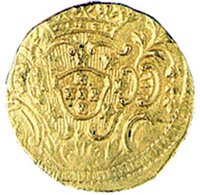
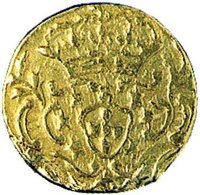
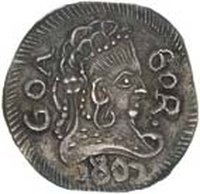
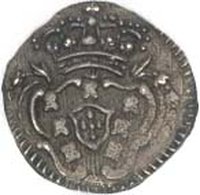
Heraldic emblem
Reverse
Edge
Mints
| Name | Mark |
|---|---|
| Goa | — |
Mintings
| Year | Mint Mark | Mintage | Quality | Collection |
|---|---|---|---|---|
| 1788 | — | — | ||
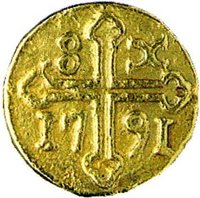
| 1791 | — | — | ||
| 1793 | — | — | ||
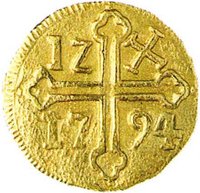
| 1794 | — | — | ||
| 1795 | — | — | ||
| 1804 | — | — | ||
| 1805 | — | — |
Historical background
In 1788, the currency situation in Portuguese India, centered on the colony of Goa, was a complex and deteriorating system defined by chronic scarcity, debasement, and competing monetary units. The official currency was the Portuguese Indian Rupia (Xerafim), but its value and physical availability were in severe crisis. Decades of poor fiscal management by the Estado da Índia and the economic decline of the once-prosperous territory had led to repeated debasements—reducing the silver content of minted coins to raise short-term revenue. This resulted in a severe lack of trustworthy, full-bodied specie in circulation, crippling official trade and state finances.
The vacuum was filled by a chaotic proliferation of other currencies. Most prominently, the gold Muhar, a coin of the neighbouring Maratha Empire, circulated widely as a more stable and trusted medium for larger transactions. Additionally, various foreign silver coins, especially Spanish American Reales (often called "Patacas" or "Pardaus"), and even old Mughal rupees, formed the patchwork of everyday commerce. This multi-currency environment created constant exchange difficulties and arbitrage, with the official, debased Xerafim trading at a significant discount against these foreign and private coins, further undermining state authority and economic predictability.
This monetary instability was both a symptom and a cause of Goa’s deep economic malaise in the late 18th century. The Portuguese crown, preoccupied with Brazil and the home kingdom, provided little effective remedy. Local attempts at monetary reform were ad hoc and unsuccessful. Consequently, the currency chaos of 1788 reflected a broader reality: Portuguese India was no longer a dominant commercial power but an isolated, impoverished enclave, its economic life sustained more by the currencies of its dynamic neighbours and global trade circuits than by its own failing monetary system.
The vacuum was filled by a chaotic proliferation of other currencies. Most prominently, the gold Muhar, a coin of the neighbouring Maratha Empire, circulated widely as a more stable and trusted medium for larger transactions. Additionally, various foreign silver coins, especially Spanish American Reales (often called "Patacas" or "Pardaus"), and even old Mughal rupees, formed the patchwork of everyday commerce. This multi-currency environment created constant exchange difficulties and arbitrage, with the official, debased Xerafim trading at a significant discount against these foreign and private coins, further undermining state authority and economic predictability.
This monetary instability was both a symptom and a cause of Goa’s deep economic malaise in the late 18th century. The Portuguese crown, preoccupied with Brazil and the home kingdom, provided little effective remedy. Local attempts at monetary reform were ad hoc and unsuccessful. Consequently, the currency chaos of 1788 reflected a broader reality: Portuguese India was no longer a dominant commercial power but an isolated, impoverished enclave, its economic life sustained more by the currencies of its dynamic neighbours and global trade circuits than by its own failing monetary system.
✨ Legendary