

1 Denier – Hungary
Hungary
Context

Material
Diameter: 15.5 mm
Weight: 0.58 g
Silver weight: 0.29 g
Shape: Irregular round
Composition: 50% Silver
Magnetic: No
References
KM: #Click to copy to clipboard16
Numista: #51048
Value
Bullion value: $0.82
Obverse
Description:
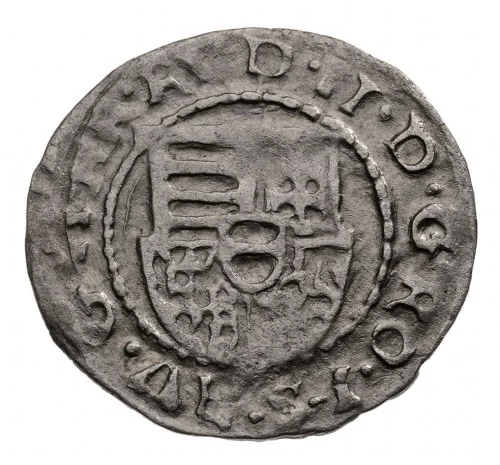
Hungarian coat of arms with Árpád stripes, double cross, Dalmatian leopard heads, and Bohemian lion; central shield: Austrian bonds.
Inscription:
RVD · II · D · G · RO · I · S · AV · G · H · B · R ·
Script: Latin
Reverse
Description:
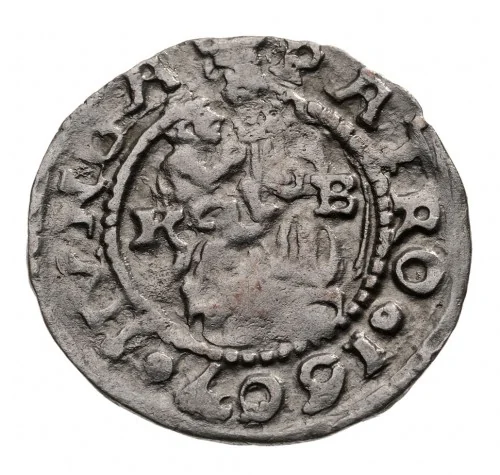
Crowned Madonna with child at right, mintmarks flanking, date in outer legend.
Inscription:
PATRO ¤ 1607 ¤ HVNGA
K B
K B
Script: Latin
Edge
Plain
Mints
| Name | Mark |
|---|---|
| Kremnica | KB |
Mintings
| Year | Mint Mark | Mintage | Quality | Collection |
|---|---|---|---|---|
| 1602 | K-B | — | ||
| 1603 | K-B | — | ||
| 1604 | K-B | — | ||
| 1605 | K-B | — | ||
| 1606 | K-B | — | ||
| 1607 | K-B | — | ||
| 1608 | K-B | — |
Historical background
In 1602, Hungary was a fractured kingdom caught in the protracted conflict between the Habsburg Monarchy and the Ottoman Empire, a period known as the Long Turkish War (1593-1606). This warfare devastated the economy and placed an immense fiscal strain on the Habsburg ruler, Emperor Rudolf II. To finance his military campaigns, the imperial treasury in Prague resorted to rampant currency debasement, primarily by drastically reducing the silver content of the large silver coins known as thalers and the smaller denars circulating in the Hungarian realm. This practice, while providing short-term funds, systematically eroded the value of money in circulation.
The currency situation was chaotic and inflationary. The debased, poor-quality coins minted in large quantities (often from captured Turkish silver) drove older, full-value coins out of circulation, as people hoarded them or melted them down for their intrinsic metal worth—an example of Gresham's Law. This led to a severe loss of confidence in the currency, price instability, and hardship for the population, particularly soldiers and those on fixed incomes who were paid in the worthless new coins. The problem was exacerbated by the circulation of Ottoman akçe in occupied territories and a plethora of older, foreign, and counterfeit coins, creating a complex and unreliable monetary environment.
This financial crisis had significant political repercussions within Hungary. The Hungarian estates and nobility, already resentful of Habsburg centralization and heavy-handed rule, were infuriated by the economic damage caused by the debasement, which they had no control over. The currency manipulation became a major grievance, fueling discontent that would later contribute to the uprising led by Stephen Bocskay in 1604. Thus, the monetary situation of 1602 was not merely an economic issue but a key factor in the growing national and political tensions that threatened Habsburg authority in the kingdom.
The currency situation was chaotic and inflationary. The debased, poor-quality coins minted in large quantities (often from captured Turkish silver) drove older, full-value coins out of circulation, as people hoarded them or melted them down for their intrinsic metal worth—an example of Gresham's Law. This led to a severe loss of confidence in the currency, price instability, and hardship for the population, particularly soldiers and those on fixed incomes who were paid in the worthless new coins. The problem was exacerbated by the circulation of Ottoman akçe in occupied territories and a plethora of older, foreign, and counterfeit coins, creating a complex and unreliable monetary environment.
This financial crisis had significant political repercussions within Hungary. The Hungarian estates and nobility, already resentful of Habsburg centralization and heavy-handed rule, were infuriated by the economic damage caused by the debasement, which they had no control over. The currency manipulation became a major grievance, fueling discontent that would later contribute to the uprising led by Stephen Bocskay in 1604. Thus, the monetary situation of 1602 was not merely an economic issue but a key factor in the growing national and political tensions that threatened Habsburg authority in the kingdom.

💎 Very Rare