

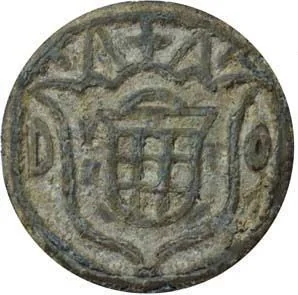
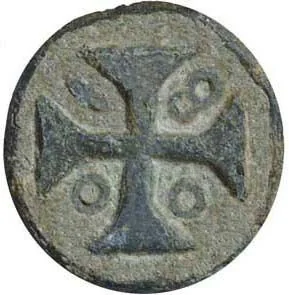
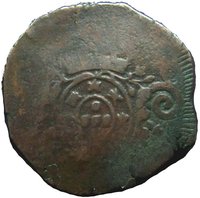
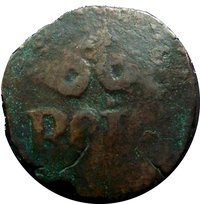
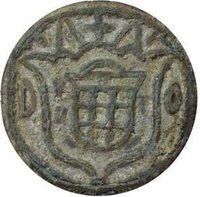
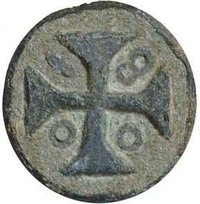
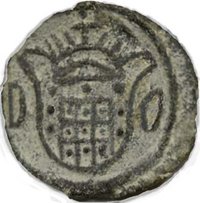
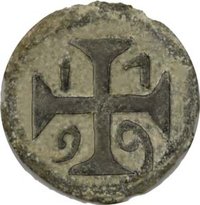
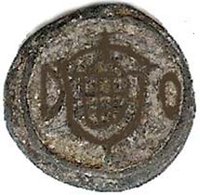
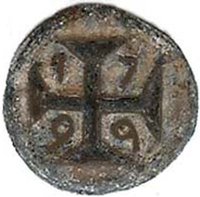
5 bazarucos – Portuguese India
Add to wishlist
India
Context
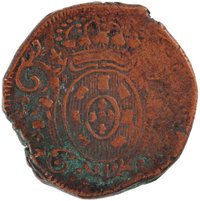
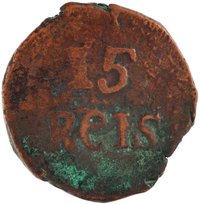
Years: 1799–1807
Country: India
Issuer: Portuguese India
Issuing organization: Casa da Moeda de Diu
Ruler: Maria I
Currency:
(1706—1880)
Demonetized: Yes
Material
References
KM: #
Numista: #50949
Mintings
| Year | Mint Mark | Mintage | Quality | Collection |
|---|---|---|---|---|
| 1799 | D-O | — | ||
| 1800 | D-O | — | ||
| 1801 | D-O | — | ||
| 1807 | D-O | — |
Historical background
In 1799, the currency situation in Portuguese India, centered on Goa, was characterized by significant complexity and instability, largely stemming from its role as a commercial hub. The territory operated within a multi-currency environment where several foreign coins circulated alongside local issues. The most important of these was the Portuguese Indian Rupia (Xerafim), but its value and acceptance were persistently challenged by the widespread use of stronger foreign silver coins, particularly the Spanish American 8 Reales (the "Spanish Dollar" or "Piece of Eight") and various Indian Rupees from neighboring Maratha and other territories. This created a chaotic exchange market where merchants had to constantly negotiate values.
The root of the monetary crisis lay in a chronic shortage of precious metals, especially silver, flowing from the metropole in Lisbon. Portugal's own economic difficulties, exacerbated by the Napoleonic Wars and the disruption of Brazilian gold shipments, meant Goa's mint often lacked the bullion to strike sufficient quantities of high-value, full-bodied currency. Consequently, the local economy relied heavily on the influx of foreign coins through trade, but this made the monetary system vulnerable to external flows and speculation. The intrinsic silver content of the Spanish Dollar often made it more desirable than the locally minted Xerafim, leading to hoarding and the export of the best coins.
Attempts by the Portuguese administration to standardize the currency and fix exchange rates repeatedly failed, as market forces consistently overrode official decrees. In practice, this monetary fragmentation and devaluation hindered both governance and commerce, creating a climate of uncertainty for merchants, tax collectors, and the general populace. The situation in 1799 was therefore one of a weakened colonial power struggling to impose monetary order in a vibrant Asian trade network that naturally favored more reliable and universally accepted foreign coinage.
The root of the monetary crisis lay in a chronic shortage of precious metals, especially silver, flowing from the metropole in Lisbon. Portugal's own economic difficulties, exacerbated by the Napoleonic Wars and the disruption of Brazilian gold shipments, meant Goa's mint often lacked the bullion to strike sufficient quantities of high-value, full-bodied currency. Consequently, the local economy relied heavily on the influx of foreign coins through trade, but this made the monetary system vulnerable to external flows and speculation. The intrinsic silver content of the Spanish Dollar often made it more desirable than the locally minted Xerafim, leading to hoarding and the export of the best coins.
Attempts by the Portuguese administration to standardize the currency and fix exchange rates repeatedly failed, as market forces consistently overrode official decrees. In practice, this monetary fragmentation and devaluation hindered both governance and commerce, creating a climate of uncertainty for merchants, tax collectors, and the general populace. The situation in 1799 was therefore one of a weakened colonial power struggling to impose monetary order in a vibrant Asian trade network that naturally favored more reliable and universally accepted foreign coinage.
✨ Legendary