

4 Xerafins – Portuguese India
India
Context
Years: 1778–1785
Country: India 
Issuer: Portuguese India
Currency:
(1706—1880)
Subdivision: 4 Xerafins = 2 Rupias
Demonetized: Yes
Material
Diameter: 14 mm
Weight: 1.6 g
Gold weight: 1.60 g
Shape: Irregular round
Composition: Gold
Magnetic: No
Technique: Hammered
References
KM: #Click to copy to clipboard175
Numista: #50931
Value
Bullion value: $267.31
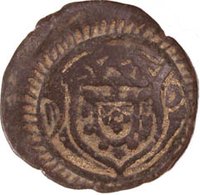
Obverse
Description:
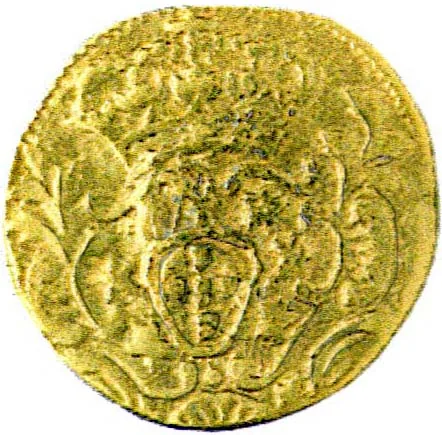
Royal Arms
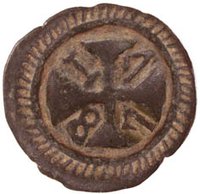
Reverse
Description:
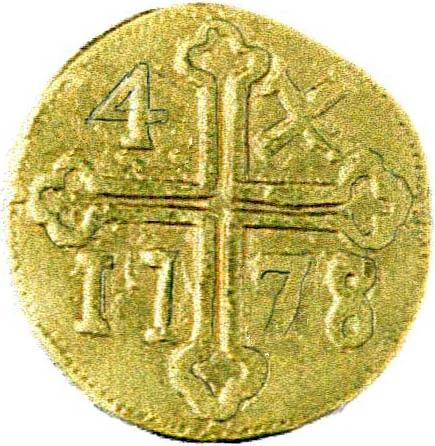
Cross of St. Thomas divides denomination and date.
Inscription:
4 - X
17-78
17-78
Script: Latin
Edge
Mints
| Name | Mark |
|---|---|
| Goa | — |
Mintings
| Year | Mint Mark | Mintage | Quality | Collection |
|---|---|---|---|---|
| 1778 | — | — | ||
| 1781 | — | — | ||
| 1785 | — | — |
Historical background
In 1778, the currency situation in Portuguese India, centered on Goa, was characterized by a complex and problematic monetary duality. The official system was based on the Portuguese réis, with the xerafim (equivalent to 300 réis) as a key local silver coin. However, this system was chronically debased and suffered from a severe shortage of precious metal coinage, leading to widespread use of low-value copper bazarucos for everyday transactions. This created inflationary pressure and a disconnect between the official currency and the realities of the local bazaar economy.
Simultaneously, the region was dominated by the circulation of strong foreign silver coins, reflecting Goa's role in Indian Ocean trade. The most important of these was the Spanish-American silver dollar (8 reales), known locally as the pataca or peso, alongside various Indian rupees, like those from Mughal and regional mints. These foreign coins were preferred for their reliable silver content and were essential for large-scale commerce, both within Goa and with neighboring territories. The Portuguese administration tacitly accepted this reality, often setting official exchange rates between the xerafim and these foreign currencies.
This monetary environment created significant challenges for the colonial treasury. The constant need to manage exchange rates between the debased local currency and stable foreign specie led to fiscal instability and revenue shortfalls. Furthermore, the outflow of silver to pay for trade deficits and the cost of maintaining the enclave drained the colony of precious metal. By 1778, this situation was a persistent financial strain, undermining Lisbon's control and highlighting the relative economic decline of Portuguese India within the competitive landscape of the subcontinent.
Simultaneously, the region was dominated by the circulation of strong foreign silver coins, reflecting Goa's role in Indian Ocean trade. The most important of these was the Spanish-American silver dollar (8 reales), known locally as the pataca or peso, alongside various Indian rupees, like those from Mughal and regional mints. These foreign coins were preferred for their reliable silver content and were essential for large-scale commerce, both within Goa and with neighboring territories. The Portuguese administration tacitly accepted this reality, often setting official exchange rates between the xerafim and these foreign currencies.
This monetary environment created significant challenges for the colonial treasury. The constant need to manage exchange rates between the debased local currency and stable foreign specie led to fiscal instability and revenue shortfalls. Furthermore, the outflow of silver to pay for trade deficits and the cost of maintaining the enclave drained the colony of precious metal. By 1778, this situation was a persistent financial strain, undermining Lisbon's control and highlighting the relative economic decline of Portuguese India within the competitive landscape of the subcontinent.
✨ Legendary