

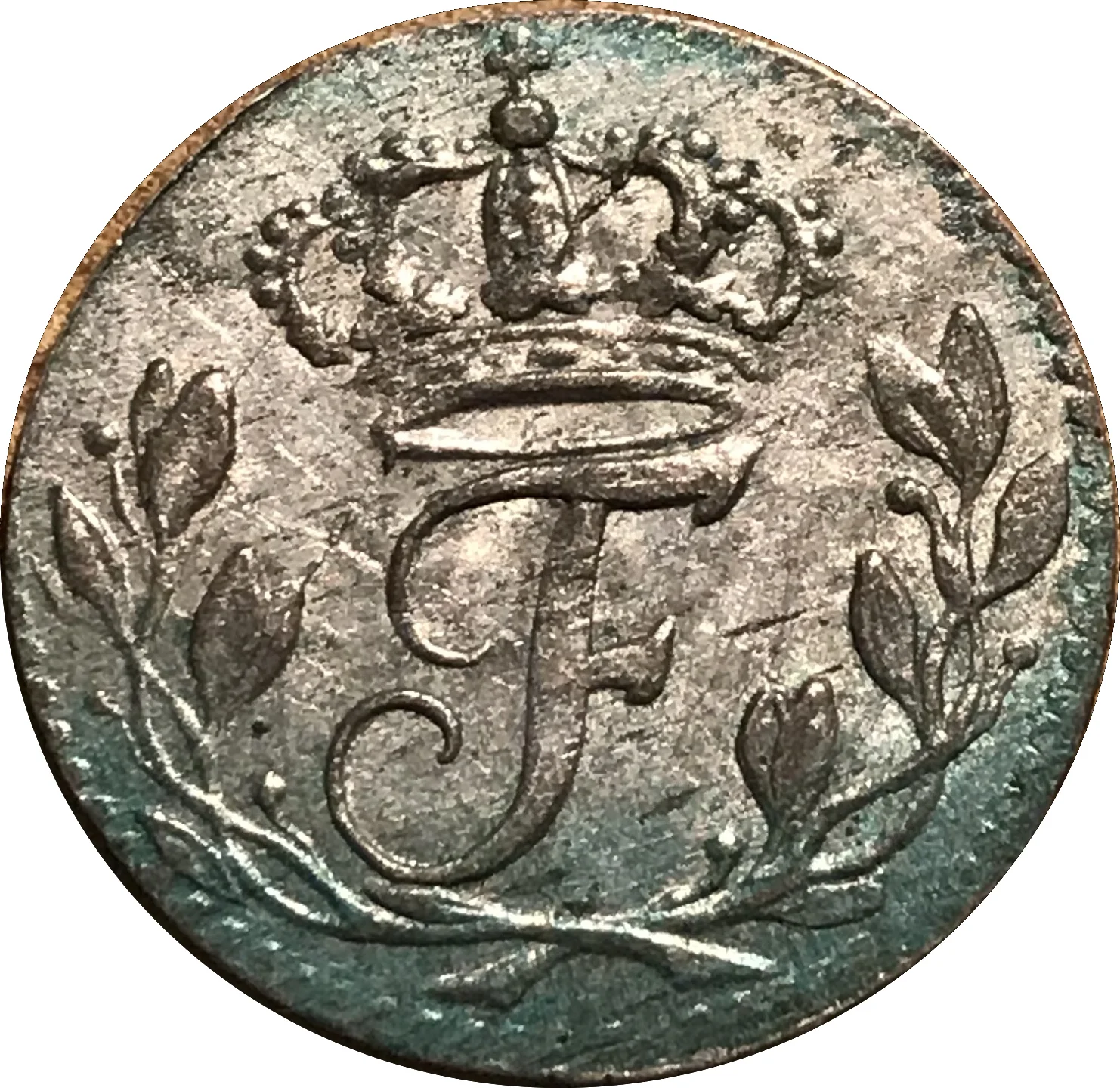
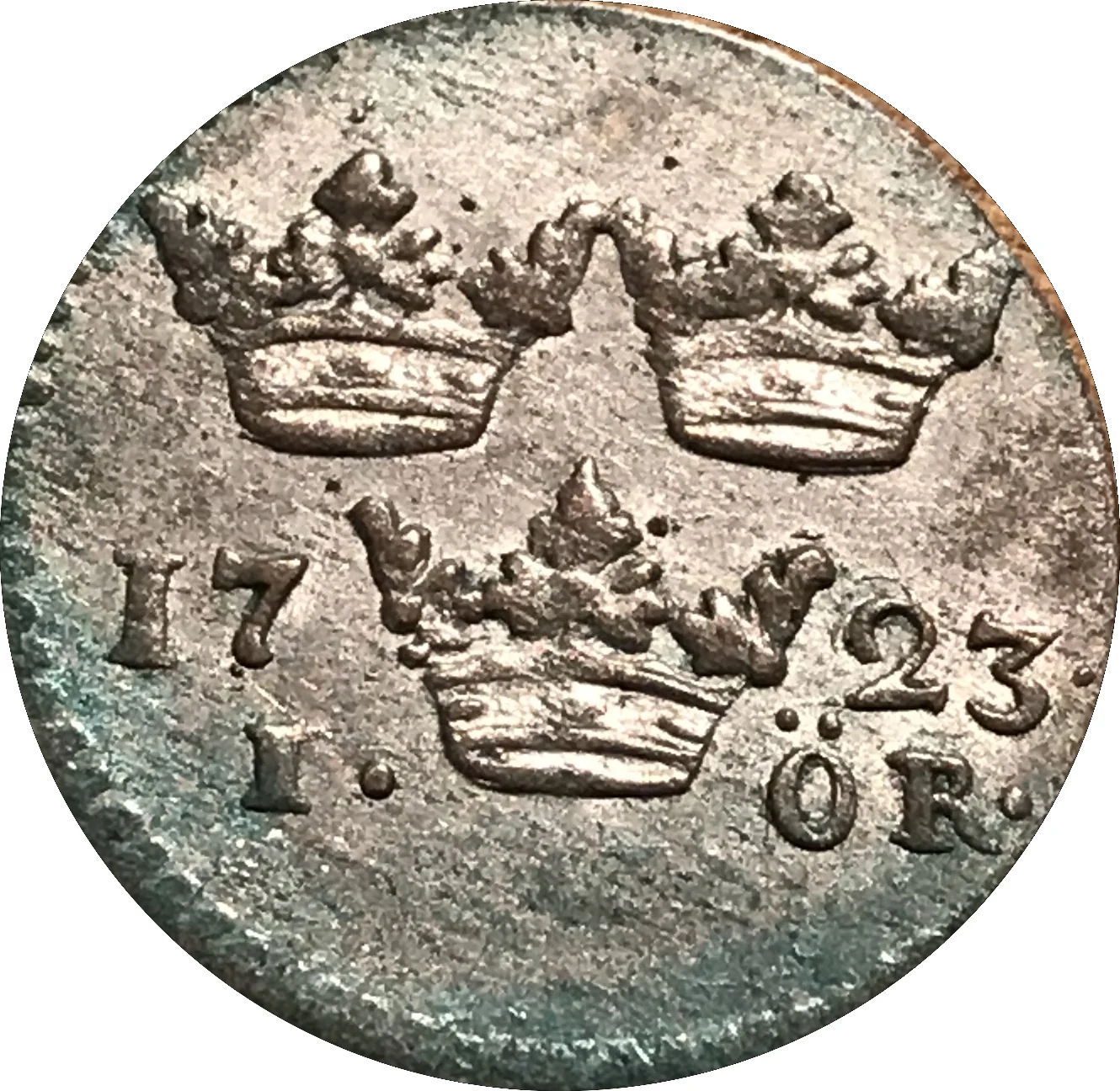
1 öre – Sweden
Add to wishlist
Sweden
Context
Years: 1720–1749
Issuer: Sweden
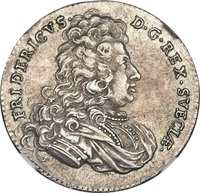
Ruler: Frederick I
Currency:
(1719—1798)
Demonetized: Yes
Total mintage: 7,475,558
Material
References
KM: #
Numista: #50927
Obverse
Reverse
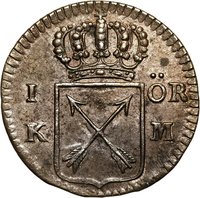
Description:
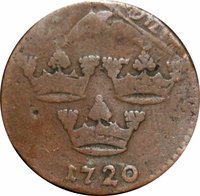
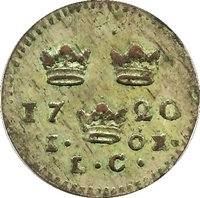
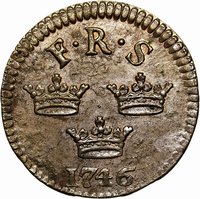
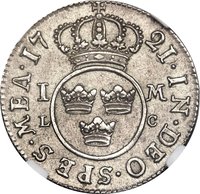
Three crowns separate date and value. Mintmaster initials beneath.
Inscription:
17 34
I · ÖR ·
G · Z ·
I · ÖR ·
G · Z ·
Script: Latin
Edge
Plain
Mints
| Name | Mark |
|---|---|
| Stockholm | — |
Mintings
| Year | Mint Mark | Mintage | Quality | Collection |
|---|---|---|---|---|
| 1720 | — | 144,353 | ||
| 1721 | — | 201,443 | ||
| 1722 | — | 576,304 | ||
| 1723 | — | 1,931,473 | ||
| 1724 | — | 387,055 | ||
| 1725 | — | 79,348 | ||
| 1726 | — | 223,934 | ||
| 1727 | — | 71,234 | ||
| 1728 | — | 71,016 | ||
| 1729 | — | 58,972 | ||
| 1730 | — | 74,220 | ||
| 1731 | — | 77,752 | ||
| 1732 | — | 767,703 | ||
| 1733 | — | 956,777 | ||
| 1734 | — | 326,484 | ||
| 1735 | — | 146,258 | ||
| 1736 | — | 160,949 | ||
| 1737 | — | 224,018 | ||
| 1740 | — | 76,704 | ||
| 1742 | — | 350,387 | ||
| 1743 | — | 288,046 | ||
| 1747 | — | 191,452 | ||
| 1749 | — | 89,676 |
Historical background
Following the Great Northern War (1700-1721), Sweden in 1720 found itself in a profound monetary crisis. The immense cost of the war had been financed not by taxes but by the relentless minting of copper and silver coins with drastically reduced precious metal content, a practice known as debasement. This led to severe inflation and a collapse in public trust in the currency. The system was further strained by Sweden's unique use of heavy copper plate money (plåtmynt), intended to be intrinsically valuable but which became impractical and cumbersome.
The official currency, the riksdaler, existed in a bewildering array of forms—specie (full-value coin), credit notes, and debased coinage—all circulating simultaneously at wildly different values. A complex and unstable exchange rate system, where the government-set value of coins bore little relation to their market or metallic worth, created chaos in trade and daily transactions. Merchants and the public struggled with constant uncertainty, as the real value of money fluctuated based on its form rather than its face denomination.
This chaotic situation demanded urgent reform. In the background of 1720, with the war winding down and Sweden having lost its great power status, the state was bankrupt and its financial infrastructure in ruins. The pressing task for the Riksdag and the state was to stabilize the nation's finances, which would eventually lead to the establishment of the Riksens Ständers Bank (the precursor to the Riksbank) in 1720 and later, more comprehensive monetary reforms under the Caps party in the 1730s to restore confidence and value to the Swedish currency.
The official currency, the riksdaler, existed in a bewildering array of forms—specie (full-value coin), credit notes, and debased coinage—all circulating simultaneously at wildly different values. A complex and unstable exchange rate system, where the government-set value of coins bore little relation to their market or metallic worth, created chaos in trade and daily transactions. Merchants and the public struggled with constant uncertainty, as the real value of money fluctuated based on its form rather than its face denomination.
This chaotic situation demanded urgent reform. In the background of 1720, with the war winding down and Sweden having lost its great power status, the state was bankrupt and its financial infrastructure in ruins. The pressing task for the Riksdag and the state was to stabilize the nation's finances, which would eventually lead to the establishment of the Riksens Ständers Bank (the precursor to the Riksbank) in 1720 and later, more comprehensive monetary reforms under the Caps party in the 1730s to restore confidence and value to the Swedish currency.
Series: 1720 Sweden circulation coins
🌟 Limited