

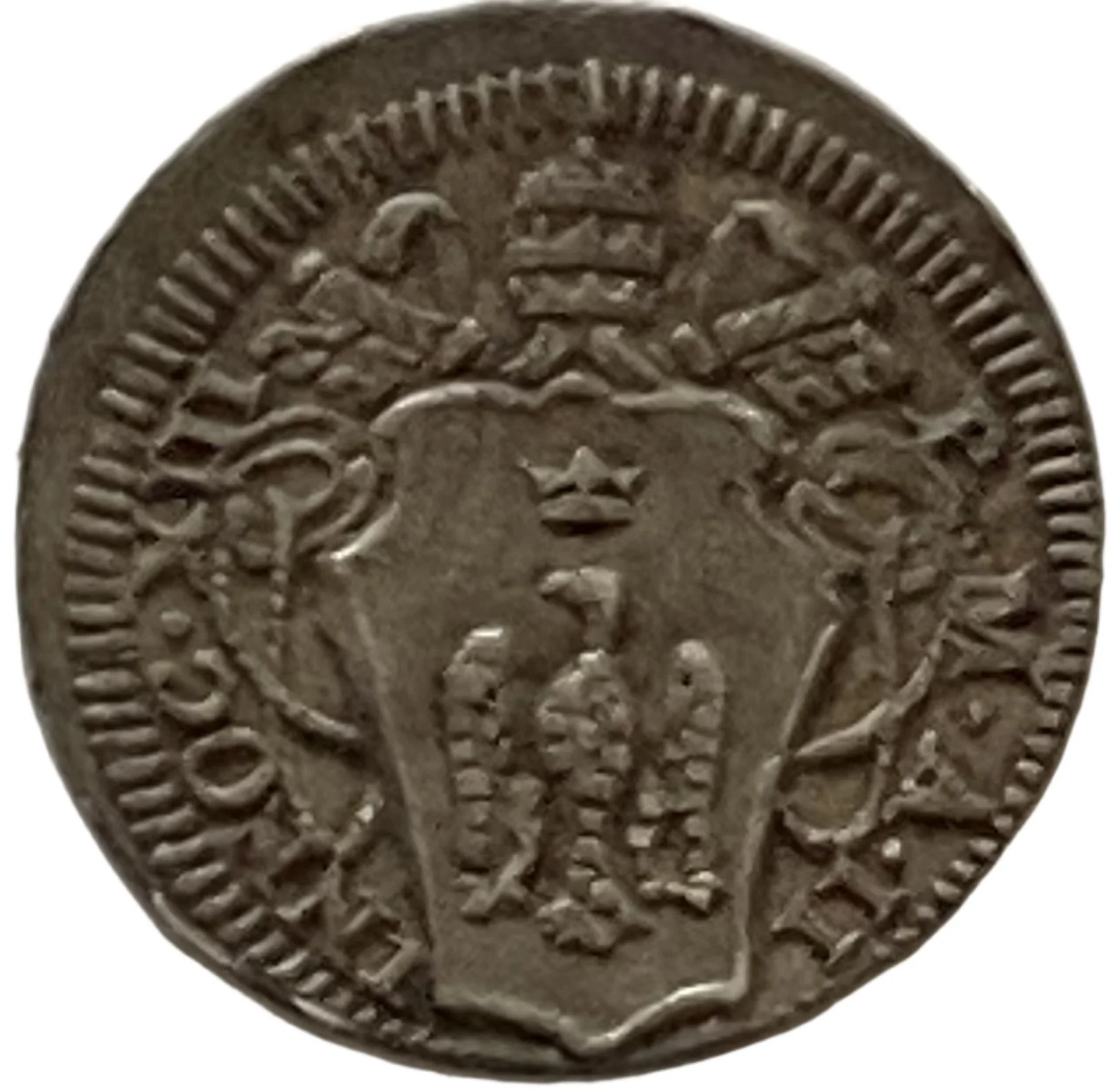
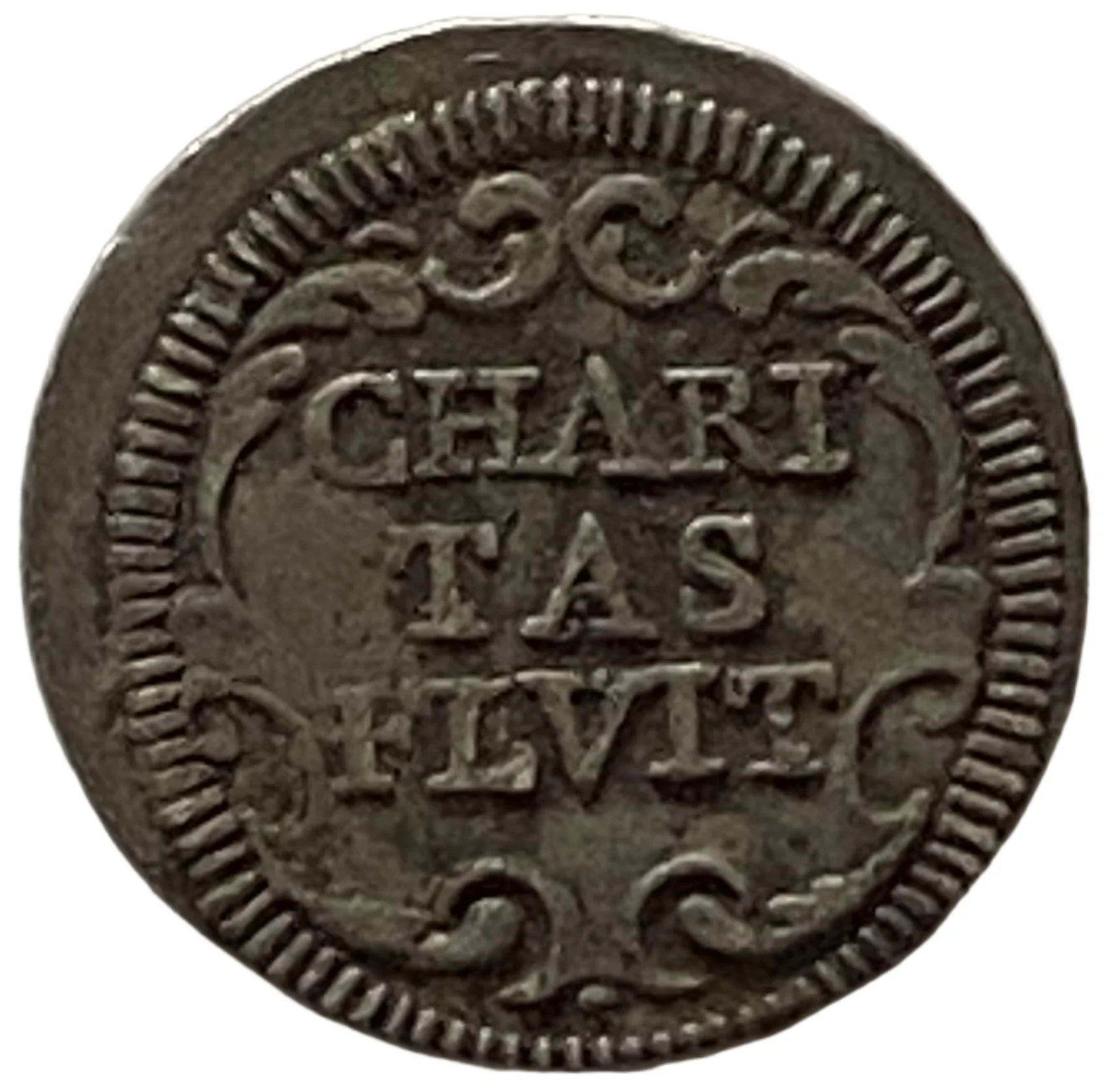
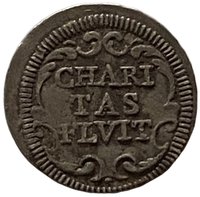
½ Grosso – Papal States
Vatican City
Context
Year: 1722
Country: Vatican City 
Issuer: Papal States
Ruler: Innocent XIII
Currency:
(1534—1835)
Demonetized: Yes
Material
References
KM: #Click to copy to clipboard1003
Numista: #508413
Value
Bullion value: $1.59
Obverse
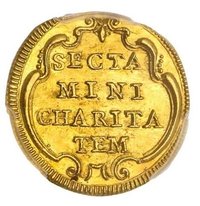
Reverse
Edge
Mints
| Name | Mark |
|---|---|
| Rome | — |
Mintings
| Year | Mint Mark | Mintage | Quality | Collection |
|---|---|---|---|---|
| 1722 | — | — |
Historical background
In 1722, the Papal States’ currency system was a complex and fragmented reflection of its political and economic reality. The state issued its own coinage, most notably the scudo (a large silver coin) and its subdivisions like the giulio and baiocco, minted at Rome and Bologna. However, the monetary landscape was far from unified. Numerous other Italian states, including the powerful Republic of Venice and the Grand Duchy of Tuscany, also circulated their coins freely within papal territories due to trade and the peninsula's interconnected economies. This created a constant challenge of exchange rates and valuation, further complicated by the widespread circulation of clipped, worn, and counterfeit coins that eroded public trust.
The period was one of relative monetary stability under Pope Innocent XIII (reigned 1721–1724), following the more turbulent and inflationary years of the late 17th century. The papal treasury, the Camera Apostolica, maintained a conservative policy aimed at preserving the metallic purity and weight of its official coinage to uphold its credibility. However, the state's finances were perpetually strained by a reliance on debt, consumption taxes, and the costs of administration, limiting any ambitious monetary reforms. The primary economic activity remained agriculture, with a modest manufacturing base, meaning that monetary policy was often reactive to harvest yields and the flow of specie from broader European trade.
Ultimately, the currency situation in 1722 was characterized by a fragile equilibrium. While the official papal coinage served as a nominal standard, the daily reality for merchants and citizens involved tedious calculations and assessments of a heterogeneous mix of coins. This system functioned adequately for local transactions but highlighted the Papal States' limited sovereignty over its economic space. The lack of a truly uniform and controlled monetary system was a symptom of the broader administrative weaknesses that would continue to challenge the papal government throughout the 18th century.
The period was one of relative monetary stability under Pope Innocent XIII (reigned 1721–1724), following the more turbulent and inflationary years of the late 17th century. The papal treasury, the Camera Apostolica, maintained a conservative policy aimed at preserving the metallic purity and weight of its official coinage to uphold its credibility. However, the state's finances were perpetually strained by a reliance on debt, consumption taxes, and the costs of administration, limiting any ambitious monetary reforms. The primary economic activity remained agriculture, with a modest manufacturing base, meaning that monetary policy was often reactive to harvest yields and the flow of specie from broader European trade.
Ultimately, the currency situation in 1722 was characterized by a fragile equilibrium. While the official papal coinage served as a nominal standard, the daily reality for merchants and citizens involved tedious calculations and assessments of a heterogeneous mix of coins. This system functioned adequately for local transactions but highlighted the Papal States' limited sovereignty over its economic space. The lack of a truly uniform and controlled monetary system was a symptom of the broader administrative weaknesses that would continue to challenge the papal government throughout the 18th century.
✨ Legendary