

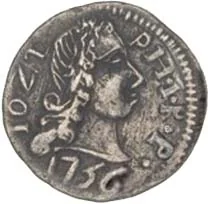
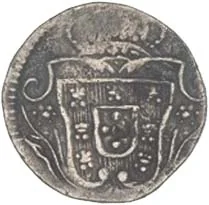
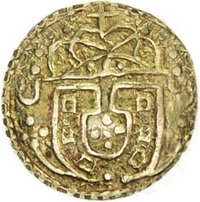
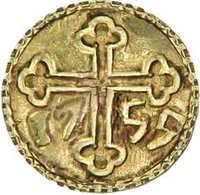
150 reis – Portuguese India
Add to wishlist
India
Context
Years: 1752–1764
Country: India
Issuer: Portuguese India
Ruler: Joseph I
Currency:
(1706—1880)
Subdivision: 150 reis = ½ Pardao=¼ Rupia
Demonetized: Yes
Material
Diameter: 16 mm
Weight: 3 g
Silver Weight:: 3.00 g
Shape: Irregular round
Composition: Silver
Magnetic: No
Technique: Hammered
References
KM: #
Numista: #50840
Value
Bullion value: $7.67
Mints
| Name | Mark |
|---|---|
| Goa | — |
Mintings
| Year | Mint Mark | Mintage | Quality | Collection |
|---|---|---|---|---|
| 1752 | — | — | ||
| 1753 | — | — | ||
| 1755 | — | — | ||
| 1756 | — | — | ||
| 1761 | — | — | ||
| 1762 | — | — | ||
| 1764 | — | — |
Historical background
In 1752, the currency situation in Portuguese India, centered at Goa, was a complex tapestry of local, regional, and international monetary systems, reflecting the territory's role as a declining commercial hub within a contested Indian Ocean world. The official currency was the Portuguese xerafim (plural: xerafins), a silver coin minted at the Goa mint. However, its value and circulation were overshadowed by a plethora of other coins. Most significant were the gold mohur and silver rupia (rupee) from the neighboring Maratha Empire, which dominated regional trade. Furthermore, older Portuguese coins like the cruzado and tanga remained in accounting use, while coins from other European powers, especially Spanish-American silver reales (pieces of eight), flowed through Goa due to its continued, if diminished, participation in wider Asian trade networks.
This monetary pluralism created a chaotic and often unstable economic environment. The value of coins was not fixed by a central authority but fluctuated based on their intrinsic metal content (silver or gold purity and weight) and market demand. Complex and official conversion rates between the xerafim, rupia, and tanga were published in tariff tables (tábuas), but these often conflicted with volatile market realities. This system was prone to manipulation, counterfeiting, and recurrent shortages of specie, which hampered administrative revenue collection and everyday commerce. The Portuguese state struggled to control this system, as its own economic and political power was waning in the face of Maratha ascendancy and British East India Company expansion.
Ultimately, the currency mosaic of 1752 was a direct symptom of Portuguese India's diminished sovereignty. No single power—neither the Estado da Índia in Goa, the Maratha Confederacy, nor other European companies—could impose a uniform monetary standard. The circulation was dictated by the pragmatic needs of merchants and the relative credibility of the issuing authority's bullion. This fragmented system added significant transaction costs and uncertainty to the economy, further weakening Portuguese administrative control and highlighting the transition of Goa from a dominant imperial capital to a territorial enclave surviving within the economic spheres of its more powerful neighbors.
This monetary pluralism created a chaotic and often unstable economic environment. The value of coins was not fixed by a central authority but fluctuated based on their intrinsic metal content (silver or gold purity and weight) and market demand. Complex and official conversion rates between the xerafim, rupia, and tanga were published in tariff tables (tábuas), but these often conflicted with volatile market realities. This system was prone to manipulation, counterfeiting, and recurrent shortages of specie, which hampered administrative revenue collection and everyday commerce. The Portuguese state struggled to control this system, as its own economic and political power was waning in the face of Maratha ascendancy and British East India Company expansion.
Ultimately, the currency mosaic of 1752 was a direct symptom of Portuguese India's diminished sovereignty. No single power—neither the Estado da Índia in Goa, the Maratha Confederacy, nor other European companies—could impose a uniform monetary standard. The circulation was dictated by the pragmatic needs of merchants and the relative credibility of the issuing authority's bullion. This fragmented system added significant transaction costs and uncertainty to the economy, further weakening Portuguese administrative control and highlighting the transition of Goa from a dominant imperial capital to a territorial enclave surviving within the economic spheres of its more powerful neighbors.
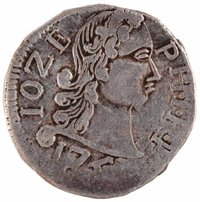
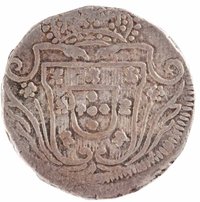
✨ Legendary