

5 francs – France
Add to wishlist
France
Context
Years: 1939–1947
Issuer: France
Period:
(1870—1940)
Currency:
(1795—1959)
Demonetization: 17 February 2005
Total mintage: 53,169,125
Material
Diameter: 31 mm
Weight: 12 g
Thickness: 2.3 mm
Shape: Round
Composition: Aluminium bronze
Magnetic: No
Technique: Milled
Alignment: Coin alignment
flip
References
KM: #
Numista: #1189
Obverse
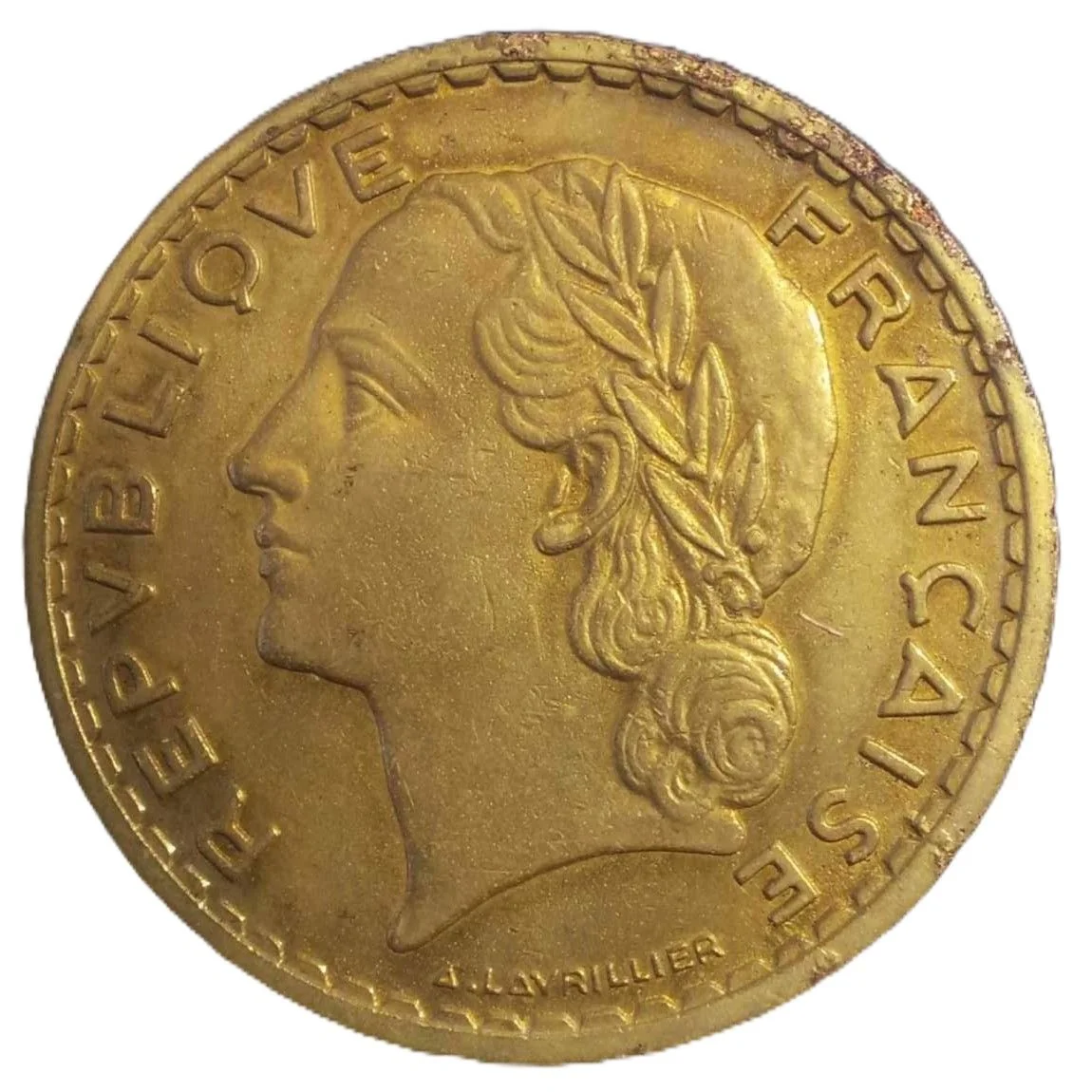
Description:
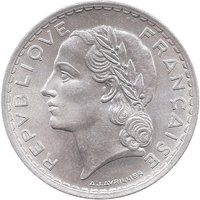
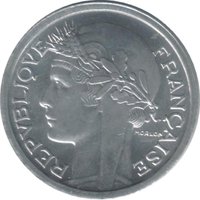
Laureate facing left
Inscription:
REPVBLIQVE FRANÇAISE
A. LAVRILLIER
A. LAVRILLIER
Translation:
FRENCH REPUBLIC
A. LAVRILLIER
A. LAVRILLIER
Script: Latin
Language: French
Engraver: André-Henri Lavrillier
Reverse
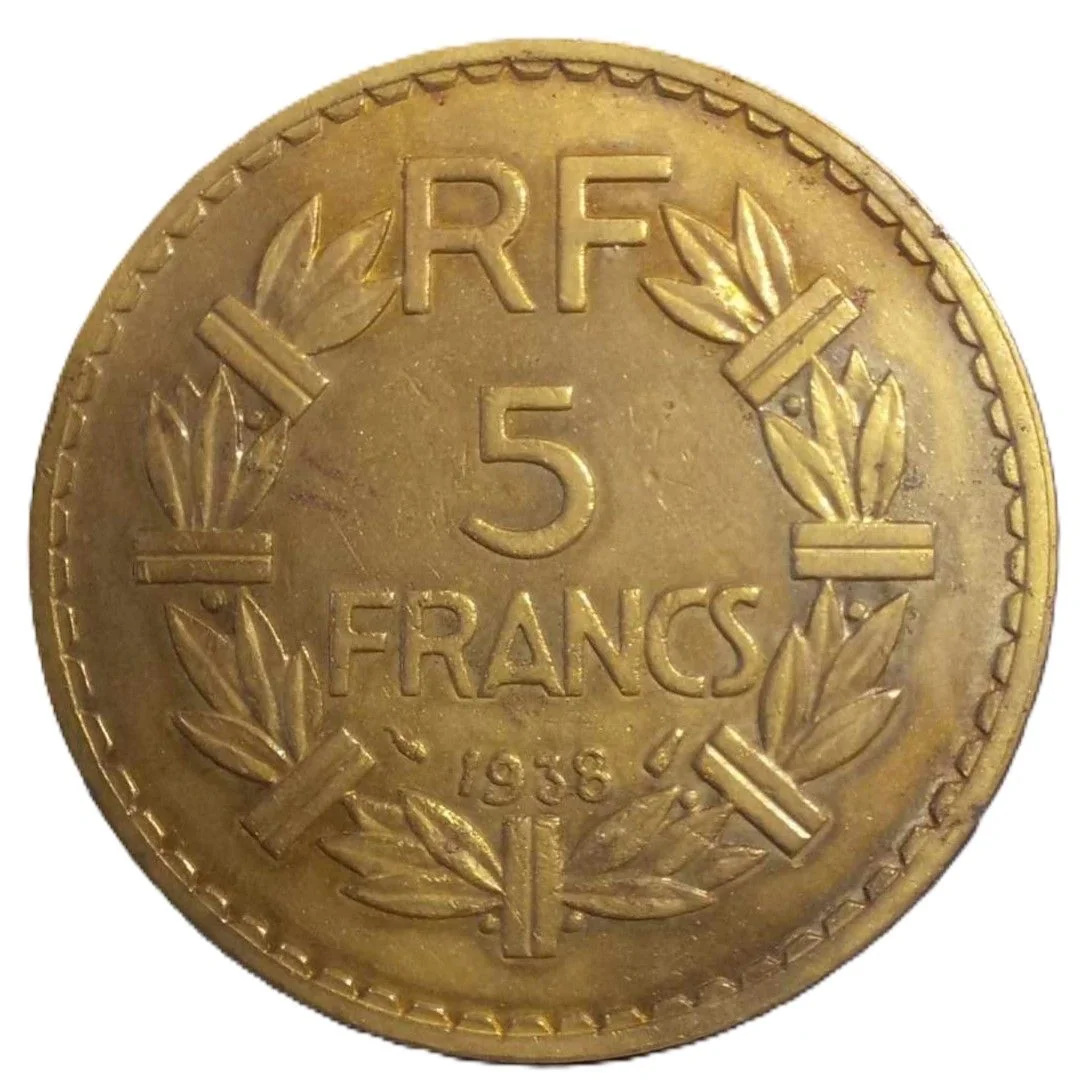
Description:
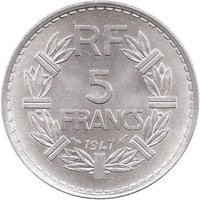
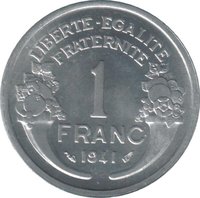
Date above denomination in wreath.
Inscription:
RF
5
FRANCS
1938
5
FRANCS
1938
Script: Latin
Engraver: André-Henri Lavrillier
Edge
Plain
Mints
| Name | Mark |
|---|---|
| Monnaie de Paris | — |
| Castelsarrasin | C |
Mintings
Historical background
In 1939, France entered the Second World War with a currency that was nominally strong but fundamentally fragile. The French franc had been devalued and officially pegged to the British pound and US dollar in 1936 under the Popular Front government, abandoning the gold standard in an attempt to stimulate exports and economic recovery from the Great Depression. This "Franc Poincaré" era of stability was over, and the currency was now managed by the Exchange Stabilization Fund, which controlled foreign exchange to prevent capital flight and conserve reserves for the coming war effort. Public confidence in the franc was low, a legacy of the inflationary trauma following World War I.
The government of Édouard Daladier, preparing for imminent conflict, imposed strict financial controls in September 1939. These included fixed exchange rates, stringent regulations on foreign currency transactions, and the forced conversion of foreign assets held by French citizens. The primary goal was to marshal all financial resources for the war, prevent speculation against the franc, and ensure the state could finance massive military expenditures without immediate hyperinflation. In practice, this created a dual economy: an official, controlled economy and a growing black market where the franc traded at a significant discount.
Thus, on the eve of war, the French franc was a managed currency operating under a regime of financial siege. Its value was artificially maintained by authority rather than market confidence, and its stability was entirely dependent on the state's ability to control the economy and, ultimately, its military fortunes. The disastrous defeat in 1940 would shatter this precarious system, leading to occupation, the imposition of occupation marks, and a further drastic erosion of the franc's value.
The government of Édouard Daladier, preparing for imminent conflict, imposed strict financial controls in September 1939. These included fixed exchange rates, stringent regulations on foreign currency transactions, and the forced conversion of foreign assets held by French citizens. The primary goal was to marshal all financial resources for the war, prevent speculation against the franc, and ensure the state could finance massive military expenditures without immediate hyperinflation. In practice, this created a dual economy: an official, controlled economy and a growing black market where the franc traded at a significant discount.
Thus, on the eve of war, the French franc was a managed currency operating under a regime of financial siege. Its value was artificially maintained by authority rather than market confidence, and its stability was entirely dependent on the state's ability to control the economy and, ultimately, its military fortunes. The disastrous defeat in 1940 would shatter this precarious system, leading to occupation, the imposition of occupation marks, and a further drastic erosion of the franc's value.
🌱 Very Common