


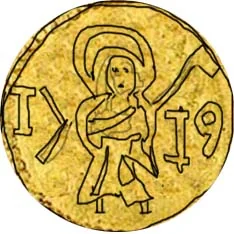
5 xerafins – Portuguese India
Add to wishlist
India
Context
Years: 1718–1728
Country: India
Issuer: Portuguese India
Issuing organization: Casa da Moeda de Diu
Ruler: João V
Currency:
(1706—1880)
Demonetized: Yes
Material
Diameter: 18 mm
Weight: 2.8 g
Gold Weight:: 2.80 g
Shape: Irregular round
Composition: Gold
Magnetic: No
Technique: Hammered
References
KM: #
Numista: #50722
Value
Bullion value: $429.86
Obverse
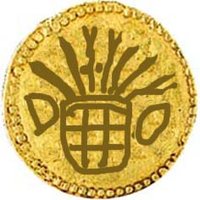
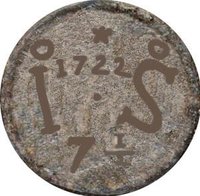
Reverse
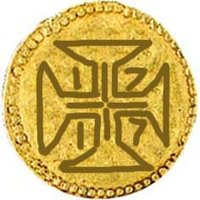
Edge
Mintings
| Year | Mint Mark | Mintage | Quality | Collection |
|---|---|---|---|---|
| 1718 | D-O | — | ||
| 1719 | D-O | — | ||
| 1721 | D-O | — | ||
| 1726 | D-O | — | ||
| 1727 | D-O | — | ||
| 1728 | D-O | — |
Historical background
In 1718, the currency situation in Portuguese India, centered at Goa, was a complex tapestry of official Portuguese issues, persistent local systems, and widespread foreign coinage, reflecting the territory's role as a commercial crossroads. The official currency was the Portuguese real, with higher-value gold cruzados and silver xerafins, but the royal treasury was perennially short of specie. This scarcity was exacerbated by the continual drain of silver to Portugal and the need to finance the Estado da Índia's extensive military and administrative costs, leading to frequent debasements and the issuance of low-quality copper bazarucos for local small trade.
Despite Lisbon's attempts at monetary control, the actual circulation was dominated by a plethora of foreign coins, a testament to Goa's integrated position in Indian Ocean trade networks. Gold mohurs from the Mughal Empire, silver rupees from various Indian princely states, and even Spanish pieces of eight were commonly used in major transactions. This de facto multi-currency system created constant challenges for merchants and the administration, requiring complex conversion calculations and exposing the economy to the fluctuating inflows and outflows of these external currencies.
The situation was further strained by the broader political and economic decline of the Estado da Índia. Facing rising competition from the Dutch and English East India Companies, Portuguese authorities often resorted to financial expedients. These included ordering recoinages, manipulating the official valuation of coins against the real, and struggling to suppress the circulation of worn or counterfeit coins. Consequently, the monetary landscape of 1718 was one of instability and uncertainty, where the official Portuguese system existed more on paper than in practice, overshadowed by the pragmatic use of stronger regional currencies.
Despite Lisbon's attempts at monetary control, the actual circulation was dominated by a plethora of foreign coins, a testament to Goa's integrated position in Indian Ocean trade networks. Gold mohurs from the Mughal Empire, silver rupees from various Indian princely states, and even Spanish pieces of eight were commonly used in major transactions. This de facto multi-currency system created constant challenges for merchants and the administration, requiring complex conversion calculations and exposing the economy to the fluctuating inflows and outflows of these external currencies.
The situation was further strained by the broader political and economic decline of the Estado da Índia. Facing rising competition from the Dutch and English East India Companies, Portuguese authorities often resorted to financial expedients. These included ordering recoinages, manipulating the official valuation of coins against the real, and struggling to suppress the circulation of worn or counterfeit coins. Consequently, the monetary landscape of 1718 was one of instability and uncertainty, where the official Portuguese system existed more on paper than in practice, overshadowed by the pragmatic use of stronger regional currencies.
✨ Legendary