

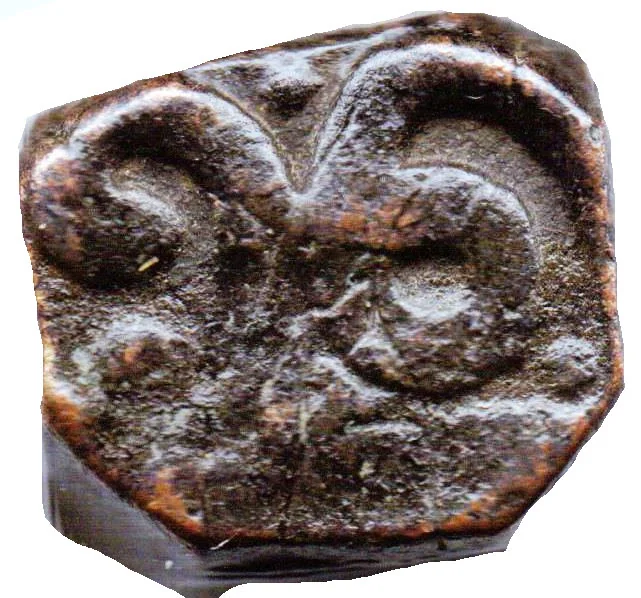
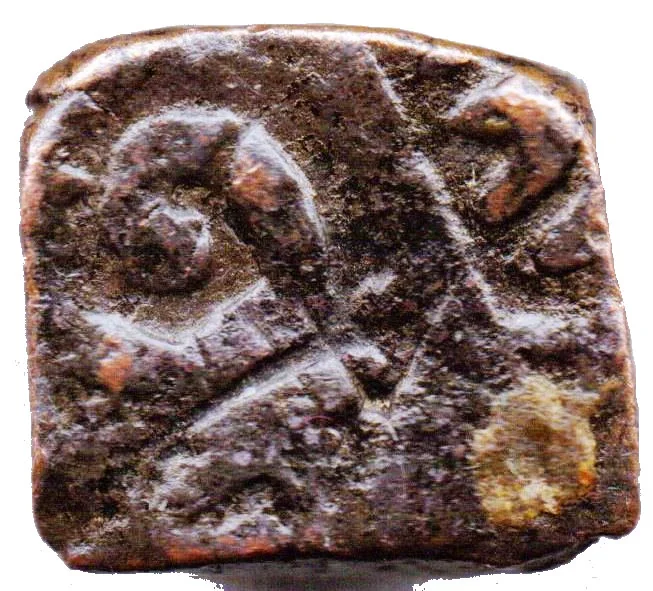
1 Tanka – Mughal Empire
India
Context
Years: 1563–1592
Country: India 
Issuer: Mughal Empire
Ruler: Akbar
Currency:
(1540—1842)
Demonetized: Yes
Material
References
KM: #Click to copy to clipboard46
Numista: #50660
Obverse
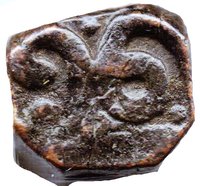
Description:
Mint
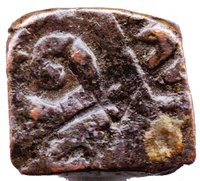
Reverse
Edge
Plain
Mintings
| Year | Mint Mark | Mintage | Quality | Collection |
|---|---|---|---|---|
| 1563 | — | — | ||
| 1582 | — | — | ||
| 1586 | — | — | ||
| 1587 | — | — | ||
| 1592 | — | — |
Historical background
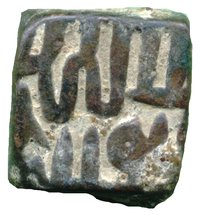
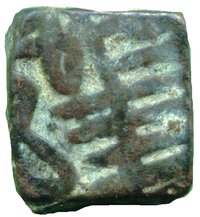
In 1563, the Mughal Empire's currency system was in a period of consolidation and standardization under the reign of Emperor Akbar (r. 1556–1605). The empire, having been established by Akbar's grandfather Babur only a few decades prior, inherited a complex monetary landscape from the preceding Delhi Sultanate and various regional kingdoms. This legacy included a mix of silver tankas, copper dams, and some gold coins, with varying weights and purities across different provinces. Akbar, still in the early phase of his rule, was beginning to assert central control over this system, recognizing that a uniform currency was essential for efficient administration, taxation, and trade across his expanding territories.
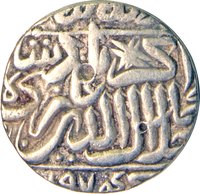
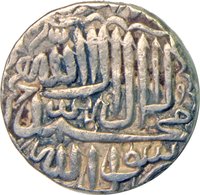
The primary circulating coin was the silver rupiya (the precursor to the modern rupee), introduced by Sher Shah Suri shortly before the Mughals regained power. In 1563, these coins were likely being minted at imperial mints (mints) in major cities like Delhi, Agra, and Lahore. The standard weight of the rupiya was maintained at approximately 11.5 grams of high-purity silver, establishing a reliable and trusted unit of account. Alongside it, the copper dam served as the essential lower-denomination coin for daily market transactions, with an official exchange rate that would later be standardized by Akbar at 40 dams to one rupiya. Gold coins (mohurs) were also minted but were used less for everyday commerce and more for hoarding, large state transactions, and ceremonial purposes.
The currency situation in 1563 was therefore one of transition towards greater imperial uniformity, though local and older coins certainly remained in circulation. Akbar's policies, which would later include sophisticated reforms like the dagh system (marking coins with the year of minting) and the establishment of a vast network of mints, were still in their infancy. The stability and wide acceptance of the silver rupiya, however, provided a strong foundation for the economic integration and prosperity that would characterize the peak of the Mughal Empire in the coming decades.
The primary circulating coin was the silver rupiya (the precursor to the modern rupee), introduced by Sher Shah Suri shortly before the Mughals regained power. In 1563, these coins were likely being minted at imperial mints (mints) in major cities like Delhi, Agra, and Lahore. The standard weight of the rupiya was maintained at approximately 11.5 grams of high-purity silver, establishing a reliable and trusted unit of account. Alongside it, the copper dam served as the essential lower-denomination coin for daily market transactions, with an official exchange rate that would later be standardized by Akbar at 40 dams to one rupiya. Gold coins (mohurs) were also minted but were used less for everyday commerce and more for hoarding, large state transactions, and ceremonial purposes.
The currency situation in 1563 was therefore one of transition towards greater imperial uniformity, though local and older coins certainly remained in circulation. Akbar's policies, which would later include sophisticated reforms like the dagh system (marking coins with the year of minting) and the establishment of a vast network of mints, were still in their infancy. The stability and wide acceptance of the silver rupiya, however, provided a strong foundation for the economic integration and prosperity that would characterize the peak of the Mughal Empire in the coming decades.
💎 Extremely Rare