

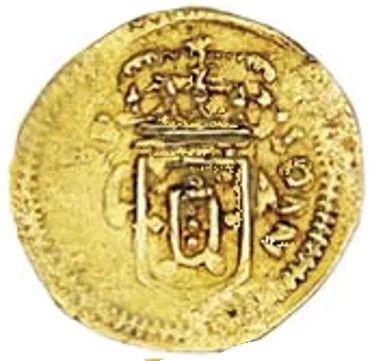
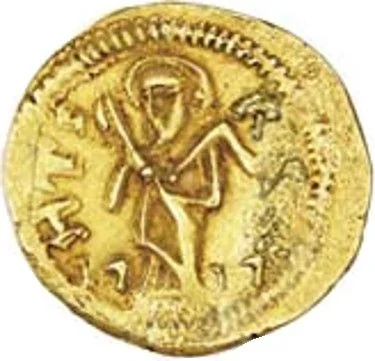
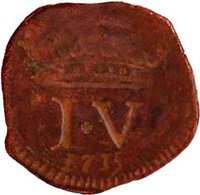
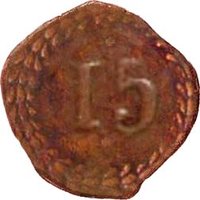
2.5 xerafins – Portuguese India
Add to wishlist
India
Context
Years: 1714–1750
Country: India
Issuer: Portuguese India
Ruler: João V
Currency:
(1706—1880)
Subdivision: 2.5 xerafins = 750 Réis
Demonetized: Yes
Material
Diameter: 14 mm
Weight: 1.4 g
Gold Weight:: 1.40 g
Shape: Irregular round
Composition: Gold
Magnetic: No
Technique: Hammered
References
KM: #
Numista: #50614
Value
Bullion value: $215.51
Mints
| Name | Mark |
|---|---|
| Goa | — |
Mintings
| Year | Mint Mark | Mintage | Quality | Collection |
|---|---|---|---|---|
| 1714 | G-A | — | ||
| 1715 | G-A | — | ||
| 1716 | G-A | — | ||
| 1717 | G-A | — | ||
| — | G-A | — |
Historical background
In 1714, the currency situation in Portuguese India, centered on Goa, was characterized by a complex and often chaotic monetary landscape. The official Portuguese currency, the real and its higher-value counterpart the cruzado, circulated alongside a multitude of foreign coins, reflecting Goa's role as a major trading hub. The most significant of these were gold mohurs and silver rupias from the Mughal Empire, along with a variety of European coins like Spanish pieces of eight and Venetian ducats. This proliferation created constant challenges for trade and administration, as merchants and officials had to navigate fluctuating exchange rates and varying standards of purity.
The Portuguese administration struggled to assert monetary control. While they minted their own silver tangas and copper bazarucos at the Goa mint, these often failed to meet local demand or trust, especially for larger transactions. A persistent problem was the outflow of full-weight, high-purity silver coins to neighboring Indian territories, where they were often melted down. This left the local economy frequently short of sound currency and reliant on often-debased or counterfeit coins. The Estado da Índia's chronic financial difficulties and the distance from Lisbon hampered consistent and effective monetary policy.
Consequently, the daily economic reality in Portuguese India was one of pragmatic adaptation. Accountants and merchants became adept at calculating values based on a coin's metal content and origin rather than its face value. Major contracts and tax revenues were often stipulated in the relatively stable gold mohur, while smaller daily transactions used a mix of lower-value local and foreign copper and silver coins. This unstable system, a blend of official impotence and private enterprise, mirrored the wider decline of Portuguese power in the region, as economic initiative increasingly lay with local networks and foreign traders rather than the colonial administration.
The Portuguese administration struggled to assert monetary control. While they minted their own silver tangas and copper bazarucos at the Goa mint, these often failed to meet local demand or trust, especially for larger transactions. A persistent problem was the outflow of full-weight, high-purity silver coins to neighboring Indian territories, where they were often melted down. This left the local economy frequently short of sound currency and reliant on often-debased or counterfeit coins. The Estado da Índia's chronic financial difficulties and the distance from Lisbon hampered consistent and effective monetary policy.
Consequently, the daily economic reality in Portuguese India was one of pragmatic adaptation. Accountants and merchants became adept at calculating values based on a coin's metal content and origin rather than its face value. Major contracts and tax revenues were often stipulated in the relatively stable gold mohur, while smaller daily transactions used a mix of lower-value local and foreign copper and silver coins. This unstable system, a blend of official impotence and private enterprise, mirrored the wider decline of Portuguese power in the region, as economic initiative increasingly lay with local networks and foreign traders rather than the colonial administration.
✨ Legendary