

1 Rupia – Portuguese India
India
Context
Years: 1739–1750
Country: India 
Issuer: Portuguese India
Issuing organization: Casa da Moeda de Damão
Ruler: João V
Currency:
(1706—1880)
Demonetized: Yes
Material
Diameter: 25 mm
Weight: 11.9 g
Silver weight: 11.90 g
Shape: Irregular round
Composition: Silver
Magnetic: No
Technique: Hammered
References
KM: #Click to copy to clipboard24
Numista: #50525
Value
Bullion value: $33.66
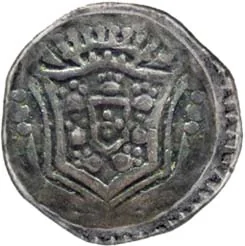
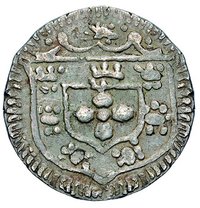
Obverse
Inscription:
IOANNES V R.P.
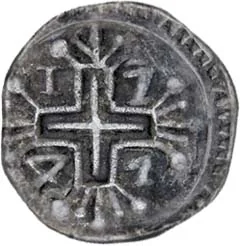
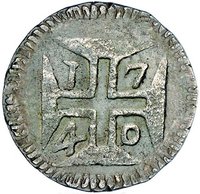
Reverse
Inscription:
I-7
4-7
4-7
Edge
Mintings
| Year | Mint Mark | Mintage | Quality | Collection |
|---|---|---|---|---|
| 1739 | — | — | ||
| 1741 | — | — | ||
| 1742 | — | — | ||
| 1744 | — | — | ||
| 1745 | — | — | ||
| 1747 | — | — | ||
| 1749 | — | — | ||
| 1750 | — | — |
Historical background
In 1739, the currency situation in Portuguese India, centered in Goa, was characterized by profound instability and complexity, a direct reflection of the Estado da India’s declining economic and political power. The official Portuguese currency system, based on the réis and its higher denominations like the cruzado, was severely undermined. Chronic shortages of specie, especially gold and silver, plagued the administration, as the once-lucrative trade routes that funneled bullion to Goa had been largely captured by the Dutch and English East India Companies. This scarcity crippled the government's ability to pay its soldiers and civil servants, leading to frequent arrears and demoralization within the colonial establishment.
The vacuum was filled by a chaotic circulation of diverse foreign coins, making the monetary landscape a bazaar of competing currencies. The most dominant and trusted was the gold Muhar of the neighbouring Maratha Empire, alongside a flood of other regional coins like Mughal rupees, Venetian sequins, and Ottoman ducats. Portuguese attempts to mint local coins, such as the xerafim, often failed to gain public confidence due to erratic metallic content and debasement. Furthermore, the English East India Company’s rupees, minted in Bombay, were increasingly used in trade, symbolizing the shift in commercial power. This proliferation created a confusing system where exchange rates fluctuated wildly, and transactions required expert knowledge of the weight and fineness of dozens of coin types.
This monetary crisis was both a symptom and a cause of Goa’s deepening troubles. The lack of a stable, sovereign currency hampered tax collection, discouraged commerce, and reflected the loss of Portuguese prestige. While authorities in Lisbon periodically issued decrees to regulate rates and ban foreign coins, these orders were largely ignored on the ground, as economic reality dictated the use of whatever sound money was available. Thus, in 1739, the currency of Portuguese India was less a unified system and more a fragmented, market-driven mosaic, underscoring the colony's integration into—and subordination within—the wider Indian Ocean economy rather than the Portuguese empire.
The vacuum was filled by a chaotic circulation of diverse foreign coins, making the monetary landscape a bazaar of competing currencies. The most dominant and trusted was the gold Muhar of the neighbouring Maratha Empire, alongside a flood of other regional coins like Mughal rupees, Venetian sequins, and Ottoman ducats. Portuguese attempts to mint local coins, such as the xerafim, often failed to gain public confidence due to erratic metallic content and debasement. Furthermore, the English East India Company’s rupees, minted in Bombay, were increasingly used in trade, symbolizing the shift in commercial power. This proliferation created a confusing system where exchange rates fluctuated wildly, and transactions required expert knowledge of the weight and fineness of dozens of coin types.
This monetary crisis was both a symptom and a cause of Goa’s deepening troubles. The lack of a stable, sovereign currency hampered tax collection, discouraged commerce, and reflected the loss of Portuguese prestige. While authorities in Lisbon periodically issued decrees to regulate rates and ban foreign coins, these orders were largely ignored on the ground, as economic reality dictated the use of whatever sound money was available. Thus, in 1739, the currency of Portuguese India was less a unified system and more a fragmented, market-driven mosaic, underscoring the colony's integration into—and subordination within—the wider Indian Ocean economy rather than the Portuguese empire.
✨ Legendary