

2 stuivers – Java
Add to wishlist
Indonesia
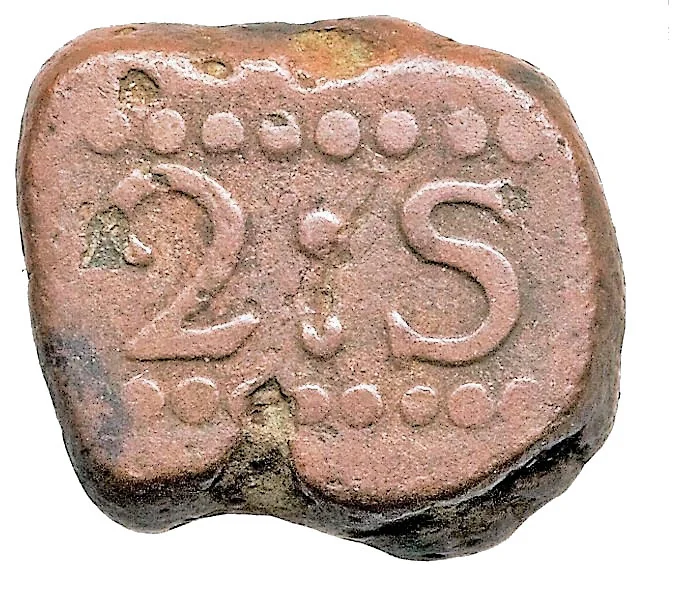
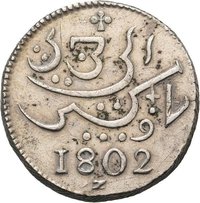
Obverse
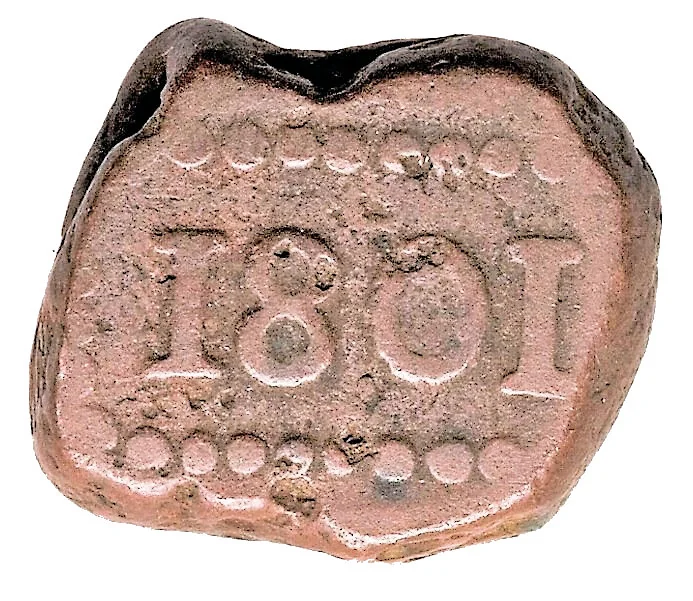
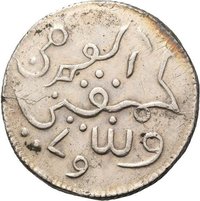
Reverse
Description:
Date
Inscription:
1801
Edge
Mintings
| Year | Mint Mark | Mintage | Quality | Collection |
|---|---|---|---|---|
| 1800 | — | — | ||
| 1801 | — | — | ||
| 1802 | — | — | ||
| 1803 | — | — |
Historical background
In 1800, Java's currency situation was complex and transitional, reflecting the island's shifting political control. The Dutch East India Company (VOC), which had long dominated the archipelago, was formally dissolved in 1799, and its assets were taken over by the Dutch state, the Batavian Republic. However, the monetary system in place was a legacy of the VOC's pragmatic and often chaotic rule. The primary circulating coins were a mixture of Spanish silver dollars (real pesos or "pieces of eight"), Dutch guilders, and a vast array of other foreign silver and gold coins from across Asia and Europe. Alongside these, there was a heavy reliance on copper duit coins for everyday small transactions, leading to a multi-tiered system where accounts were often kept in guilders but physical payment could be made in a variety of metallic forms.
This period was also marked by a severe shortage of reliable specie, exacerbated by global conflicts stemming from the Napoleonic Wars, which disrupted European trade and coin shipments. To address the liquidity crisis, the colonial administration had resorted to issuing paper money, known as "credit letters." These notes, however, suffered from a serious lack of public confidence and were prone to drastic depreciation. The monetary landscape was further complicated by the widespread practice of clipping and debasing coins, as well as the circulation of counterfeit money, making trade and taxation fraught with difficulty and uncertainty.
The year 1800 fell within a brief but significant interregnum of British influence, preceding the formal British takeover in 1811. While still under nominal Dutch authority, the economic instability created an environment ripe for reform. The chaotic multiplicity of coins, the weak paper currency, and the overarching need for a unified system to facilitate colonial extraction and trade set the stage for the major currency reforms that would follow under both British rule (led by Stamford Raffles) and later the returning Dutch administration, who would eventually establish the Netherlands Indies guilder on a more standardized footing.
This period was also marked by a severe shortage of reliable specie, exacerbated by global conflicts stemming from the Napoleonic Wars, which disrupted European trade and coin shipments. To address the liquidity crisis, the colonial administration had resorted to issuing paper money, known as "credit letters." These notes, however, suffered from a serious lack of public confidence and were prone to drastic depreciation. The monetary landscape was further complicated by the widespread practice of clipping and debasing coins, as well as the circulation of counterfeit money, making trade and taxation fraught with difficulty and uncertainty.
The year 1800 fell within a brief but significant interregnum of British influence, preceding the formal British takeover in 1811. While still under nominal Dutch authority, the economic instability created an environment ripe for reform. The chaotic multiplicity of coins, the weak paper currency, and the overarching need for a unified system to facilitate colonial extraction and trade set the stage for the major currency reforms that would follow under both British rule (led by Stamford Raffles) and later the returning Dutch administration, who would eventually establish the Netherlands Indies guilder on a more standardized footing.
✨ Legendary