

1½ Paisa – Bombay Presidency
India
Context

Material
References
KM: #Click to copy to clipboard195
Numista: #50421
Obverse
Description:
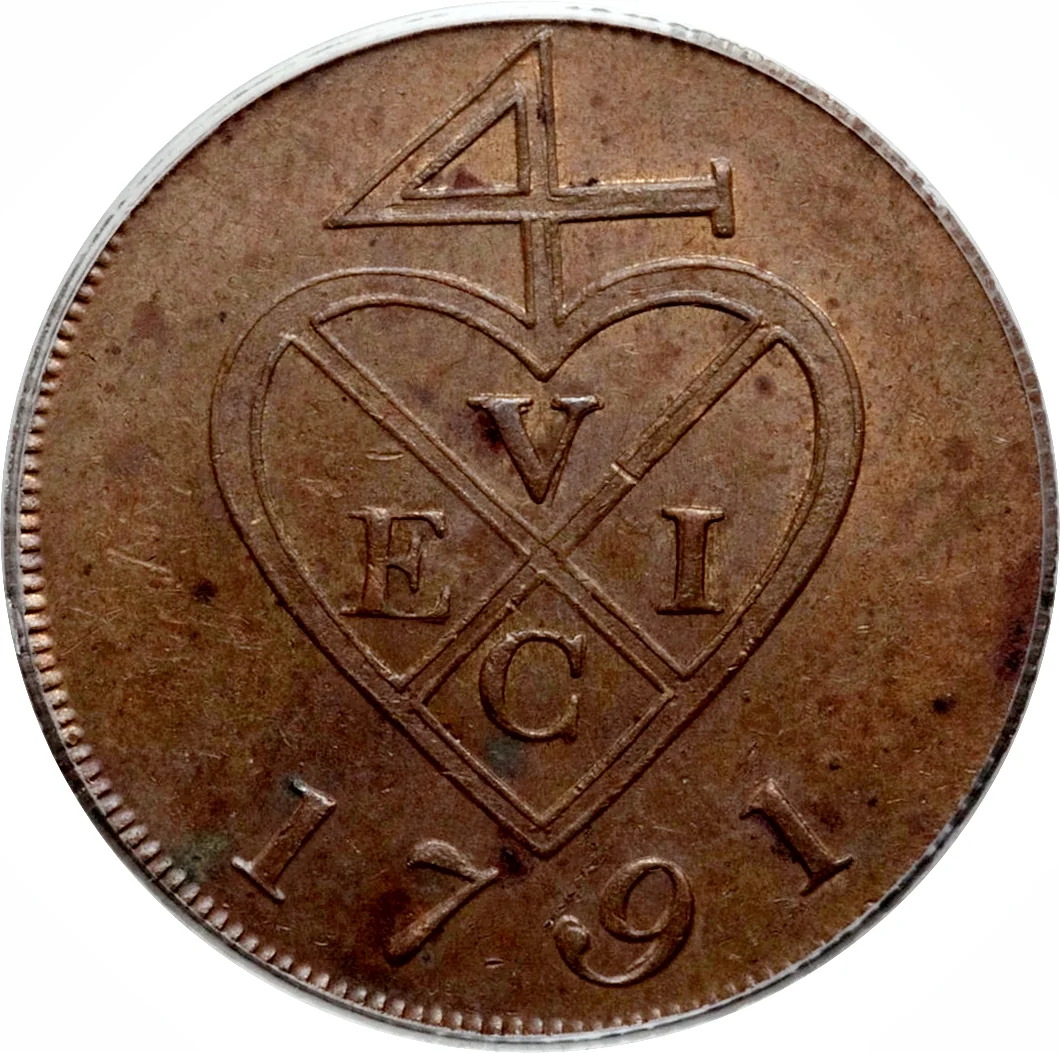
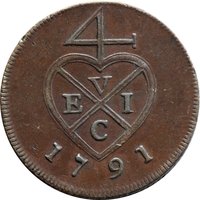
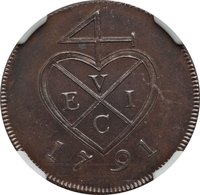
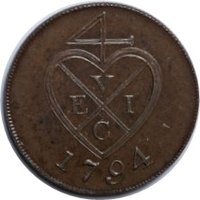
United East India Company bale mark, dated, within a toothed rim.
Inscription:
4
V E I C
1791
V E I C
1791
Reverse
Description:
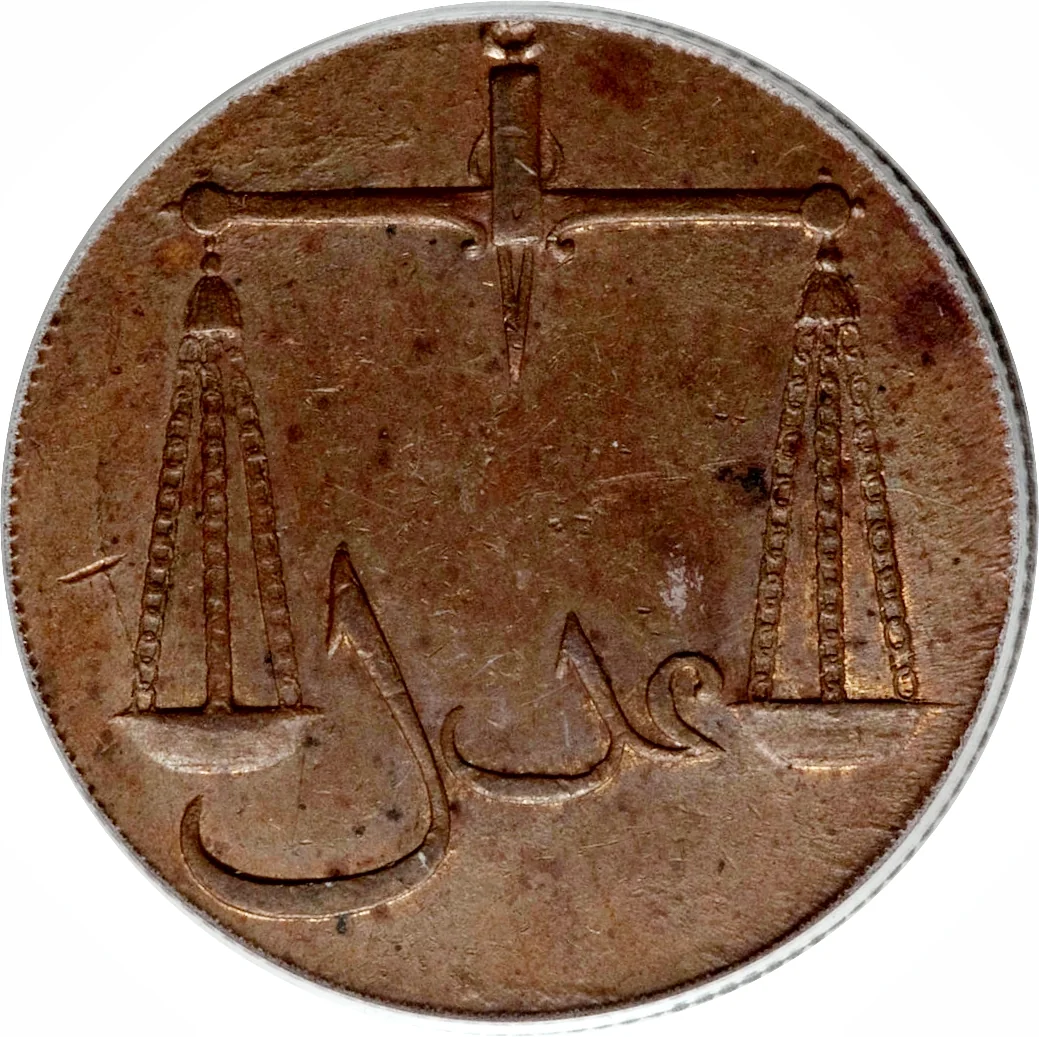
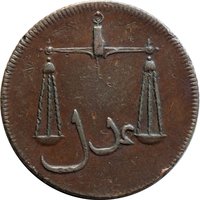
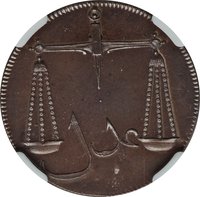
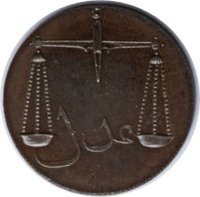
Scales with Persian legend "Adil" between pans, within a raised, toothed border.
Inscription:
عدل
Edge
Oblique milling, grained right ////
Mints
| Name | Mark |
|---|---|
| Soho Mint | — |
Mintings
| Year | Mint Mark | Mintage | Quality | Collection |
|---|---|---|---|---|
| 1791 | — | — | Proof | |
| 1791 | — | — | ||
| 1794 | — | — | Proof |
Historical background
In 1791, the Bombay Presidency's currency situation was a complex and challenging landscape, characterized by a severe shortage of standardized specie and a bewildering multiplicity of circulating coins. The Presidency lacked a unified monetary system, operating amidst a chaotic mix of foreign and indigenous currencies. The most prominent were the silver rupees of the Mughal Empire and the various successor states, particularly the Ankushi rupee of the Ahmadabad mint, but Portuguese xerafins, Spanish dollars, and coins from other European trading companies also circulated. This proliferation, with coins of varying weight, purity, and value, created immense difficulties for commerce and administration, necessitating constant reference to batta (premium/discount) tables for exchange.
The core of the problem was the absence of a dominant, authoritative mint under the Company's direct control. While the East India Company operated the Bombay Mint, its output was insufficient to establish a standard. The Presidency's trade, especially with the Arabian Sea and Persian Gulf regions, drained silver rupees out of the territory, exacerbating the scarcity. Furthermore, the ongoing wars with the Maratha Confederacy (the Third Anglo-Maratha War would begin two decades later) and Tipu Sultan of Mysore (the Third Anglo-Mysore War was ongoing in 1791) created economic instability, disrupted trade routes, and made the systematic reform of currency exceedingly difficult.
Consequently, daily transactions and government finances were hampered by this instability. The Company's administration struggled to collect revenue in a reliable standard and pay its troops and civil servants without loss through exchange. This monetary confusion acted as a significant brake on economic growth and efficient governance. The situation in 1791 thus represented a pressing administrative problem, one that would eventually compel the Company to pursue more aggressive monetary reform and the eventual imposition of a uniform rupee, a process that would gain momentum after securing greater territorial and political control in the early 19th century.
The core of the problem was the absence of a dominant, authoritative mint under the Company's direct control. While the East India Company operated the Bombay Mint, its output was insufficient to establish a standard. The Presidency's trade, especially with the Arabian Sea and Persian Gulf regions, drained silver rupees out of the territory, exacerbating the scarcity. Furthermore, the ongoing wars with the Maratha Confederacy (the Third Anglo-Maratha War would begin two decades later) and Tipu Sultan of Mysore (the Third Anglo-Mysore War was ongoing in 1791) created economic instability, disrupted trade routes, and made the systematic reform of currency exceedingly difficult.
Consequently, daily transactions and government finances were hampered by this instability. The Company's administration struggled to collect revenue in a reliable standard and pay its troops and civil servants without loss through exchange. This monetary confusion acted as a significant brake on economic growth and efficient governance. The situation in 1791 thus represented a pressing administrative problem, one that would eventually compel the Company to pursue more aggressive monetary reform and the eventual imposition of a uniform rupee, a process that would gain momentum after securing greater territorial and political control in the early 19th century.
💎 Very Rare