

1⁄48 Rupee – Madras Presidency
India

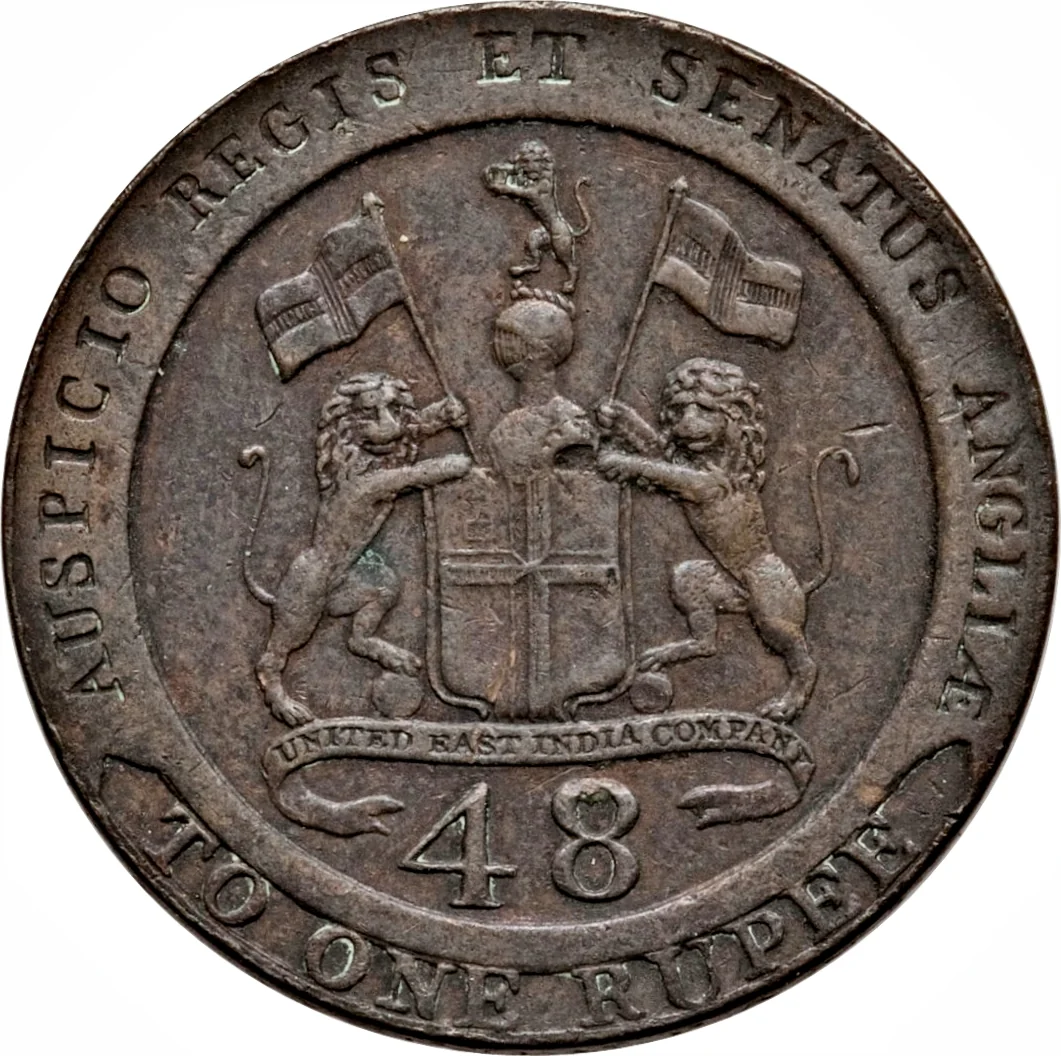
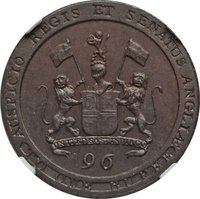
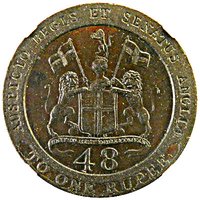
Obverse
Description:
Arms of the East India Company on a scroll reading "United East India Company." The rim is inscribed "AUSPICIO REGIS ET SENATUS ANGLIAE" with "48 TO ONE RUPEE" in a sunken panel below.
Inscription:
AUSPICIO REGIS ET SENATUS ANGLIAE
UNITED EAST INDIA COMPANY
48
TO ONE RUPEE
UNITED EAST INDIA COMPANY
48
TO ONE RUPEE
Script: Latin
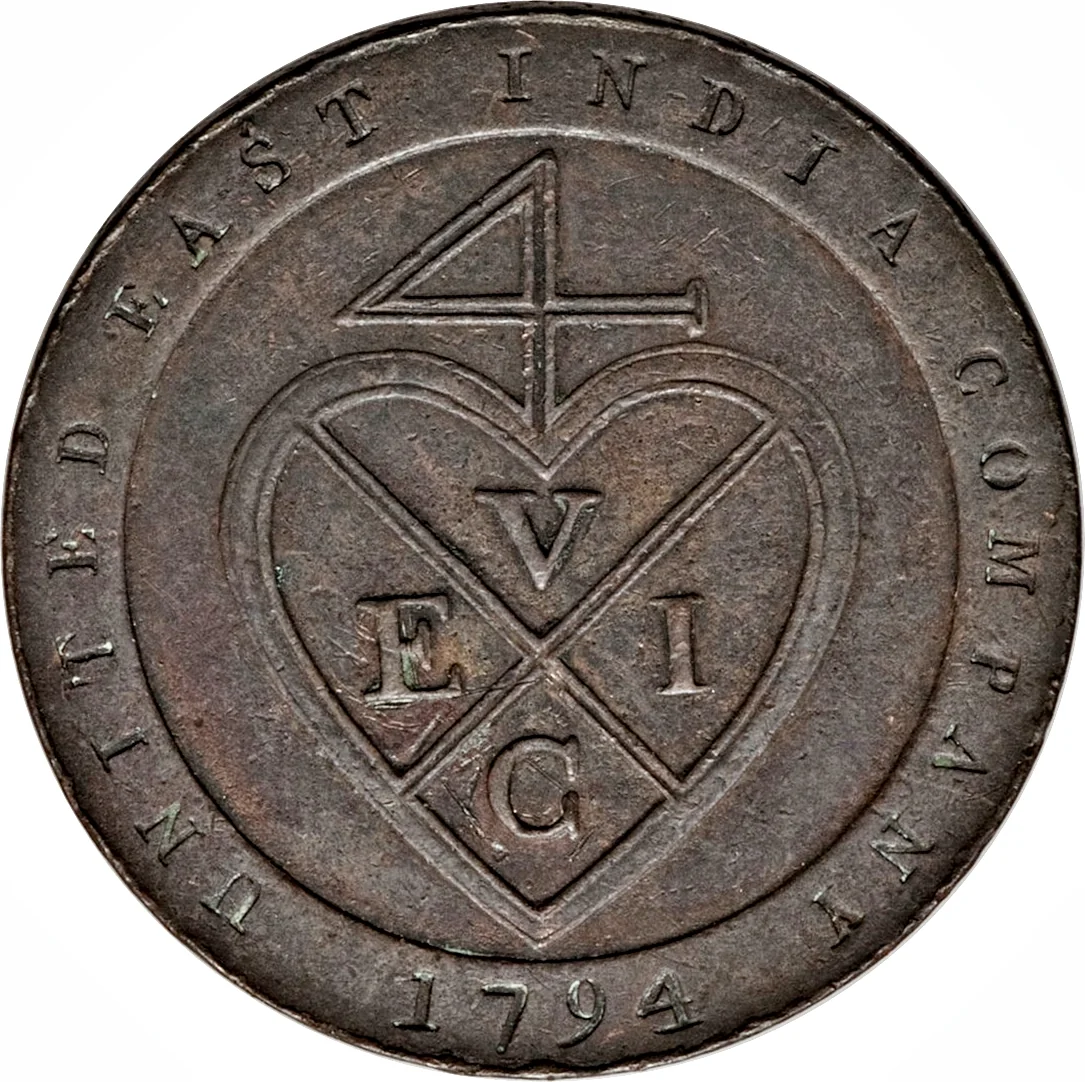
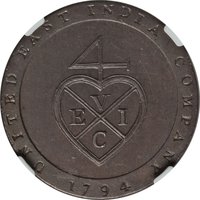
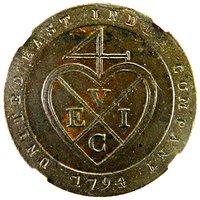
Reverse
Description:
Company seal with "United East India Company 1794" on its rim.
Inscription:
UNITED EAST INDIA COMPANY
4
V E I C
1794
4
V E I C
1794
Script: Latin
Edge
Smooth with Lettering
Legend:
ENGLISH UNITED EAST INDIA COMPANY
Mints
| Name | Mark |
|---|---|
| Soho Mint | — |
Mintings
| Year | Mint Mark | Mintage | Quality | Collection |
|---|---|---|---|---|
| 1794 | — | — | ||
| 1794 | — | — | Proof |
Historical background
In 1794, the currency situation in the Madras Presidency was a complex and chaotic system defined by a severe shortage of standardized specie and a reliance on a bewildering variety of coins. The Presidency operated on a silver standard, with the British East India Company's silver rupee as the official unit of account. However, the actual circulation was dominated by a mix of older, debased Mughal and Arcot rupees, gold pagodas (a historic South Indian coin), and a plethora of foreign coins like Spanish dollars and Dutch ducatons. This proliferation created constant problems of valuation, exchange, and widespread forgery, hampering both commerce and administrative revenue collection.
The root of the crisis lay in the chronic shortage of official Company-minted silver rupees, exacerbated by the high cost of importing silver bullion from Europe during the Napoleonic Wars. To fill the void, the Company had long tolerated the circulation of the heavily debased Arcot rupee, which was minted at a lower fineness. By 1794, these coins constituted the bulk of the currency in circulation, but they traded at a significant discount against the Company's "star pagoda" (a gold coin) and its own theoretical silver rupee. This created a dual system of "bazaar" and "accounting" rates, leading to confusion and exploitation.
Consequently, 1794 fell within a period of intense monetary experimentation and distress. The Company's administration, under Governor Sir Charles Oakley, was grappling with the consequences of earlier failed attempts to reform the system. A proposed recoinage in the 1780s had stalled, and the public remained deeply distrustful of any new currency issues. The situation was a significant administrative and economic challenge, undermining the Company's financial stability and highlighting its struggle to impose a unified fiscal order on the diverse economy of Southern India. This instability would eventually lead to the major reforms of 1807-1812, which finally established a uniform silver standard for the Presidency.
The root of the crisis lay in the chronic shortage of official Company-minted silver rupees, exacerbated by the high cost of importing silver bullion from Europe during the Napoleonic Wars. To fill the void, the Company had long tolerated the circulation of the heavily debased Arcot rupee, which was minted at a lower fineness. By 1794, these coins constituted the bulk of the currency in circulation, but they traded at a significant discount against the Company's "star pagoda" (a gold coin) and its own theoretical silver rupee. This created a dual system of "bazaar" and "accounting" rates, leading to confusion and exploitation.
Consequently, 1794 fell within a period of intense monetary experimentation and distress. The Company's administration, under Governor Sir Charles Oakley, was grappling with the consequences of earlier failed attempts to reform the system. A proposed recoinage in the 1780s had stalled, and the public remained deeply distrustful of any new currency issues. The situation was a significant administrative and economic challenge, undermining the Company's financial stability and highlighting its struggle to impose a unified fiscal order on the diverse economy of Southern India. This instability would eventually lead to the major reforms of 1807-1812, which finally established a uniform silver standard for the Presidency.
💎 Very Rare