

2 xerafins – Portuguese India
Add to wishlist
India
Context
Year: 1688
Country: India
Issuer: Portuguese India
Issuing organization: Casa da Moeda de Diu
Currency:
(1580—1706)
Demonetized: Yes
Material
Diameter: 30 mm
Weight: 25 g
Silver Weight:: 25.00 g
Shape: Irregular round
Composition: Silver
Magnetic: No
Technique: Hammered
References
KM: #
Numista: #50303
Value
Bullion value: $63.88
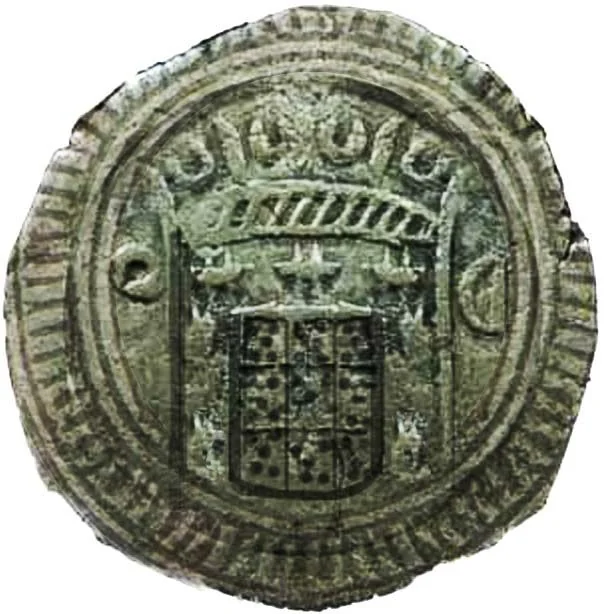
Obverse
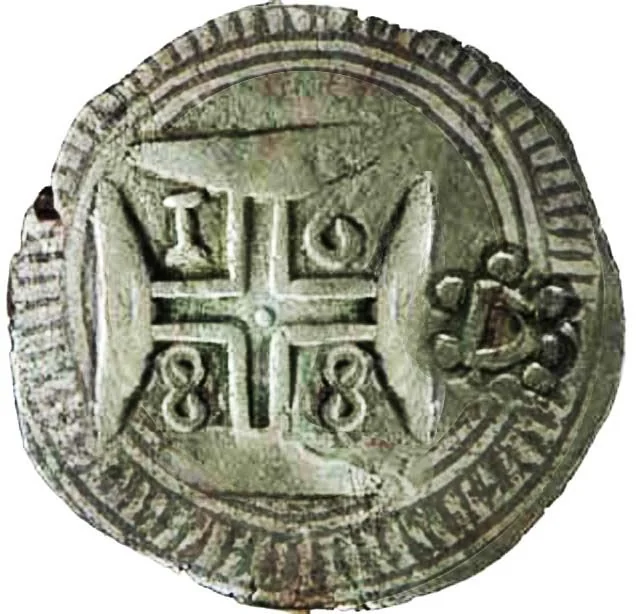
Reverse
Description:
Cross of the Military Order of Christ, dated at corners, bearing a "D" assay mark.
Inscription:
1-6
8-8
8-8
Edge
Mintings
| Year | Mint Mark | Mintage | Quality | Collection |
|---|---|---|---|---|
| 1688 | O-D | — |
Historical background
In 1688, the currency situation in Portuguese India, centered at Goa, was a complex tapestry of local, regional, and international coinage, reflecting the Estado da Índia’s diminished economic power and its role as a commercial intermediary. The official Portuguese currency, the cruzado, served as the unit of account, but its physical presence was often overshadowed by a plethora of circulating foreign coins. The most dominant of these was the Spanish piece of eight, or real de a ocho, a silver coin that had become the de facto currency of global trade. Alongside it, various gold mohurs and silver rupias from the neighboring Mughal Empire were essential for commerce within the subcontinent, while Venetian ducats, Persian larins, and other coins also flowed through Goan markets.
This monetary pluralism was a symptom of Portuguese weakness. The Crown struggled to enforce a monopoly and lacked the bullion reserves to mint sufficient high-quality currency of its own. Consequently, the local economy operated on a practical bimetallic system, with gold coins used for larger transactions and state revenue, and silver for everyday trade. The Royal Mint (Casa da Moeda) in Goa did produce coins like the tangas and reis, but these often had limited reach beyond immediate Portuguese territories and were frequently debased, leading to distrust and complex, fluctuating exchange rates against the more stable foreign currencies.
The situation created significant administrative and economic challenges for the Portuguese authorities. Tax collections and official accounts had to constantly account for different coinages and their values, leading to confusion and potential for fraud. Furthermore, the reliance on foreign, especially Spanish, silver highlighted Portugal’s integration into and dependence on broader global bullion flows, largely controlled by rivals. Thus, in 1688, the currency landscape of Portuguese India was less a symbol of sovereign power and more a pragmatic, albeit messy, adaptation to its precarious position within the vibrant and competitive Indian Ocean economy.
This monetary pluralism was a symptom of Portuguese weakness. The Crown struggled to enforce a monopoly and lacked the bullion reserves to mint sufficient high-quality currency of its own. Consequently, the local economy operated on a practical bimetallic system, with gold coins used for larger transactions and state revenue, and silver for everyday trade. The Royal Mint (Casa da Moeda) in Goa did produce coins like the tangas and reis, but these often had limited reach beyond immediate Portuguese territories and were frequently debased, leading to distrust and complex, fluctuating exchange rates against the more stable foreign currencies.
The situation created significant administrative and economic challenges for the Portuguese authorities. Tax collections and official accounts had to constantly account for different coinages and their values, leading to confusion and potential for fraud. Furthermore, the reliance on foreign, especially Spanish, silver highlighted Portugal’s integration into and dependence on broader global bullion flows, largely controlled by rivals. Thus, in 1688, the currency landscape of Portuguese India was less a symbol of sovereign power and more a pragmatic, albeit messy, adaptation to its precarious position within the vibrant and competitive Indian Ocean economy.


✨ Legendary