

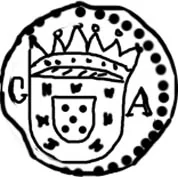


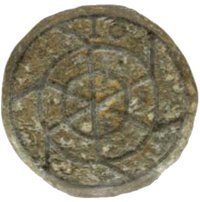
Obverse
Reverse
Edge
Mintings
| Year | Mint Mark | Mintage | Quality | Collection |
|---|---|---|---|---|
| 1691 | G-A | — |
Historical background
In 1691, the currency situation in Portuguese India, centered at Goa, was characterized by a complex and often chaotic multiplicity of circulating coins, reflecting the territory's role as a commercial crossroads. The official Portuguese currency, the real and its higher denominations like the cruzado, struggled to maintain primacy. These coins competed with a flood of foreign silver, most notably Spanish-American pieces of eight (reales) and their regional derivatives, which were the dominant trade currency of the Indian Ocean. Furthermore, a vast array of local gold hons and silver tangas from neighboring Indian states, particularly the Maratha Empire and the Sultanate of Bijapur, circulated widely, their values fluctuating with political and market conditions.
This monetary pluralism created severe administrative and economic challenges for the Estado da Índia. The constant inflow and outflow of coins of varying metallic purity led to chronic instability in exchange rates, facilitating fraud and hindering tax collection. The Portuguese administration frequently issued proclamations (bandos) to fix the value of specific coins against the xerafim (the local accounting unit), but these were often ineffective or ignored in the bustling markets of Old Goa. Debasement of coinage was also a recurring problem, as both local and royal mints sometimes reduced silver content to raise short-term revenue, further eroding trust in the currency.
Ultimately, the monetary landscape of 1691 symbolized the diminished power of the Portuguese crown in the region. Unable to impose a uniform currency, the authorities were forced to accommodate the reality of a poly-metallic system driven by regional trade dynamics rather than imperial decree. This situation underscored the transition from Portuguese commercial hegemony in the previous century to a more precarious position where their economic system was permeable and heavily influenced by the currencies of both global European rivals and rising indigenous powers.
This monetary pluralism created severe administrative and economic challenges for the Estado da Índia. The constant inflow and outflow of coins of varying metallic purity led to chronic instability in exchange rates, facilitating fraud and hindering tax collection. The Portuguese administration frequently issued proclamations (bandos) to fix the value of specific coins against the xerafim (the local accounting unit), but these were often ineffective or ignored in the bustling markets of Old Goa. Debasement of coinage was also a recurring problem, as both local and royal mints sometimes reduced silver content to raise short-term revenue, further eroding trust in the currency.
Ultimately, the monetary landscape of 1691 symbolized the diminished power of the Portuguese crown in the region. Unable to impose a uniform currency, the authorities were forced to accommodate the reality of a poly-metallic system driven by regional trade dynamics rather than imperial decree. This situation underscored the transition from Portuguese commercial hegemony in the previous century to a more precarious position where their economic system was permeable and heavily influenced by the currencies of both global European rivals and rising indigenous powers.
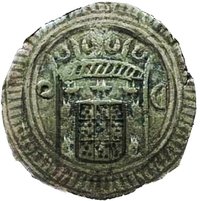
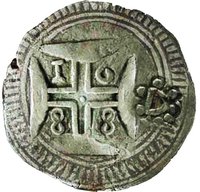
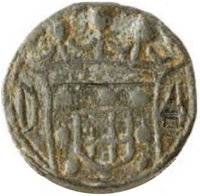
✨ Legendary