

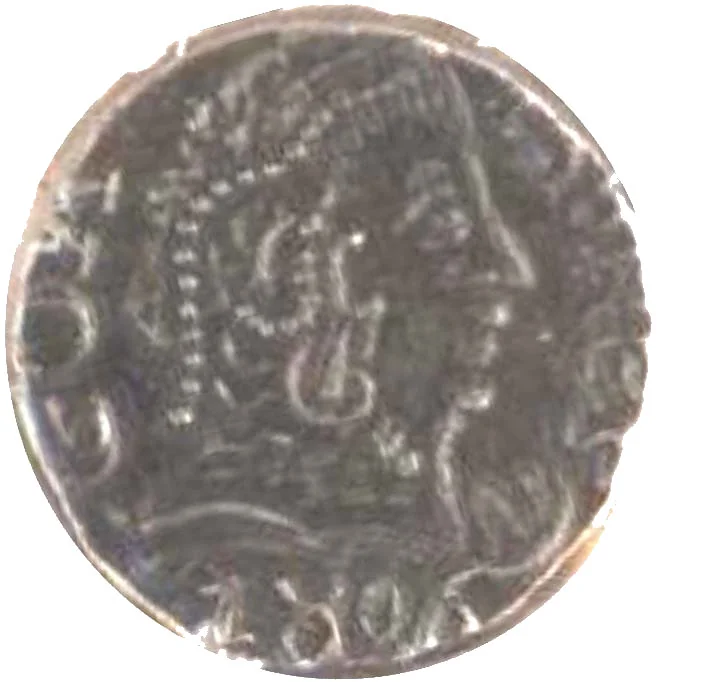
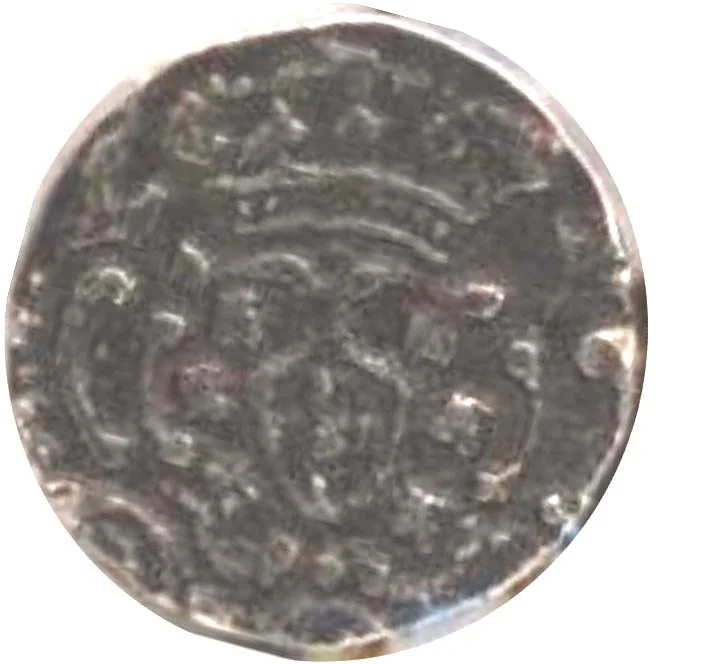
150 Reis – Portuguese India
India
Context
Years: 1787–1806
Country: India 
Issuer: Portuguese India
Ruler: Maria I
Currency:
(1706—1880)
Subdivision: 150 Reis = ½ Pardao=¼ Rupia
Demonetized: Yes
Material
Diameter: 15 mm
Weight: 2.7 g
Silver weight: 2.70 g
Shape: Irregular round
Composition: Silver
Magnetic: No
Technique: Hammered
References
KM: #Click to copy to clipboard199
Numista: #50096
Value
Bullion value: $7.64
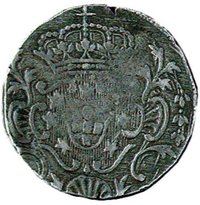
Obverse
Description:
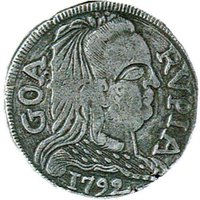
M1 29: Bust with widow's veil.
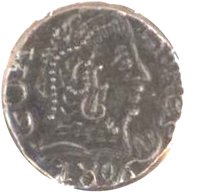
M1 30: Bust with headdress.
M1 30: Bust with headdress.
Inscription:
GOA / 150 R
or
GOA / 150 RES
or
GOA / 150 RES
Script: Latin
Reverse
Edge
Mints
| Name | Mark |
|---|---|
| Goa | — |
Mintings
| Year | Mint Mark | Mintage | Quality | Collection |
|---|---|---|---|---|
| 1787 | GOA | — | ||
| 1788 | GOA | — | ||
| 1790 | GOA | — | ||
| 1791 | GOA | — | ||
| 1793 | GOA | — | ||
| 1794 | GOA | — | ||
| 1796 | GOA | — | ||
| 1797 | GOA | — | ||
| 1799 | GOA | — | ||
| 1802 | GOA | — | ||
| 1803 | GOA | — | ||
| 1804 | GOA | — | ||
| 1805 | GOA | — | ||
| 1806 | GOA | — |
Historical background
In 1787, the currency situation in Portuguese India, centered on the colony of Goa, was complex and marked by a severe shortage of reliable specie. The official currency was the Portuguese xerafim, but the monetary landscape was dominated by a chaotic mix of foreign coins that circulated concurrently. These included gold mohurs and silver rupias from neighboring Maratha territories, older Portuguese cruzados, and a variety of European coins brought through trade, particularly the Spanish-American silver peso or "piece of eight." This multiplicity created constant problems of valuation, exchange, and fraud, hampering both local commerce and the administration's ability to collect revenue.
The root of the crisis lay in the declining economic fortunes of the Estado da Índia. Once a powerful trading empire, by the late 18th century it was a diminished entity, running chronic budget deficits. The Portuguese crown lacked the silver and gold reserves to mint sufficient quantities of official coinage for its colony, leading to an overreliance on imported currency. Furthermore, the colony suffered from a persistent trade imbalance, as it imported more goods (especially textiles and food) from surrounding Indian states than it exported, causing a steady drain of precious metal coinage out of Goa.
Attempts at reform were piecemeal and largely ineffective. The local government frequently issued proclamations to fix exchange rates between the various coins, but these official rates often conflicted with market values, leading to widespread hoarding of good coin and the circulation of debased or counterfeit money. In 1787, this monetary instability contributed to the broader social and political tensions that culminated in the failed "Pinto Conspiracy," a revolt led by disaffected military officers and clergy. Thus, the currency crisis was both a symptom and an aggravating factor in the general administrative and economic decay of Portuguese India in this period.
The root of the crisis lay in the declining economic fortunes of the Estado da Índia. Once a powerful trading empire, by the late 18th century it was a diminished entity, running chronic budget deficits. The Portuguese crown lacked the silver and gold reserves to mint sufficient quantities of official coinage for its colony, leading to an overreliance on imported currency. Furthermore, the colony suffered from a persistent trade imbalance, as it imported more goods (especially textiles and food) from surrounding Indian states than it exported, causing a steady drain of precious metal coinage out of Goa.
Attempts at reform were piecemeal and largely ineffective. The local government frequently issued proclamations to fix exchange rates between the various coins, but these official rates often conflicted with market values, leading to widespread hoarding of good coin and the circulation of debased or counterfeit money. In 1787, this monetary instability contributed to the broader social and political tensions that culminated in the failed "Pinto Conspiracy," a revolt led by disaffected military officers and clergy. Thus, the currency crisis was both a symptom and an aggravating factor in the general administrative and economic decay of Portuguese India in this period.

✨ Legendary