

10 Bazarucos – Portuguese India
India
Context
Year: 1722
Country: India 
Issuer: Portuguese India
Ruler: João V
Currency:
(1706—1880)
Demonetized: Yes
Material
References
KM: #Click to copy to clipboard106
Numista: #50080
Obverse
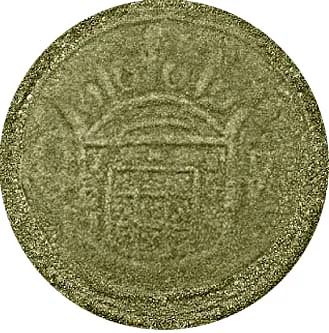
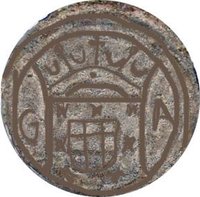
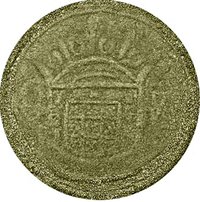
Description:
Arms split, mint marks.
Inscription:
G-A
Reverse
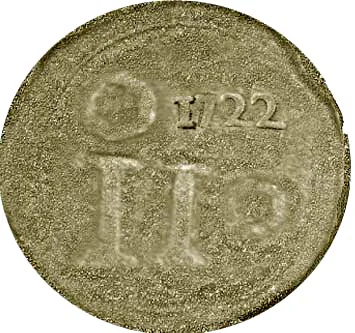
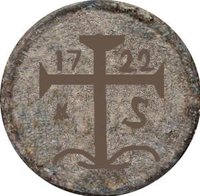
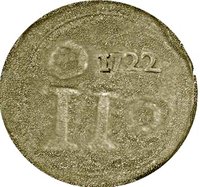
Description:
King’s initial crowned. Value (I0) on right.
Inscription:
0 1722
I Io
I Io
Edge
Mints
| Name | Mark |
|---|---|
| Goa | — |
Mintings
| Year | Mint Mark | Mintage | Quality | Collection |
|---|---|---|---|---|
| 1722 | G-A | — |
Historical background
In 1722, the currency situation in Portuguese India, centered on Goa, was a complex tapestry of official Portuguese coinage, locally minted imitations, and a vast array of foreign currencies circulating in daily trade. The official system was nominally based on the Portuguese real and its higher-value counterpart, the xerafim (worth 300 réis), but the royal treasury in Lisbon struggled to supply sufficient quantities of consistent, high-quality coinage to its distant colony. This chronic shortage led to the widespread use of worn, clipped, and counterfeit Portuguese coins, creating significant confusion and loss of value in transactions.
The economic reality on the ground was dominated by foreign silver, particularly the ubiquitous Spanish-American piece of eight (peso de ocho reales) and its fractional coins, which served as the de facto backbone of regional and international commerce in the Indian Ocean. Alongside these, a multitude of other coins circulated freely, including gold Mughal mohurs, Venetian sequins, and various Indian and Persian silver rupees. This monetary bazaar reflected Goa’s role as a commercial hub, but it posed severe challenges for the cash-strapped Portuguese administration, which found it difficult to collect taxes and pay its soldiers and officials in a stable, recognized currency.
In response, the Portuguese authorities periodically attempted to assert control by setting official exchange rates (tabelas) for these foreign coins against the xerafim, but these rates often failed to reflect market realities, leading to arbitrage and further instability. The year 1722 falls within a period of particular financial strain for the Estado da Índia, as it grappled with declining territorial control and revenues. While no major monetary reform is specifically recorded for that year, the situation was characterized by a continuous struggle to maintain a functioning fiscal system amidst a de facto multi-currency economy, where the value of money was often a matter of negotiation rather than royal decree.
The economic reality on the ground was dominated by foreign silver, particularly the ubiquitous Spanish-American piece of eight (peso de ocho reales) and its fractional coins, which served as the de facto backbone of regional and international commerce in the Indian Ocean. Alongside these, a multitude of other coins circulated freely, including gold Mughal mohurs, Venetian sequins, and various Indian and Persian silver rupees. This monetary bazaar reflected Goa’s role as a commercial hub, but it posed severe challenges for the cash-strapped Portuguese administration, which found it difficult to collect taxes and pay its soldiers and officials in a stable, recognized currency.
In response, the Portuguese authorities periodically attempted to assert control by setting official exchange rates (tabelas) for these foreign coins against the xerafim, but these rates often failed to reflect market realities, leading to arbitrage and further instability. The year 1722 falls within a period of particular financial strain for the Estado da Índia, as it grappled with declining territorial control and revenues. While no major monetary reform is specifically recorded for that year, the situation was characterized by a continuous struggle to maintain a functioning fiscal system amidst a de facto multi-currency economy, where the value of money was often a matter of negotiation rather than royal decree.
✨ Legendary