


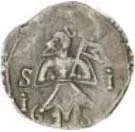
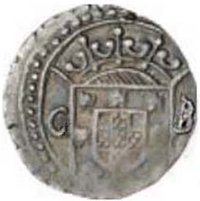
2 tangas – Portuguese India
Add to wishlist
India
Obverse
Reverse
Edge
Mintings
| Year | Mint Mark | Mintage | Quality | Collection |
|---|---|---|---|---|
| 1653 | C-B | — |
Historical background
In 1653, the currency situation in Portuguese India was a complex tapestry of official Portuguese coinage, local and regional currencies, and a chronic scarcity of specie. The official currency was the Portuguese real, with higher-value gold cruzados and silver tostões minted at the Crown's mint in Goa. However, the production of these coins was inconsistent and insufficient for the vast trade needs of the Estado da Índia. This scarcity was exacerbated by the continual drain of precious metals to Europe and the need to finance military defenses against persistent Dutch and Maratha pressures, leading to frequent debasements of coinage and a loss of public confidence in official currency.
Consequently, the daily economic life of Portuguese territories—primarily Goa, Damão, and Diu—relied heavily on a parallel circulation of foreign coins. The most important of these was the Mughal silver rupia, a stable and widely trusted currency that dominated regional trade. Other currencies, like the gold pagoda from the Vijayanagara and later Bijapur regions, and even Dutch and Spanish coins, circulated freely. This created a de facto monetary system where transactions, especially large commercial ones, were often priced and settled in these foreign units, undermining Portuguese monetary authority and causing constant exchange rate fluctuations.
The Portuguese administration struggled to manage this system. Attempts to fix exchange rates between the real and the rupia often failed due to market forces, and the frequent issuance of low-value copper bazarucos for small transactions led to inflation and hardship for the poor. Thus, in 1653, the currency scenario was one of fragmentation and weakness, reflecting the broader decline of Portuguese commercial power in the region. The state’s inability to control its own monetary system was both a symptom and a cause of its diminishing economic sovereignty amidst fierce European competition and powerful local economies.
Consequently, the daily economic life of Portuguese territories—primarily Goa, Damão, and Diu—relied heavily on a parallel circulation of foreign coins. The most important of these was the Mughal silver rupia, a stable and widely trusted currency that dominated regional trade. Other currencies, like the gold pagoda from the Vijayanagara and later Bijapur regions, and even Dutch and Spanish coins, circulated freely. This created a de facto monetary system where transactions, especially large commercial ones, were often priced and settled in these foreign units, undermining Portuguese monetary authority and causing constant exchange rate fluctuations.
The Portuguese administration struggled to manage this system. Attempts to fix exchange rates between the real and the rupia often failed due to market forces, and the frequent issuance of low-value copper bazarucos for small transactions led to inflation and hardship for the poor. Thus, in 1653, the currency scenario was one of fragmentation and weakness, reflecting the broader decline of Portuguese commercial power in the region. The state’s inability to control its own monetary system was both a symptom and a cause of its diminishing economic sovereignty amidst fierce European competition and powerful local economies.


✨ Legendary