

½ Patacão – Portuguese India
India
Context
Year: 1630
Country: India 
Issuer: Portuguese India
Ruler: Philip III
Currency:
(1580—1706)
Subdivision: ½ Patacão = 3 Tangas
Demonetized: Yes
Material
Diameter: 26 mm
Weight: 8.3 g
Silver weight: 8.30 g
Shape: Irregular round
Composition: Silver
Magnetic: No
Technique: Hammered
References
KM: #Click to copy to clipboard60
Numista: #49791
Value
Bullion value: $24.12
Obverse
Description:
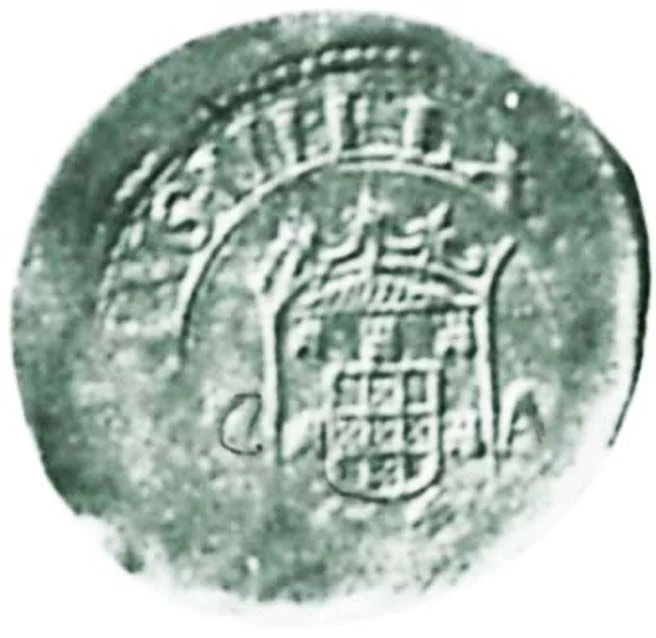
G-A lettering encircles a divided coat of arms.
Inscription:
G-A
1630
PHILIPVS : III : PORT : ET : A : R
1630
PHILIPVS : III : PORT : ET : A : R
Script: Latin
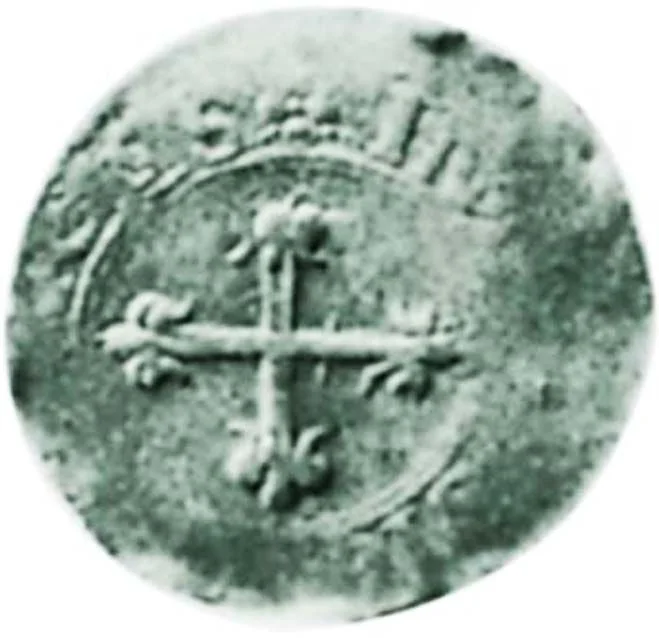
Reverse
Edge
Mints
| Name | Mark |
|---|---|
| Goa | — |
Mintings
| Year | Mint Mark | Mintage | Quality | Collection |
|---|---|---|---|---|
| 1630 | G-A | — |
Historical background
In 1630, the currency situation in Portuguese India was a complex tapestry of official Portuguese coinage, local and regional currencies, and a chronic shortage of specie. The official currency was the Portuguese real, with higher-value gold cruzados and silver tostões minted at the Crown's mint in Goa. However, the supply of these coins was consistently insufficient for the vast trade networks of the Estado da Ída, leading to a reliance on a multitude of foreign coins that circulated freely. The most important of these were Spanish pieces of eight (reales) and their fractional coins, which flowed in from Manila and the New World, alongside Venetian ducats, Mughal rupees, and various other gold huns and pagodas from neighboring Indian states.
This monetary pluralism created significant administrative and economic challenges. The constant fluctuation in value between different coins, based on their metallic purity and weight, complicated all transactions. To bring order, Portuguese authorities regularly issued taxas (official valuation tables) that fixed exchange rates between these myriad currencies. However, these rates often conflicted with market values, leading to arbitrage, confusion in accounting, and frequent complaints from merchants. Furthermore, the shortage of coinage was so severe that it hampered the payment of soldiers and officials, sometimes leading to mutinies and forcing the use of goods or credit for salaries.
Underlying these issues was the declining economic and military position of the Estado da Ída. By 1630, Portuguese trade dominance was being aggressively challenged by the Dutch and English East India Companies, who were capturing key trade routes and blockading Goa. This external pressure strangled the flow of trade revenues and precious metals into Portuguese coffers, exacerbating the currency crisis. Thus, the monetary disarray of 1630 was not merely a financial problem but a direct symptom of the wider geopolitical and economic decay of Portuguese power in Asia.
This monetary pluralism created significant administrative and economic challenges. The constant fluctuation in value between different coins, based on their metallic purity and weight, complicated all transactions. To bring order, Portuguese authorities regularly issued taxas (official valuation tables) that fixed exchange rates between these myriad currencies. However, these rates often conflicted with market values, leading to arbitrage, confusion in accounting, and frequent complaints from merchants. Furthermore, the shortage of coinage was so severe that it hampered the payment of soldiers and officials, sometimes leading to mutinies and forcing the use of goods or credit for salaries.
Underlying these issues was the declining economic and military position of the Estado da Ída. By 1630, Portuguese trade dominance was being aggressively challenged by the Dutch and English East India Companies, who were capturing key trade routes and blockading Goa. This external pressure strangled the flow of trade revenues and precious metals into Portuguese coffers, exacerbating the currency crisis. Thus, the monetary disarray of 1630 was not merely a financial problem but a direct symptom of the wider geopolitical and economic decay of Portuguese power in Asia.


✨ Legendary