

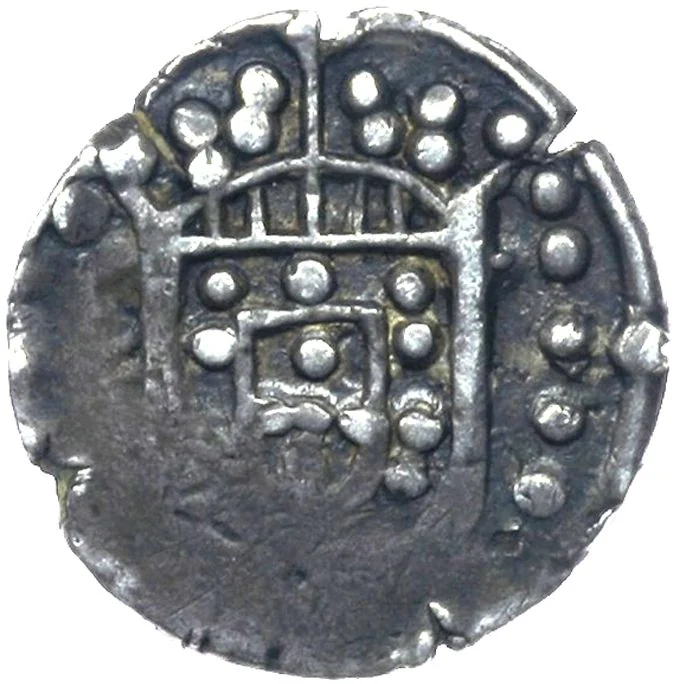
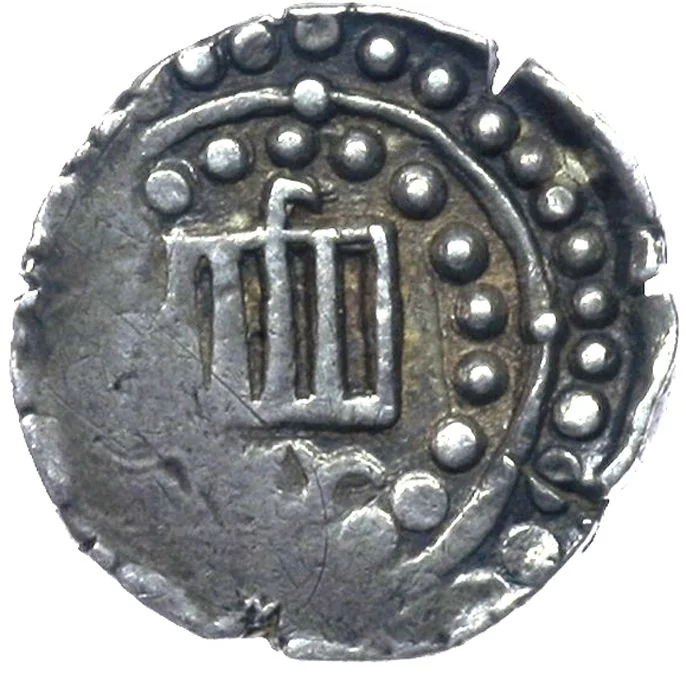
1 tanga – Portuguese India
Add to wishlist
India
Context
Years: 1621–1640
Country: India
Issuer: Portuguese India
Ruler: Philip III
Currency:
(1580—1706)
Demonetized: Yes
Material
References
KM: #
Numista: #341465
Value
Bullion value: $7.52
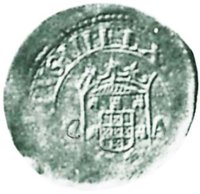
Obverse
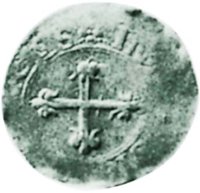
Reverse
Edge
Mintings
| Year | Mint Mark | Mintage | Quality | Collection |
|---|---|---|---|---|
| — | — | — |
Historical background
In 1621, the currency situation in Portuguese India was a complex and strained system, reflecting the broader challenges of maintaining a vast maritime empire. The official currency was the Portuguese real, but the reality on the ground in Goa, the capital of the Estado da Índia, was one of severe scarcity of reliable coinage. Decades of economic mismanagement, the high cost of maintaining military outposts, and the constant drain of silver to pay for Asian trade goods had led to repeated debasements of the coinage. This resulted in a profound lack of trust in the official currency, both within the Portuguese administration and among the local population and international merchants.
Consequently, the economy operated on a de facto multi-currency standard dominated by foreign coins. The most important and trusted currency was the Spanish piece of eight (or Spanish real), a silver coin of consistent high purity that flowed into Asia via Manila and the New World. Alongside it, various gold and silver coins from the Mughal Empire, the Ottoman Empire, and other regional powers circulated freely. The Portuguese authorities, unable to stem this tide, were forced to accept and even tax these foreign currencies to facilitate trade and pay soldiers, effectively acknowledging their own monetary weakness.
This chaotic system created significant administrative and economic difficulties. The need to constantly assay and assign exchange rates between countless coin types hampered commerce and state revenue collection. Furthermore, the outflow of silver to meet imperial obligations in Lisbon left the Estado da Índia perpetually starved of the bullion needed to mint its own credible currency. Thus, in 1621, the currency situation was a clear symptom of imperial overstretch, where local economic survival depended on the very foreign currencies that underscored the declining financial sovereignty of Portuguese India.
Consequently, the economy operated on a de facto multi-currency standard dominated by foreign coins. The most important and trusted currency was the Spanish piece of eight (or Spanish real), a silver coin of consistent high purity that flowed into Asia via Manila and the New World. Alongside it, various gold and silver coins from the Mughal Empire, the Ottoman Empire, and other regional powers circulated freely. The Portuguese authorities, unable to stem this tide, were forced to accept and even tax these foreign currencies to facilitate trade and pay soldiers, effectively acknowledging their own monetary weakness.
This chaotic system created significant administrative and economic difficulties. The need to constantly assay and assign exchange rates between countless coin types hampered commerce and state revenue collection. Furthermore, the outflow of silver to meet imperial obligations in Lisbon left the Estado da Índia perpetually starved of the bullion needed to mint its own credible currency. Thus, in 1621, the currency situation was a clear symptom of imperial overstretch, where local economic survival depended on the very foreign currencies that underscored the declining financial sovereignty of Portuguese India.
✨ Legendary